
This offensive tackle class presents a strong mix of high-end developmental upside and immediate starting talent, headlined by several prospects with rare physical profiles and others with polished, pro-ready skill sets. While there is no unanimous top-tier “perfect” tackle prospect, the depth across the board is what stands out most, with multiple players offering legitimate long-term starting potential depending on scheme fit and coaching development. Teams will be able to find starters on all three days of the draft, and the variance in skill sets gives evaluators flexibility rather than forcing projection into one archetype.
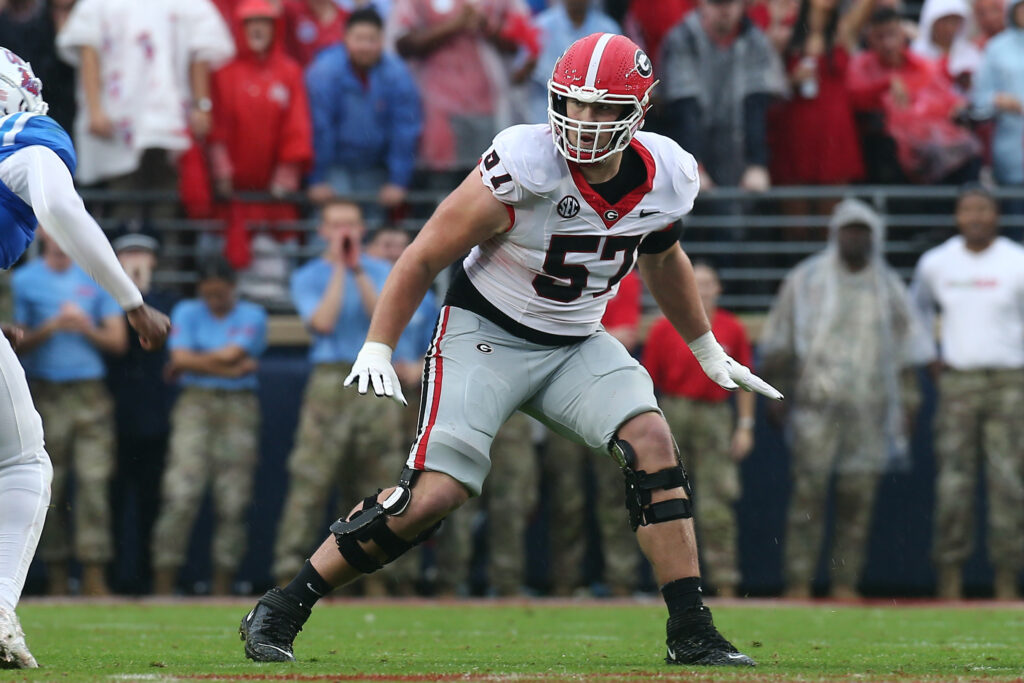
1. Monroe Freeling – Georgia
Freeling enters the draft as the premier high-upside tackle in the class due to his rare athletic profile and physical tools that translate immediately to both pass protection and movement-based schemes. His ability to explode out of his stance and cover ground in pass sets allows him to consistently meet speed rushers before they can fully stress the corner. Against SEC competition, he showed impressive control in pass protection for a first-year starter, rarely allowing clean disruption when his technique was clean and timing aligned. His hand usage flashes advanced potential, especially when resetting after initial contact, which helps him stay attached through extended reps.
His pass protection foundation is far ahead of his run blocking, where consistency and leverage still come and go. Freeling can struggle when forced into extended phone booth situations where pad level becomes the deciding factor, and he will need added mass to anchor against NFL power rushers. That said, his recovery athleticism stands out even when he is initially beaten, as he has the movement ability to reset and salvage reps that most tackles cannot. The technical refinement will determine how quickly he becomes a dominant starter.
The biggest separator for Freeling is how much room for growth remains in his game while already producing high-level flashes against top competition. He is not a finished product, but the trajectory points toward a long-term blindside starter if his development continues at its current pace. His combination of length, foot speed, and reactive athleticism gives him answers to problems that typically overwhelm young tackles. The ceiling here is as high as any offensive lineman in the class.
Value is early round 1.
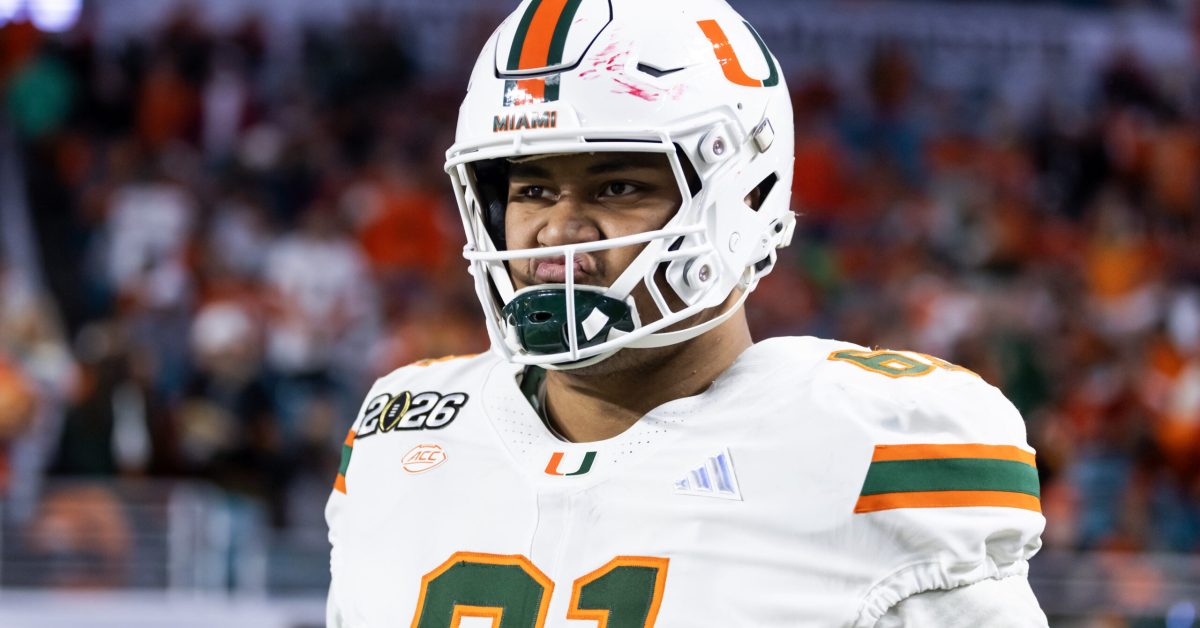
2. Francis Mauigoa – Miami
Really more of a 1a/1b with Freeling at the top of this class. Mauigoa brings one of the most stable and projectable offensive tackle profiles due to his physical density, functional strength, and controlled movement skills in both pass protection and the run game. He plays with immediate power at contact, often dictating reps with his initial punch and preventing rushers from establishing momentum. His anchor is one of his defining traits, as he absorbs power without losing balance or giving up ground, even against advanced rush plans. He also shows a strong understanding of positioning, which allows him to stay square and eliminate angles before they develop.
In the run game, Mauigoa is at his best when he can work downhill and use his strength to finish blocks rather than simply engage them. He consistently generates movement on combination blocks and brings a physical edge that translates well to gap-heavy concepts. While his athletic range is good, it is not elite in terms of recovery versus top-tier speed, which occasionally shows up when he is forced into long vertical sets. Even so, his consistency in structure helps him stay competitive even when isolated.
Mauigoa’s appeal is that his floor is extremely high due to how controlled and technically sound he already is at a young age. He does not rely on projection to function as a starter, which separates him from many tackle prospects who need significant refinement. His development curve is more about maximizing efficiency than fixing foundational flaws. That combination of reliability and power makes him one of the safest bets in the class.
Value is early round 1.
3. Spencer Fano – Utah
Fano is a highly explosive mover with excellent snap quickness and natural bend that shows up immediately in pass protection sets and run blocking angles. His ability to win early in reps gives him consistent control of the arc, especially against edge defenders who rely on timing rather than power. He plays with urgency and physical intent, often looking to finish blocks rather than simply sustain them. His hand usage is efficient, allowing him to stay engaged even when leverage is not perfect.
The run game is where Fano shows his most consistent impact, as he creates displacement and works well through angles when climbing or working in space. He has a natural feel for attacking defenders on the move, which allows him to seal lanes and extend plays vertically. However, his lighter frame creates challenges against stronger edge defenders who can compress his base and reduce his anchor stability. That physical limitation is the primary swing factor in his projection.
Fano’s long-term evaluation hinges on whether his functional strength can match his athletic ability at the NFL level. The movement skills are already there, and his competitive style suggests he will not be overwhelmed by effort or physicality. If he adds mass and continues refining his pass protection consistency, he has clear starter traits on either side of the line. His baseline tools give him legitimate starting upside with development.
Value is round 1.
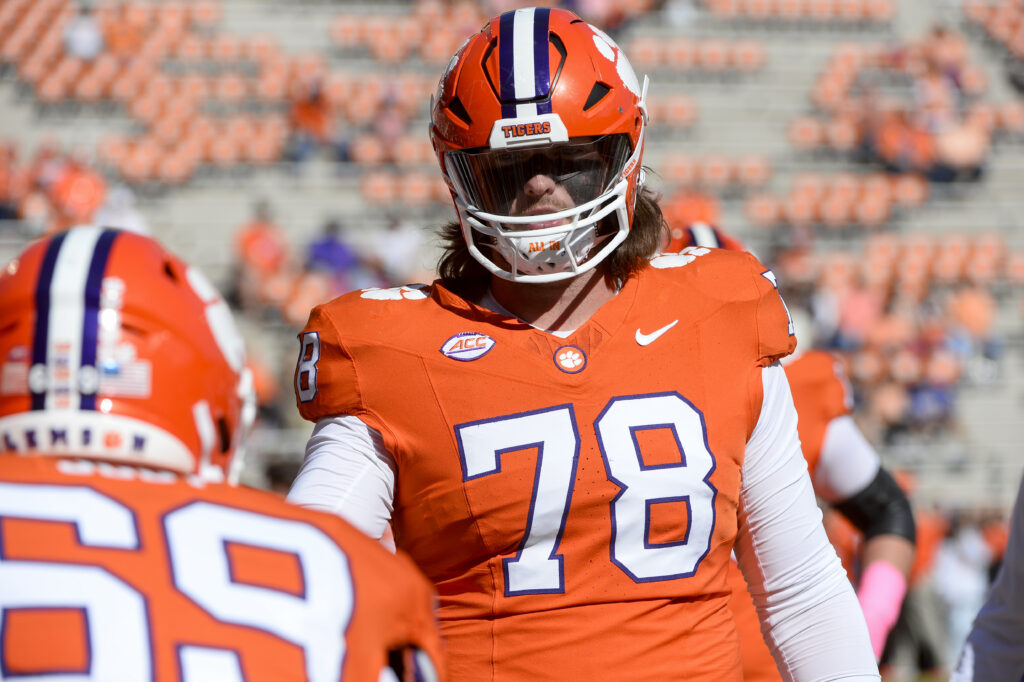
4. Blake Miller – Clemson
Miller offers one of the most reliable and durable tackle profiles in the class, with extensive starting experience and consistent performance across multiple seasons of high-level competition. His pass protection is where he is most refined, showing steady footwork, strong awareness, and the ability to handle different pass rush looks without panicking. He plays with controlled aggression, using his length and punch timing to keep rushers from getting into his frame. His experience handling stunts and twists stands out as one of his most translatable traits.
He brings a balanced physical profile that allows him to function in both pass sets and the run game, though his impact is more controlled than dominant in run blocking situations. Miller’s strength lies in staying technically sound rather than overwhelming defenders with raw force. He is also comfortable adjusting mid-rep, which helps him avoid breakdowns against movement-heavy defenses. That reliability is a major part of his appeal.
Where Miller separates himself is durability and trust factor over time, having handled a full workload without significant drop-off. He has shown he can operate on both sides of the line when needed, which adds schematic flexibility. While he may not have the highest ceiling in the class, his floor is extremely stable due to his experience and technique. Teams will value his ability to step in and hold a job immediately.
Value is round 1.
5. Caleb Lomu – Utah
Lomu is a high-end athlete with rare movement ability for his size, showcasing elite straight-line speed and fluid athleticism in pass protection and space blocking. His first-step explosiveness allows him to win early in reps and establish positioning against speed rushers before they can fully threaten the corner. When his hands land cleanly, he shows strong control and the ability to neutralize rushers quickly. His footwork in pass sets is smooth and efficient for a player still developing physically.
In the run game, Lomu flashes the ability to climb and operate in space, where his speed becomes a major advantage. He can reach second-level targets quickly and adjust on the move, which fits well in zone-heavy schemes. However, he is still developing functional strength, which shows up when he is forced to anchor against power or sustain longer engagements. His consistency in finishing blocks remains a work in progress.
Lomu’s projection is entirely tied to continued physical development and refinement of lower-body strength. The athletic tools are already NFL-caliber, and the movement skills are not in question. If he adds mass without losing mobility, he has the potential to become a high-level starter at left tackle. The raw ingredients are there for a strong developmental payoff.
Value is round 1.
6. Max Iheanachor – Arizona State
Iheanachor brings one of the most intriguing athletic profiles in the class, with rare movement ability at his size and the flexibility to operate in space at a high level. His lateral agility stands out on tape, especially when mirroring speed rushers or redirecting in recovery situations. When he is square and balanced, he can generate real force at contact and reset the line of scrimmage. His combination of length and movement gives him significant schematic versatility.
His run blocking is where his physical traits translate most cleanly, particularly in zone concepts where he can climb, seal, and redirect with ease. He shows natural timing when working combination blocks and has enough power to finish when leverage is correct. However, his hand timing and consistency in pass protection remain inconsistent, which leads to occasional breakdowns against more refined rushers. That inconsistency is the primary developmental hurdle.
The upside here is significant because the athletic traits are difficult to teach and already function at a high level in certain situations. If his hand usage and recognition improve, he has the tools to become a long-term starter with impact potential. His range of outcomes is wide, but the ceiling is clearly worth the investment. He is a developmental bet on traits and growth.
Value is round 1-2.
7. Caleb Tiernan – Northwestern
Tiernan is a highly experienced tackle with strong pass protection instincts and impressive lower-body explosiveness that shows up in both sets and initial contact situations. He plays with good patience in pass sets, rarely overcommitting early and maintaining structure against speed rushers. His anchor is solid when he stays low, and he has the ability to absorb power when properly positioned. His experience at multiple tackle spots adds to his versatility.
He is effective in the run game when operating within structure, particularly on reach blocks and combination assignments where timing is key. His understanding of protection schemes allows him to adjust well to movement and blitz packages. However, his arm length creates natural constraints when facing longer defenders, which limits his margin for error. That physical limitation shows up most in extended reps against high-level edge talent.
Tiernan’s projection is built around technical reliability and experience rather than dominant traits. He understands how to play the position and rarely puts himself out of position mentally. While his physical ceiling may be capped compared to others in the class, his ability to function within structure makes him valuable. He offers stability with developmental upside depending on usage.
Value is round 2-3.
8. Travis Burke – Memphis
Burke is an enormous tackle prospect with rare height and length, giving him an immediate physical advantage in pass protection when he is properly aligned. His punch strength is noticeable when he lands cleanly, and he can control rushers with pure reach and size. He shows ability to anchor against power when he sits into his base and maintains leverage. His physical presence alone forces rushers into adjusted paths.
He has shown improvement in recognizing stunts and handling coordinated rush plans, which is encouraging given his raw developmental stage. In the run game, he can create space when he gets his hands inside and sustains contact. However, his foot speed in space remains a limitation, especially when asked to climb or recover against faster defenders. That lack of lateral quickness is a consistent issue.
Burke is still very much a projection-based tackle, but his size and length give him a legitimate developmental foundation. If his footwork and recovery improve, he has the potential to become a starting-caliber player at the NFL level. Right now, his game is built on traits rather than refinement, but the raw tools are undeniable. He is a long-term development investment.
Value is round 2-3.
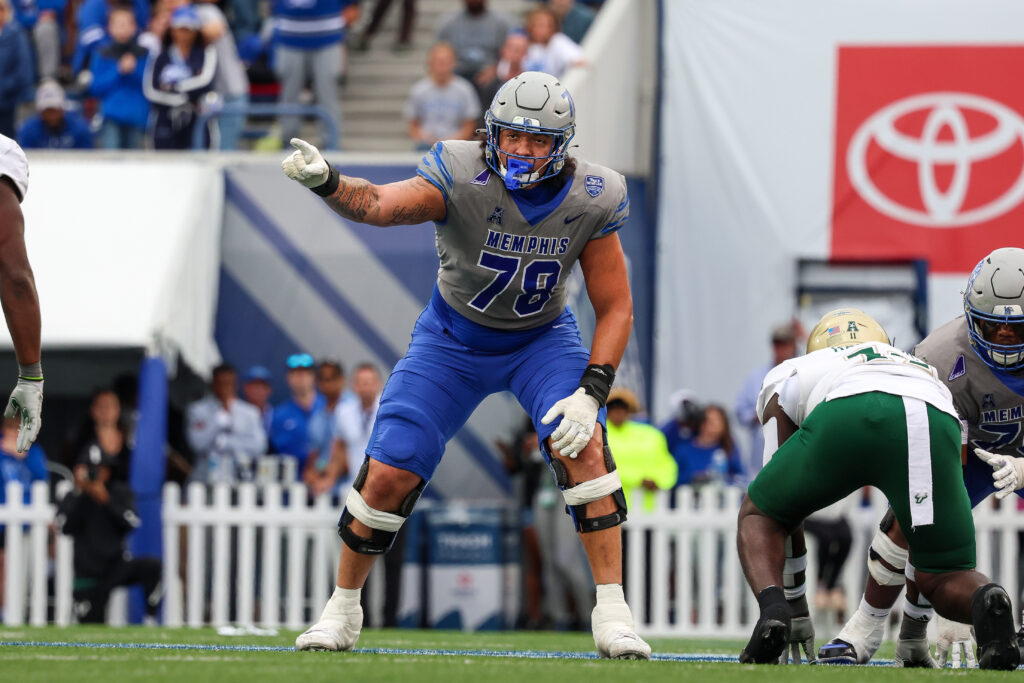
9. Markel Bell – Miami
Bell is a massive tackle prospect with elite length and rare physical dimensions that immediately stand out on the field. His ability to engage rushers early and control their path with reach alone is a defining trait. When his hands land cleanly, he can completely neutralize a pass rush rep. He also shows strong grip strength that allows him to sustain blocks once engaged.
In pass protection, Bell has made clear developmental strides, particularly in consistency and recovery ability when initially beaten. He has shown he can reset his feet and re-anchor rather than losing reps outright. However, his run blocking remains inconsistent due to leverage challenges created by his height. That continues to limit his overall impact in the ground game.
Bell’s projection is heavily tied to continued technical refinement and improvement in lower-body usage. The physical traits are rare enough to warrant investment, but the consistency still needs to catch up. If he develops leverage control and smoother footwork, he has starting-level potential. His upside is tied directly to refinement of fundamentals.
Value is round 3.
10. Austin Barber – Florida
Barber is a highly experienced tackle with significant starting snaps in the SEC, offering a steady and dependable presence on the edge. His pass protection experience stands out, as he has consistently handled high-volume reps without major breakdowns. He plays with good awareness and understands how to manage different rush styles within structure. His comfort level in protection schemes is well developed.
He is effective when using length and timing to disrupt rushers early, particularly in jump sets and controlled engagements. His athleticism allows him to stay competitive in space, and he shows enough mobility to function in multiple protection looks. However, his hand usage and leverage consistency remain areas that need refinement. That inconsistency shows up against more physical rushers.
Barber’s value comes from experience, reliability, and scheme adaptability rather than dominant traits. He can function in multiple roles across the offensive line due to his familiarity with different assignments. While he may not have elite traits, his consistency and football IQ give him a strong developmental baseline. He offers stability with rotational potential early on.
Value is round 3-4.
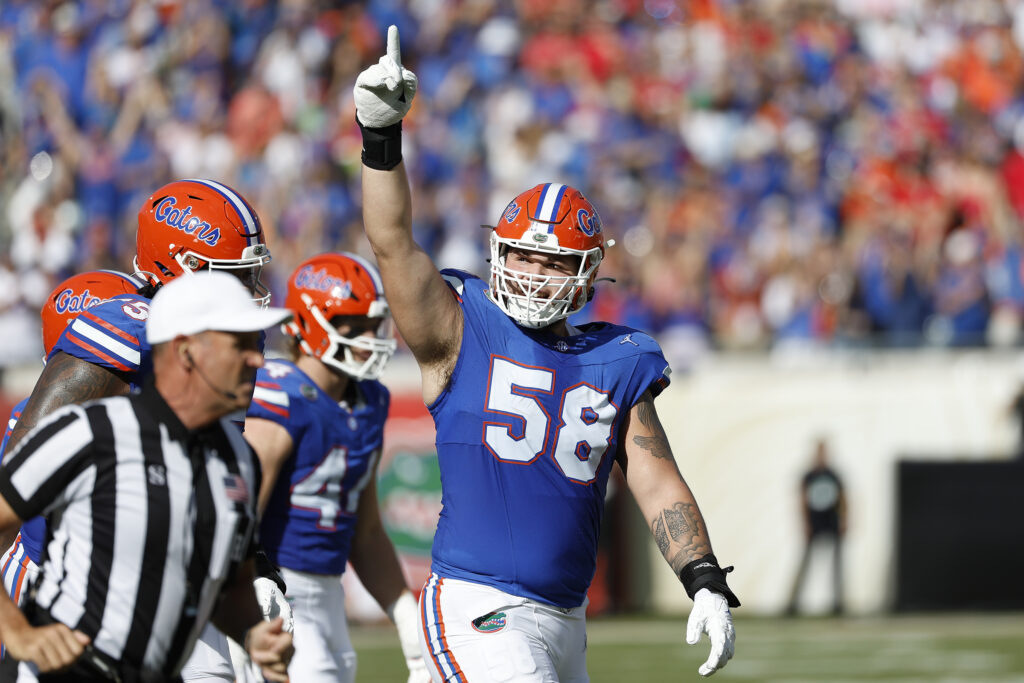
11. Dametrious Crownover – Texas A&M
Crownover is a physically overwhelming tackle with rare size and power who can impose his will in the run game when operating in space or downhill schemes. His ability to generate movement on double teams is one of his most consistent strengths. When he stays low and maintains leverage, he can completely erase defenders from gaps. His physical presence is a major factor in his projection.
In pass protection, he shows improvement in structure and patience, particularly when setting his base and absorbing contact. He has the ability to reset his hands and re-anchor when initially displaced. However, consistency remains an issue, especially when faced with speed-to-power transitions or sustained rush sequences. That inconsistency limits his reliability.
Crownover’s upside is tied to maximizing his physical tools and improving consistency in pass protection. He has the size and strength to become a starting-caliber player if his technique stabilizes. The flashes are strong enough to warrant investment, but the floor remains variable. His development will determine his long-term role.
Value is round 3-4.
12. Jude Bowry – Boston College
Bowry is an aggressive, physically imposing tackle who plays with a mauler mentality and brings force at the point of attack when his technique is aligned. His kick-slide explosiveness allows him to set a strong pass arc early in reps. When he lands his punch correctly, he can stall power rushers effectively. He also shows good burst when climbing or working in space.
His athletic profile gives him upside in both pass protection and movement-based schemes, where he can generate displacement. However, his technique remains inconsistent, especially with pad level and hand placement. He can be caught too upright, which reduces his ability to sustain control through contact. That inconsistency leads to breakdowns against refined rushers.
Bowry is a developmental tackle with starting upside if his technique improves. The physical tools and effort level are clearly present, but refinement is necessary for consistency at the next level. He has traits that translate, but they require coaching to fully stabilize. His ceiling is tied to technical growth.
Value is early day 3.
13. Kage Casey – Boise State
Casey is a highly experienced and reliable tackle who has shown consistent durability and steady performance over multiple seasons. He plays with strong base fundamentals, especially in pass protection where he maintains structure and patience. His ability to recognize stunts and adjust without panic is one of his strongest traits. He brings stability to the position through consistency.
In the run game, he is effective as a drive blocker when leveraged correctly, using strong hands to control defenders once engaged. His awareness in combination blocks allows him to function within structured schemes without mental errors. However, his athletic limitations show up when asked to move in space or recover against speed. That restricts his range of effectiveness.
Casey’s value comes from reliability and experience rather than high-end traits. He understands the position and rarely puts himself in disadvantageous situations mentally. While his ceiling may be limited, his floor is stable due to technique and awareness. He is a dependable option for depth and rotational usage.
Value is day 3.
14. Aamil Wagner – Notre Dame
Wagner brings leadership, experience, and strong physical tools that translate well to both pass protection and movement-based schemes. His length and hand usage allow him to frame rushers effectively and maintain control when properly set. He has shown consistent improvement in pass protection technique over time. His processing ability stands out in recognizing defensive movement pre-snap.
He moves well in space and can climb to the second level effectively when operating in rhythm. His straight-line athleticism allows him to cover ground on zone concepts. However, his run blocking consistency dipped at times, particularly when asked to generate movement at contact. That inconsistency limits his overall impact in the ground game.
Wagner’s projection is built on developmental refinement and consistency rather than elite traits. He has the physical foundation to function at the NFL level, but needs to stabilize his lower-body mechanics. His experience and leadership are positives that translate beyond the field. He is a developmental tackle with rotational potential.
Value is day 3.
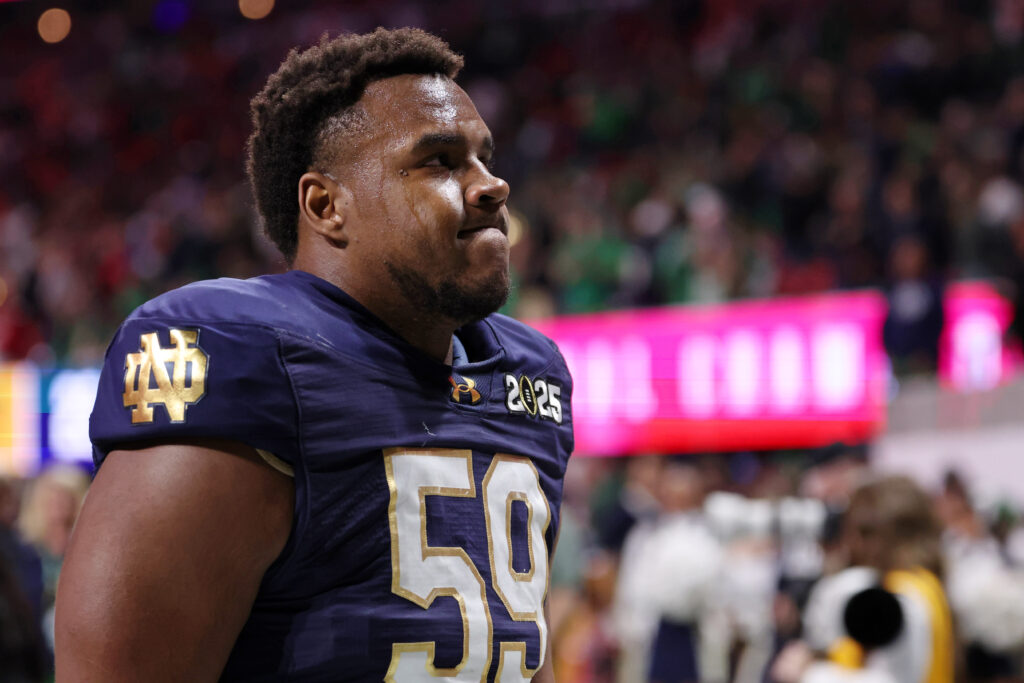
15. Isaiah World – Oregon
World is a physically gifted tackle with elite size and length that immediately stands out, but he remains a raw technical projection at the position. His ability to generate power in his punch is noticeable when his timing is correct. He shows flashes of balance and recovery athleticism that suggest long-term potential. His tools give him an NFL foundation to build on.
He has shown steady improvement in pass protection, particularly in limiting clean pressure when his technique is aligned. His recognition of movement and blitz concepts is adequate and improving. However, his run blocking remains inconsistent due to pad level and leverage issues. Those mechanical flaws limit his current effectiveness.
World’s projection is entirely dependent on technical development and recovery from injury. The athletic traits are legitimate, but he requires time and refinement before handling consistent NFL duties. If developed properly, he has starting upside due to his physical profile. His ceiling is high, but he is firmly a developmental prospect.
Value is day 3.