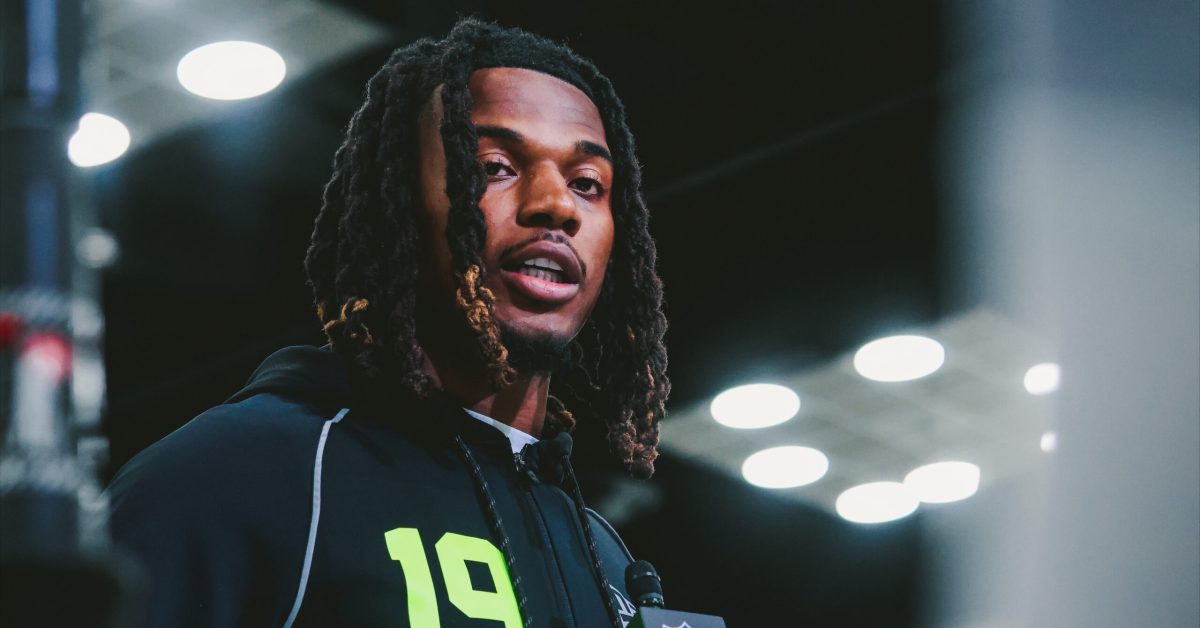

When Harold Perkins Jr. walked into the NFL Scouting Combine, he carried more than just a résumé of highlight plays. He carried the weight of expectation, position changes, injuries, coaching turnover — and the determination of a player who believes his best football is still ahead of him.
For Perkins, Indianapolis wasn’t just about testing numbers. It was about reminding NFL decision-makers who he is, even as everything around him shifts.
More Than Just Speed
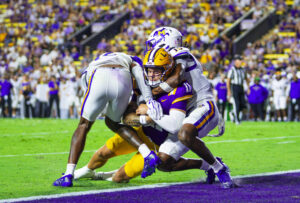
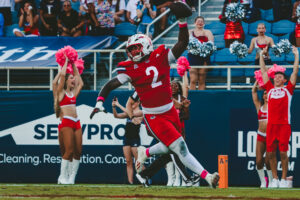
At his core, Perkins is an explosive, instinct-driven defender. His first step is elite. His closing speed in space is rare. When he’s allowed to attack downhill or bend around the edge, he can wreck a pocket in seconds. As a freshman at Louisiana State University, he looked like one of the most dynamic defenders in the country — a hybrid chess piece who could spy quarterbacks, rush off the edge and drop into coverage all in the same series.
But Perkins isn’t just a speed rusher.
Over time, his game expanded. He became more comfortable reading blocking schemes, fitting gaps against the run and communicating adjustments pre-snap. His ability to play in space — whether matching up with running backs or tracking mobile quarterbacks — makes him valuable in today’s NFL, where versatility is currency.
Still, versatility can be a double-edged sword.
Throughout his LSU career, Perkins experienced multiple defensive adjustments and coaching changes. Each shift meant new terminology, new responsibilities and, at times, a new role entirely. One season he was unleashed primarily as an edge threat. Another, he was asked to settle into more traditional linebacker duties. For some players, that instability can stunt development.
“I feel like it helped me in a lot of ways. I always thought I was versatile, and I never put myself in a box. So it felt like it did me good,” Perkins said.
For Perkins, it forced growth.
Leading Through Coaching Changes
Coaching turnover can fracture a locker room. Schemes change. Philosophies shift. Roles get redefined. Perkins didn’t shy away from that reality during his media availability at the Combine.
He spoke candidly about how difficult those transitions can be — not just for himself, but for the entire defense. Yet instead of expressing frustration, he framed it as a responsibility and something the entire team used to grow bonds that seemed like those LSU Tigers lived together for a lifetime.
He described stepping into a more leadership role as LSU’s defense navigated change. Younger players looked to him. Veterans needed consistency.
Even as he adjusted to new expectations personally, he emphasized maintaining high standards in meetings and on the practice field.
That maturity stood out.
Perkins explained that adversity forced him to become more vocal. Early in his career, his playmaking did the talking. As time went on, especially amid coaching changes, he learned that leadership required communication, accountability and composure when results weren’t immediate.
For NFL teams, that matters just as much as a 40-yard dash time.
Battling Physical Setbacks
Adversity wasn’t limited to scheme adjustments. Injuries tested him physically and mentally. For a player whose game is built on twitch and explosion, even minor setbacks can disrupt rhythm and confidence.
At the Combine, Perkins made it clear that those challenges strengthened him. He talked about focusing on recovery, film study and understanding the game from a broader perspective when he wasn’t at full strength. Instead of allowing frustration to build, he leaned into preparation.
“I’m not gonna say it was easy, because no one sees themselves getting hurt, especially with an injury like that,” Perkins said. “But it was good for me I feel like, I learned a lot from it.”
Scouts weren’t just evaluating his measurables in Indianapolis — they were evaluating durability, resilience and mindset. Perkins embraced that scrutiny.
A Dream Fit in New Orleans
Perhaps the most headline-grabbing moment of his media session came when he was asked about potential NFL destinations. Perkins didn’t hesitate.
He said he had one simple message to the New Orleans Saints. “Come get me.”
The connection makes sense. A Louisiana fan base already knows his name. The Saints have historically valued versatile defensive pieces who can move around the formation and create pressure from multiple angles. Perkins smiled as he talked about staying home, about representing the state at the next level.
It wasn’t a calculated answer — it felt genuine.
But he also made it clear that wherever he lands, the goal is the same: to prove he belongs and to impact a defense immediately.
A Position Without a Box
One of the biggest questions surrounding Perkins is positional fit. At roughly 6-foot-1 and lighter than traditional NFL edge rushers, he doesn’t fit neatly into a single prototype. But the modern NFL isn’t built on rigid prototypes.
Defenses now prioritize flexibility — linebackers who can blitz like defensive ends, cover like safeties and spy dual-threat quarterbacks. Perkins thrives in chaos. His acceleration allows him to close windows quickly. His instincts help him diagnose screens and misdirection. When used creatively, he can tilt protection schemes.
The Combine was his opportunity to show that he isn’t “tweener” — he’s adaptable.
In interviews, he emphasized his willingness to do whatever a team needs: rush, cover, set the edge, play special teams. That team-first mentality, especially after navigating coaching adversity and role changes at LSU, only reinforces his value.
Built for the Moment
The NFL Combine is designed to spotlight strengths and magnify doubts. For Perkins, it did both.
Yes, teams will debate where he lines up on Sundays. They’ll analyze his frame and project how it translates to the next level. But they’ll also see a player who has already endured instability, battled injuries, adjusted roles and emerged as a leader.
Adversity shaped him.
The freshman phenom who burst onto the scene has evolved into something more complete — a defender who understands scheme, embraces responsibility and isn’t afraid to speak up when standards slip.
If draft night brings him to New Orleans, it will feel like a full-circle moment for a Louisiana star. If it sends him elsewhere, it will simply be the next challenge.
And if his career has proven anything so far, it’s that Harold Perkins Jr. doesn’t run from challenges.
He grows through them.