
This wide receiver class is one of the hardest to evaluate in recent memory, not because of a lack of talent, but because there is very little consensus across the board. Evaluations vary wildly depending on what traits you prioritize, whether that’s route running, athletic upside, or proven production. There isn’t a clear-cut WR1 that everyone agrees on, and even within the top tier, players bring very different skill sets to the table. That makes this class particularly interesting when stacking them against each other.
There is still plenty of high-end talent here, especially at the top, where multiple receivers have legitimate first-round ability. The middle tiers are where things get complicated, with players offering intriguing traits but also clear flaws that could impact their transition to the next level. Scheme fit and development will play a major role in how this class ultimately shakes out.
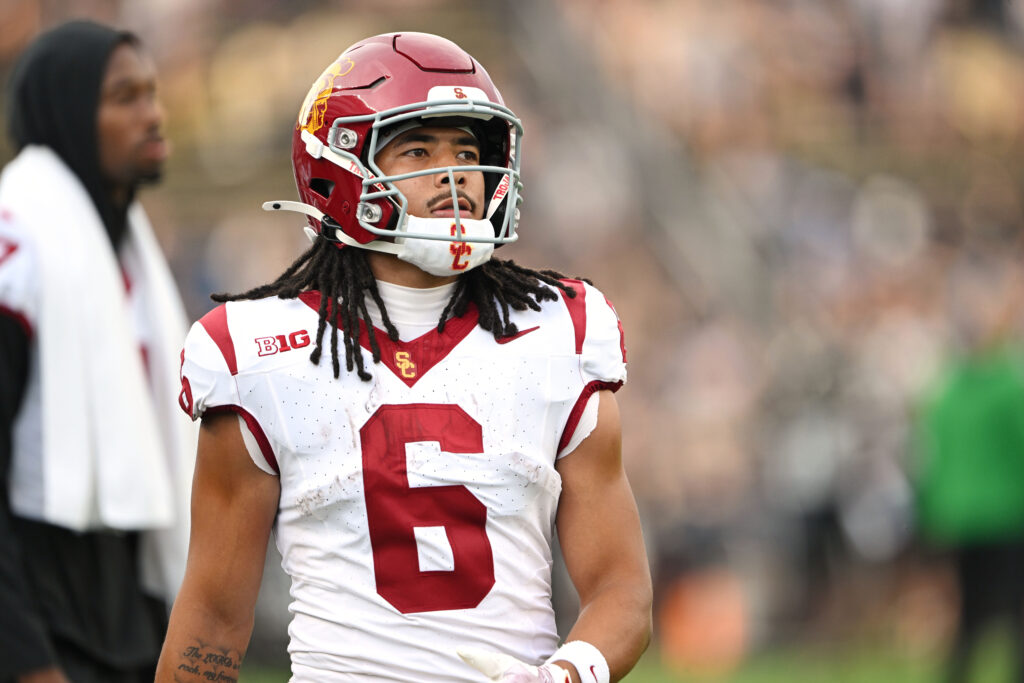
1. Makai Lemon – USC
Lemon is one of the most technically refined receivers in this class, and that shows up immediately when you turn on the tape. He consistently manipulates leverage at the line and forces defenders into uncomfortable positions before even breaking into his route. His hands are as reliable as anyone in this group, and quarterbacks trust him in tight windows because he has earned it over time. Despite not having elite size, he plays bigger than he is at the catch point and wins more contested situations than expected.
As a route runner, he separates with efficiency rather than raw explosiveness. His ability to snap off breaks without losing speed allows him to create consistent throwing windows, especially against man coverage. He also has an advanced understanding of zone spacing, routinely settling into soft spots at the right time. That awareness makes him a reliable chain mover and a quarterback-friendly target on key downs.
There are still limitations tied to his frame and initial burst, which show up more against physical corners. He does not consistently create after the catch and relies more on precision than playmaking ability in space. Even with that, the consistency, polish, and reliability make him one of the safest projections in the class.
Value: Early Round 1
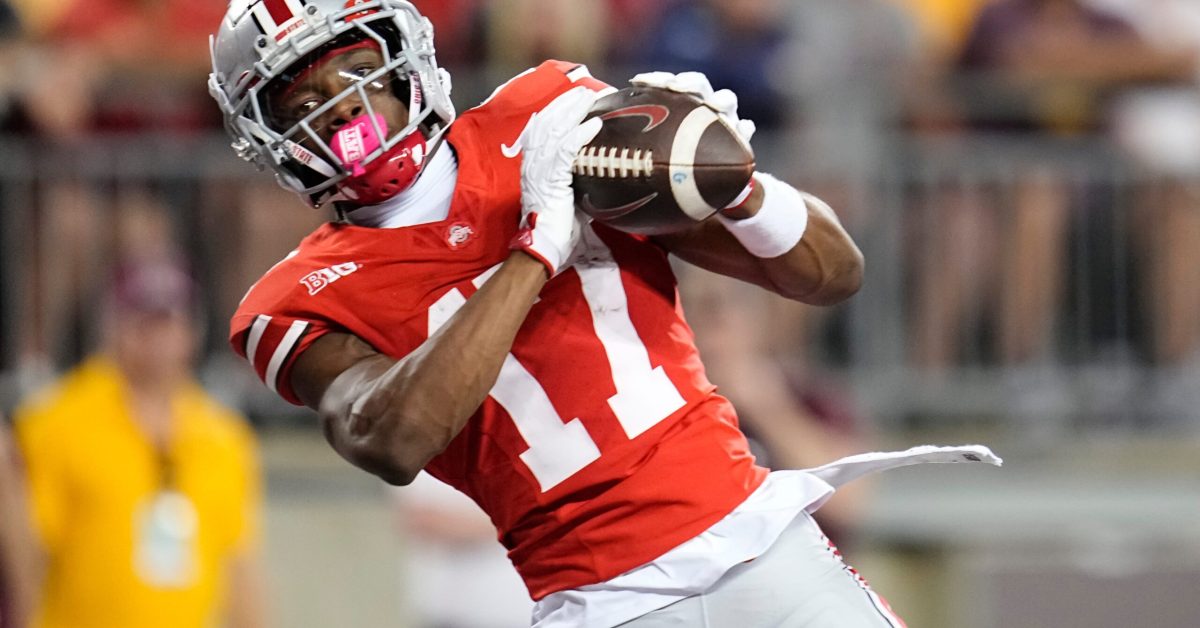
2. Carnell Tate – Ohio State
Tate brings a similar level of polish and reliability, but with a slightly different style that leans more into smoothness and control. He wins with timing, body positioning, and clean hands, making him a dependable option in all areas of the field. His ability to track the football and adjust mid-route stands out, especially on deeper throws where timing is critical.
He is particularly effective working against zone coverage, where his awareness and spacing allow him to consistently get open. Tate does a great job of working back to the quarterback and presenting a clean target, which translates well to the next level. His footwork along the sideline is also advanced, giving him value as a boundary receiver in tight situations.
The main concern comes from his lack of elite burst and size limitations. Physical corners will challenge him early in routes, and he does not have overwhelming traits to consistently counter that. Still, his overall skill set and consistency make him a high-level receiver with a strong floor.
Value: Early Round 1
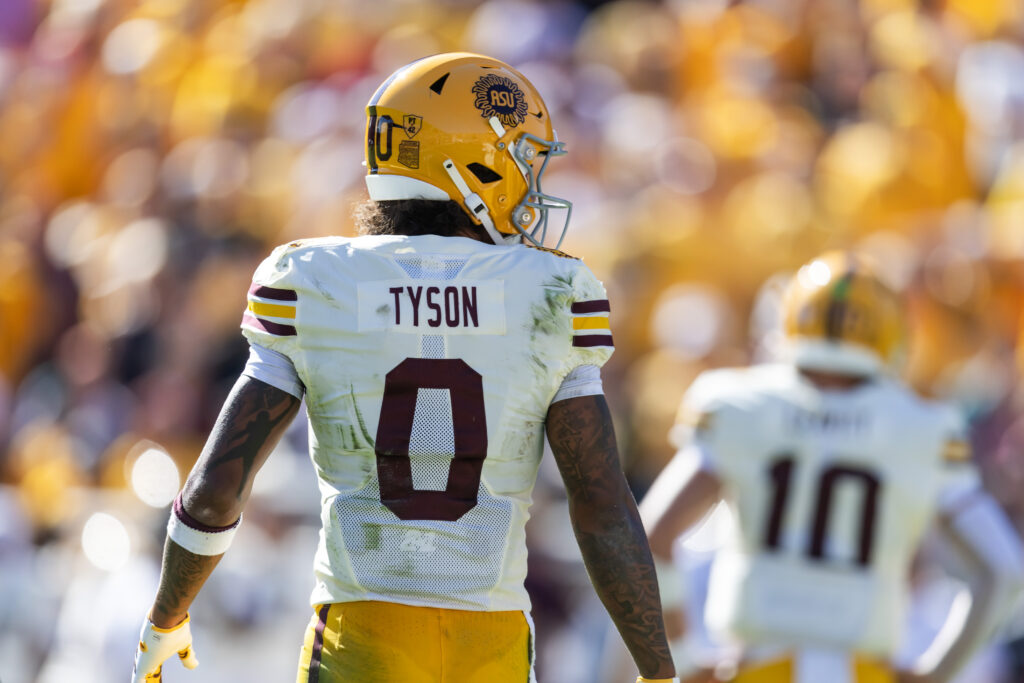
3. Jordyn Tyson – Arizona State
Tyson is the most naturally talented receiver in this class, and when he is on the field, it is obvious. He creates separation at all levels with advanced route running, quickness, and body control. His ability to win at the catch point despite not having elite size is a major strength, and he consistently makes difficult plays look routine.
His deep ball tracking is among the best in the class, and he has a natural feel for adjusting to the football in the air. Tyson also brings a competitive edge that shows up in key moments, especially on third downs and late in games. He has the ability to take over stretches of a game in a way few others in this class can.
The issue is availability, and it is a significant one. Injuries have consistently interrupted his development, and that uncertainty clouds his overall projection. If he stays healthy, he has the upside to be the best receiver in this class, but that risk cannot be ignored.
Value: Early Round 1
4. KC Concepcion – Texas A&M
Concepcion is one of the most explosive players in this class, particularly in the short and intermediate areas. His burst off the line and ability to accelerate through breaks make him extremely difficult to cover in space. He thrives after the catch, turning short completions into big gains with vision and quickness.
He also brings versatility, lining up in multiple spots and contributing as a returner. That added value makes him a dynamic offensive weapon rather than just a traditional receiver. His ability to stress defenses horizontally and vertically adds another layer to his profile.
The concerns come with consistency, particularly with drops and route refinement. He relies heavily on athleticism and needs to continue developing the finer details of his game. Even with that, his playmaking ability is hard to ignore.
Value: Round 1
5. Omar Cooper Jr. – Indiana
Cooper is a well-rounded receiver who brings a strong combination of physicality and ball skills. He is reliable at the catch point and consistently secures the football through contact. His ability to work underneath and create yards after the catch adds to his overall value.
He shows flashes of high-level playmaking ability, especially when given space to operate. Cooper runs with strength and balance, making him difficult to bring down on first contact. His willingness to block also stands out and adds to his overall profile.
There are still areas of development, particularly in route running and consistency. He can rely too much on athleticism rather than technique, which shows up against better competition. Even so, the tools and production make him a strong prospect.
Value: Round 1
6. Denzel Boston – Washington
Boston fits the mold of a traditional X receiver with his size and physicality. He uses his frame extremely well to shield defenders and win at the catch point, especially in the red zone. His ability to track the football and adjust to different throws makes him a reliable deep threat.
He is particularly effective in contested situations, where his strength and body control allow him to consistently come down with the ball. Boston also brings a physical edge after the catch, fighting for extra yards and finishing runs with intent.
The limitations come in separation and overall explosiveness. He does not consistently create space at the top of routes, which will be tested at the next level. Even so, his size and scoring ability give him clear value.
Value: Rounds 1–2
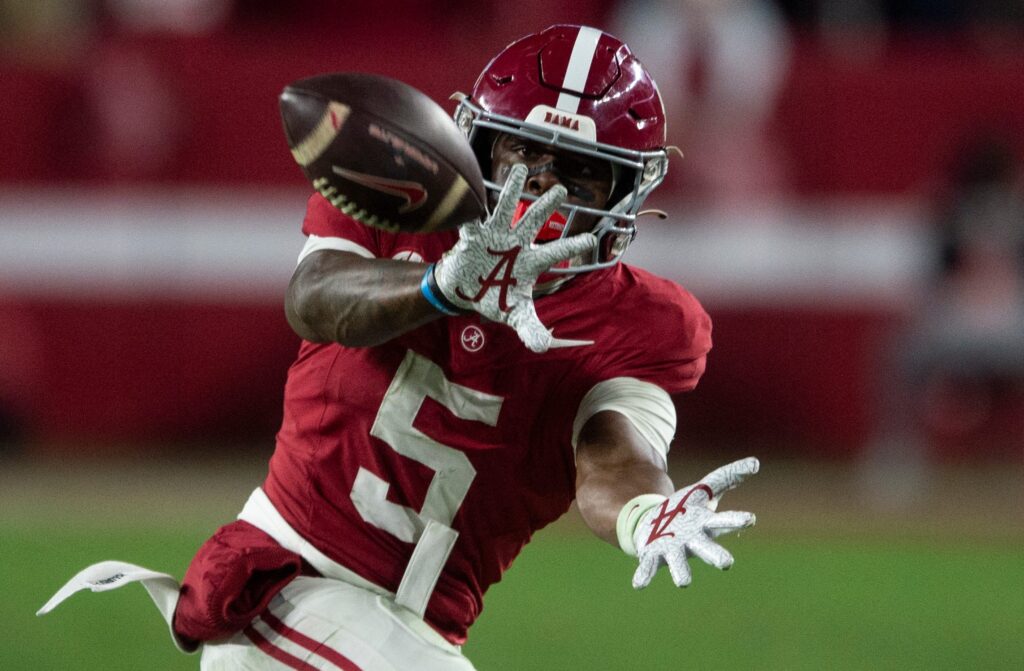
7. Germie Bernard – Alabama
Bernard is one of the more polished route runners in this class, particularly in the intermediate areas. He understands how to manipulate defenders with tempo and subtle movements, creating consistent separation. His hands are reliable, and he thrives in high-pressure situations.
He is especially effective on third downs, where his ability to find soft spots and move the chains stands out. Bernard also transitions quickly after the catch, turning receptions into positive yardage without hesitation.
The main limitation is his lack of elite speed and explosiveness. He will not consistently threaten defenses vertically, which caps his ceiling slightly. Still, his reliability and route running make him a valuable piece.
Value: Round 2
8. Zachariah Branch – Georgia
Branch is one of the most dynamic athletes in this class, with elite speed and acceleration. His ability to create after the catch is his defining trait, as he consistently turns short touches into explosive plays. He also brings value as a returner, adding another dimension to his game.
He shows good awareness in space and understands how to set up defenders with the ball in his hands. That vision allows him to maximize his athletic ability and create big plays in multiple ways.
The concerns center around size and route development. He is currently more of a manufactured-touch player than a complete receiver. If he expands his route tree, his upside becomes even higher.
Value: Round 2
9. Chris Bell – Louisville
Bell is a physical receiver who thrives in contested situations and downfield opportunities. His size and strength make him difficult to handle, especially once he builds momentum. He also brings surprising speed for his frame, which shows up on vertical routes.
He is effective working the middle of the field, where he uses his body to shield defenders and secure tough catches. After the catch, he becomes a physical runner who can break tackles and extend plays.
The concerns come with route variety and consistency. His game is somewhat limited, and he needs to expand his overall skill set. Even so, his physical tools make him an intriguing prospect.
Value: Round 2
10. Chris Brazzell II – Tennessee
Brazzell combines size and speed in a way that makes him a dangerous vertical threat. He tracks the football well and consistently wins at the catch point with his length. His ability to stretch the field adds value to any offense.
He also shows good awareness in zone coverage, settling into open areas and presenting a target. His footwork along the sideline is advanced, which helps him in boundary situations.
There are concerns with consistency and route refinement. He does not always separate cleanly, and drops can be an issue. Still, the physical tools give him strong upside.
Value: Round 2
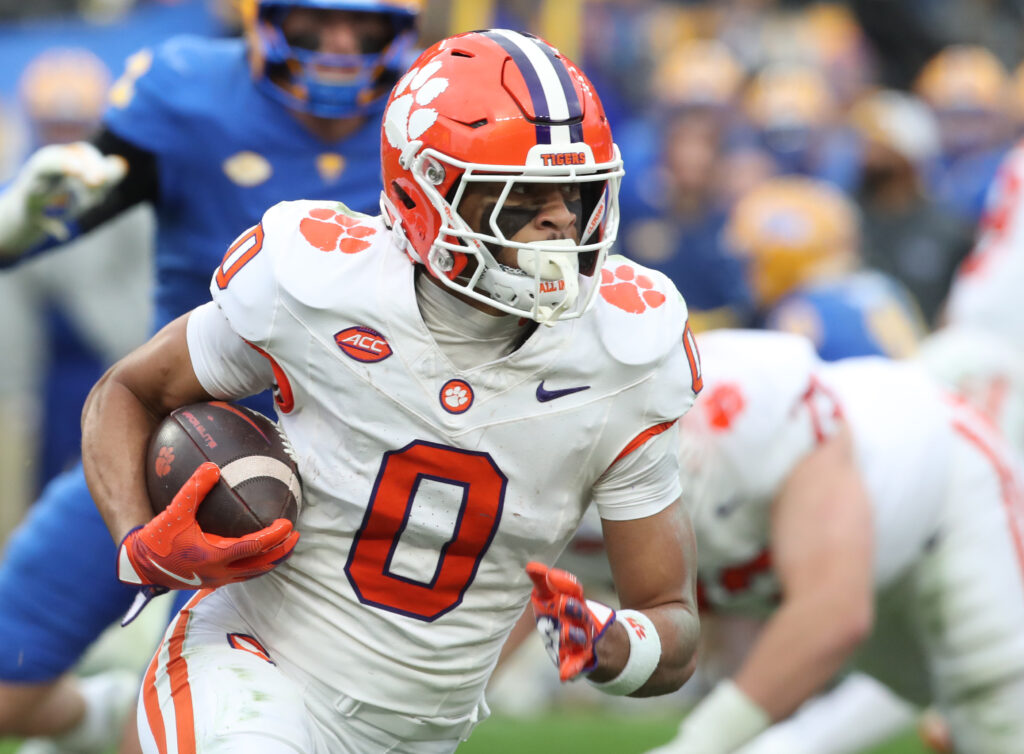
11. Antonio Williams – Clemson
Williams is a smart, technically sound receiver who wins with precision and awareness. He consistently finds openings in zone coverage and works well in traffic. His hands are reliable, and he rarely makes mental mistakes.
He also brings value after the catch, using quickness and vision to gain extra yards. His experience as a returner adds to his overall versatility.
The limitations come with size and durability concerns. He has missed time and does not have elite physical traits. Still, his intelligence and consistency make him a solid prospect.
Value: Round 3
12. Skyler Bell – UConn
Bell is an explosive athlete who plays faster than most defenders can handle. His ability to create separation vertically makes him a constant deep threat. He also produces after the catch, turning receptions into big gains.
He shows good control in his routes and has improved his hands over time. His versatility allows him to play multiple roles in an offense.
The concerns come with size and consistency. He can struggle against physical coverage and has a history of drops. Even so, his athleticism keeps him in this range.
Value: Round 3
13. Bryce Lance – NDSU
Lance is one of the best pure athletes in this class, and that explosiveness shows up constantly on tape. He can win vertically with ease, stacking defenders and tracking the ball naturally over his shoulder. His combination of size, speed, and leaping ability makes him a legitimate threat at all levels of the field. He also consistently finishes plays at the catch point, turning contested situations into wins.
There is more nuance to his game than you typically see from smaller-school prospects. Lance shows the ability to sink his hips and break cleanly on intermediate routes, and he has a natural feel for working into open space. His hands are reliable, and he rarely wastes opportunities when targeted. The production backs it up, especially in the red zone where he consistently found ways to score.
The biggest concern is the jump in competition and how quickly he can adjust. His release package still needs development, and he relied heavily on athleticism to win. There is also a limited sample of high-level production compared to some others in the class. Even with that, the upside is clear and difficult to ignore.
Value: Round 3
14. Ted Hurst – Georgia State
Hurst brings a vertical element that shows up immediately, with the ability to stress defenses downfield. He builds speed effectively through his routes and tracks the ball well in the air. His ability to create chunk plays makes him a valuable deep threat. He also showed improved production after the catch later in his career.
He has a solid understanding of zone coverage and knows how to sit in open windows. That awareness helps him move the chains and contribute beyond just vertical routes. His size and length also give him value in the red zone, where he can win on fades and back-shoulder throws.
The concerns come with consistency, particularly with drops and contested catch ability. He does not always play to his size at the catch point. His release package is also limited, which could be exposed against physical corners. There is a clear role for him, but refinement is needed.
Value: Round 3
15. Elijah Sarratt – Indiana
Sarratt is a reliable possession receiver who consistently moves the chains. He has strong hands and rarely lets the ball get into his body, securing catches through contact. His awareness of down and distance stands out, as he understands exactly where he needs to be. That makes him a valuable option in critical situations.
He wins with technique and feel rather than athleticism, using subtle movements to create separation. His ability to settle into zone coverage and present a target is one of his best traits. He also brings a physical mindset as a blocker, which adds to his overall value.
The limitations come from his lack of vertical speed and after-the-catch ability. He is not going to create explosive plays consistently. His route tree is also somewhat limited, which caps his ceiling. Still, his reliability makes him a strong contributor.
Value: Round 3
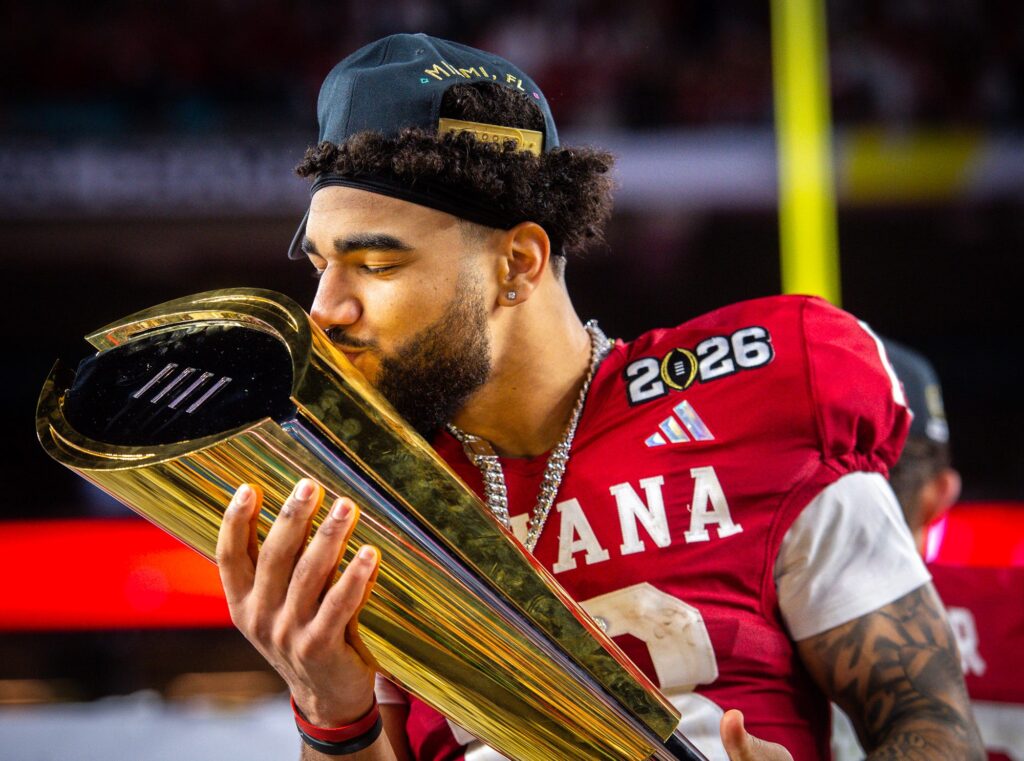
16. Ja’Kobi Lane – USC
Lane is a long, athletic receiver who excels at the catch point. His ability to high-point the football and win contested situations makes him a strong red zone weapon. He tracks the ball well downfield and adjusts effectively to off-target throws. His size gives quarterbacks a large margin for error.
He also shows flashes of route-running ability, using subtle movements to create space. Lane understands how to position his body to shield defenders and secure catches. His physicality after the catch adds another layer to his game.
The concerns come with consistency and overall refinement. His route tree is limited, and he does not consistently separate against tighter coverage. Drops have also been an issue at times. The tools are there, but development is needed.
Value: Round 3
17. Deion Burks – Oklahoma
Burks is an explosive playmaker with legitimate vertical speed. He can stretch the field and create big plays, forcing defenses to account for him at all times. His burst and agility also show up after the catch, where he can turn short gains into larger ones.
He is a polished route runner who understands how to vary tempo and create separation. His ability to track the ball and finish plays adds to his overall effectiveness. He also tends to perform well in big moments, which stands out on tape.
The concerns center around size and durability. He can struggle in contested situations and has missed time due to injuries. His blocking is also a limitation. Even with that, his explosiveness gives him real value.
Value: Rounds 3–4
18. Brenen Thompson – Mississippi State
Thompson is one of the fastest players in this class, and that speed is his defining trait. He can take the top off a defense and create explosive plays with ease. His ability to accelerate quickly makes him dangerous on vertical routes and crossing concepts.
He tracks the ball well and shows comfort catching at full speed. When given space, he can turn into a big-play threat instantly. His speed alone forces defenses to adjust their coverage.
The concerns are significant due to his size and lack of physicality. He struggles in contested situations and does not offer much as a blocker. His route running is also limited outside of vertical concepts. He has a clear role, but it is somewhat narrow.
Value: Rounds 3–4
19. Malachi Fields – Notre Dame
Fields brings a strong physical presence with his size and strength. He is one of the better contested catch receivers in this class, consistently winning at the catch point. His ability to box out defenders and secure the ball stands out.
He also shows good awareness in zone coverage, settling into open areas and working back to the quarterback. His physicality after the catch allows him to break tackles and gain extra yards. He contributes as a blocker as well, which adds value.
The limitations come with separation and overall quickness. He struggles to get off the line against press coverage and does not have elite speed. His route running needs refinement to create more consistent separation. Even so, his physical traits are valuable.
Value: Early Day 3
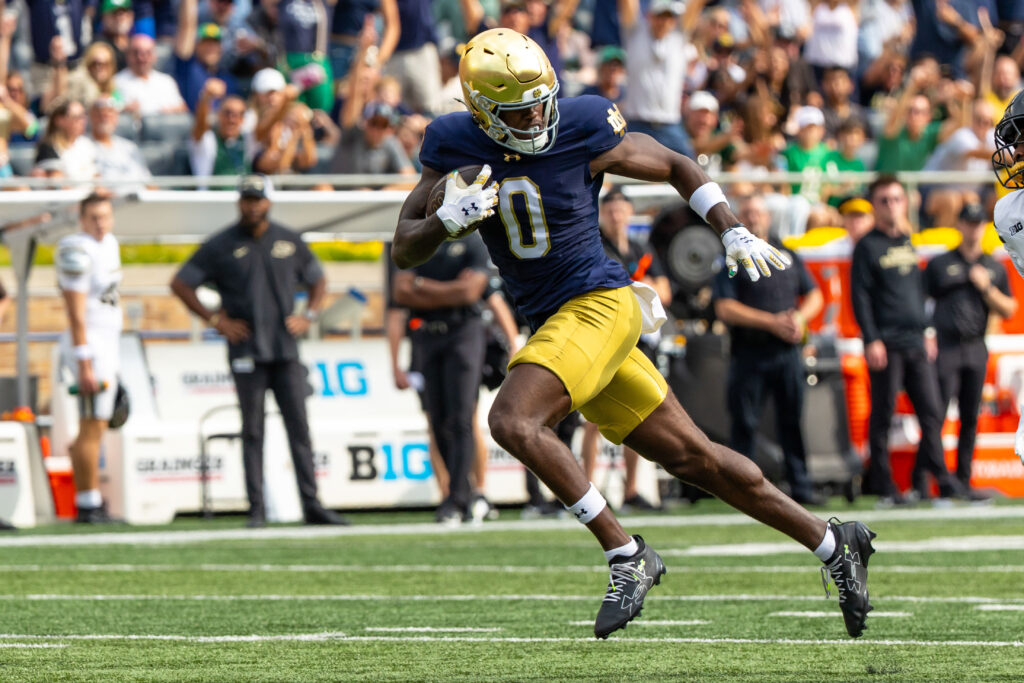
20. De’Zhaun Stribling – Ole Miss
Stribling is a smooth vertical receiver who builds speed effectively through his routes. He tracks the ball well and can adjust to throws downfield without losing momentum. His ability to create big plays is a key part of his game.
He also shows improvement in his overall skill set, particularly in route pacing and awareness. Stribling understands how to work against zone coverage and find openings. His growth over time is noticeable on tape.
The concerns come with physicality and consistency. He can be knocked off his routes by stronger defenders and struggles in contested situations. His release package is limited, which affects his ability to win early. There is upside, but refinement is needed.
Value: Early Day 3
21. Jeff Caldwell – Cincinnati
Caldwell is an intriguing size-speed prospect with a massive catch radius. He can win downfield and presents a large target for quarterbacks. His ability to stretch the field and score touchdowns stands out.
He shows flashes of strong ball tracking and body control, especially on deep throws. His athletic testing backs up the explosiveness seen on tape. There is clear upside if everything comes together.
The biggest concern is consistency, particularly with drops and contested catches. His route running is still developing, and he relies heavily on athleticism. Production against higher-level competition was also inconsistent. He is a projection-based player.
Value: Early Day 3
22. Malik Benson – Oregon
Benson is a vertical threat who can change games with his speed. He consistently forces defenses to respect the deep ball, which opens up opportunities underneath. His ability to track the ball and finish plays downfield is a major strength.
He has shown improvement in his overall consistency, particularly with his hands. His ability to produce across multiple programs speaks to his adaptability. He also contributes in key moments, which stands out.
The concerns come with physicality and overall role. He does not offer much as a blocker and struggles in contested situations. His impact is more linear than versatile. Still, his speed gives him a clear place.
Value: Early Day 3
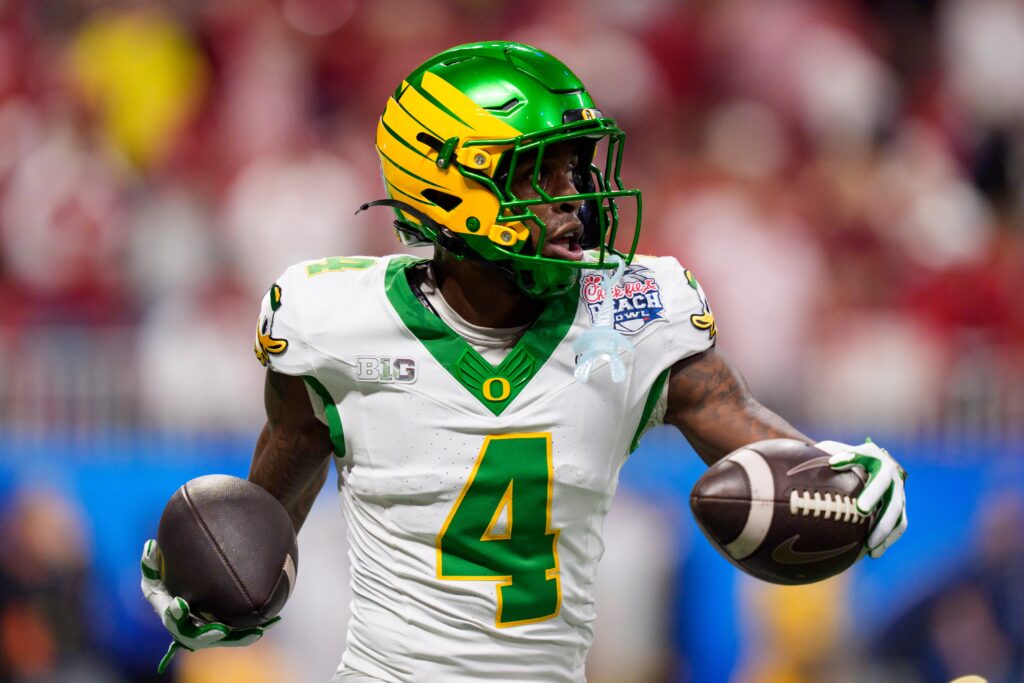
23. Caleb Douglas – Texas Tech
Douglas is a tall and speedy outside threat that some teams are going to fall in love with. He is a decent route runner and is smart enough to find leverage to get the ball in his hands consistently.
His combination of explosiveness, deep threat ability, and catch radius makes his a dynamic weapon who could prove to be a key contributor for an offense in different situations. He likely will just be a good rotational receiver, but has upside you look for.
However he has struggled with drops on tape and doesn’t play with enough physicality for his size. Despite his length he struggles to maintain contact balance, secure jump balls, and isn’t as imposing of a blocker as you’d hope.
24. Kevin Coleman Jr. – Missouri
Coleman is a quick, shifty slot receiver who excels in short-area situations. He creates separation with sudden movements and quick footwork. His hands are reliable, and he consistently secures the ball in traffic.
He is effective after the catch, using vision and agility to gain extra yards. His experience across multiple systems shows in his ability to adapt. He also brings value as a returner.
The limitations come with size and alignment versatility. He is primarily a slot receiver and may struggle outside. Physical defenders can disrupt him at the line. Even so, his quickness gives him a role.
Value: Day 3
25. Cyrus Allen – Cincinnati
Allen is a technically sound receiver who wins with route running and awareness. He creates separation with clean breaks and controlled movement. His ability to work the middle of the field and handle contact stands out.
He has improved his hands over time and shows reliability when targeted. His versatility allows him to run a variety of routes and contribute in different ways. He also produces after the catch when given space.
The limitations come with size and contested catch ability. He struggles against physical defenders and does not have a large catch radius. Blocking is also a weakness. Still, his technique gives him a path to contribute.
Value: Day 3