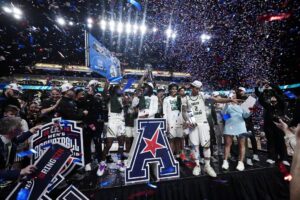
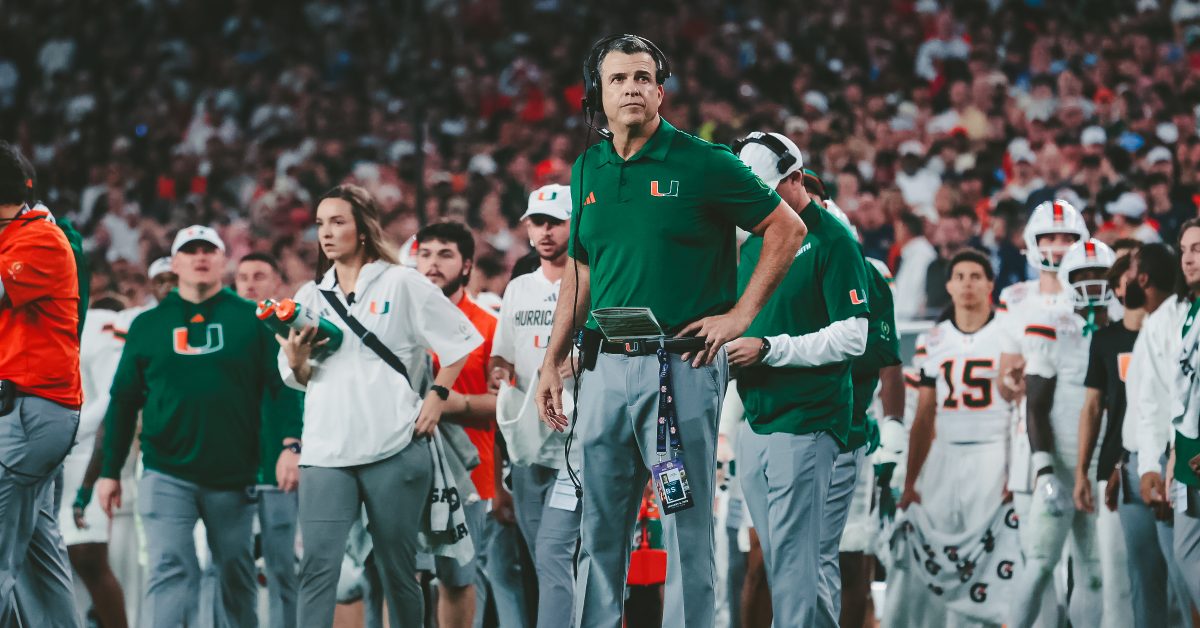

When college football reaches its final night of the season, when the confetti is packed away and only two teams remain, the national championship game becomes more than a contest—it becomes a reckoning.
For Miami, that stage has never been unfamiliar.
It’s where the Hurricanes built their reputation, forged their identity and left some of the most unforgettable moments in the sport’s history.
Miami’s relationship with the national championship began in 1983, when a game that still stands as one of the most shocking results in the sport’s history. Facing Nebraska in the Orange Bowl, Miami entered as a heavy underdog.
But behind fearless quarterback Bernie Kosar and a defense that refused to flinch, the Hurricanes pulled off a 31–30 upset, sealing the win when Nebraska’s two-point conversion failed in the final seconds. That moment didn’t just deliver Miami its first national title—it announced a new power willing to challenge without apology.
From there, Miami didn’t merely chase championships. It controlled them.
The 1987 national championship showcased Miami at its most confident. With Vinny Testaverde leading the offense, the Hurricanes defeated Oklahoma in the Orange Bowl, proving that the 1983 title was no fluke.
Two years later, in 1989, Miami produced one of the most dominant championship performances ever, overwhelming Alabama 33–25 in the Sugar Bowl. That game cemented the Hurricanes as the sport’s standard-bearer for speed, swagger and intimidation, making that the third national title within 10 years.
Perhaps no championship moment better represents Miami’s edge than 1991, when the Hurricanes defeated Washington to win another national title. It was a clash of unbeaten giants, and Miami’s defense rose to the moment, forcing turnovers and controlling the tempo on a night when the pressure could not have been higher.
Then came 2001, a season and a championship that still defines greatness in college football. Miami entered the Rose Bowl as the undisputed No. 1 team in the country, loaded with future NFL stars at nearly every position.
Against Nebraska, the Hurricanes delivered a masterclass, winning 37–14 in a game that felt decided long before the final whistle. Big plays, suffocating defense, and relentless confidence turned the national championship into a coronation. For many, that game represents the peak of modern college football dominance.
But the national championship game also carries heartbreak, and Miami knows that side of history too.
The 2003 BCS National Championship against Ohio State remains one of the most debated games ever played. Miami battled through adversity, forcing overtime and seemingly making the defensive stop that would secure another title—only for a late penalty flag to extend the game.
Ohio State eventually prevailed, and the loss still echoes as a reminder of how unforgiving the championship stage can be.
Those moments—both triumphant and painful—are what define the national championship game itself. It is where split-second decisions, controversial calls and legendary performances live forever. From goal-line stands to last-minute drives, the game has always demanded composure under pressure and greatness when there is nowhere left to hide.
Across eras—from the bowl coalition days to the BCS and now the College Football Playoff—the national championship game has remained the sport’s ultimate test.
Teams aren’t remembered for how they got there, but for how they performed when everything was on the line.
Historically, that environment has suited Miami. The Hurricanes’ greatest teams didn’t shrink in the spotlight—Miami embraced it. Playing fast, played physical and played with the understanding that championships aren’t given, they’re taken.
As college football continues to evolve, the national championship game still serves the same purpose it always has: separating contenders from legends. And for Miami, that stage has never been just a destination—it’s been a proving ground.
For Hurricanes fans, the memories of confetti falling, goalposts shaking and opponents overwhelmed are reminders of a program built for the biggest moments.
When Miami reaches the national championship game, history suggests one thing is always true: something unforgettable is about to happen back in the Rock