
Houston Texans
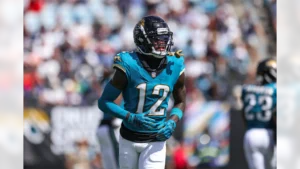
Round 1, Pick 26 (from BUF): Keylan Rutledge, G, Georgia Tech
The Texans opened their draft with one of the biggest reaches of the first round according to my board. I viewed Keylan Rutledge as a late second-round prospect, and there were still multiple guards available whom I had graded higher. Houston clearly prioritized rebuilding the offensive line and believed Rutledge was their guy, but the value simply did not line up with where I ranked him and the fact they traded up to get him makes the value even worse. Still, Rutledge fills a major need and brings positional flexibility with the ability to potentially play center if needed. He plays with strength and physicality and should fill an immediate starting role despite the questionable selection.
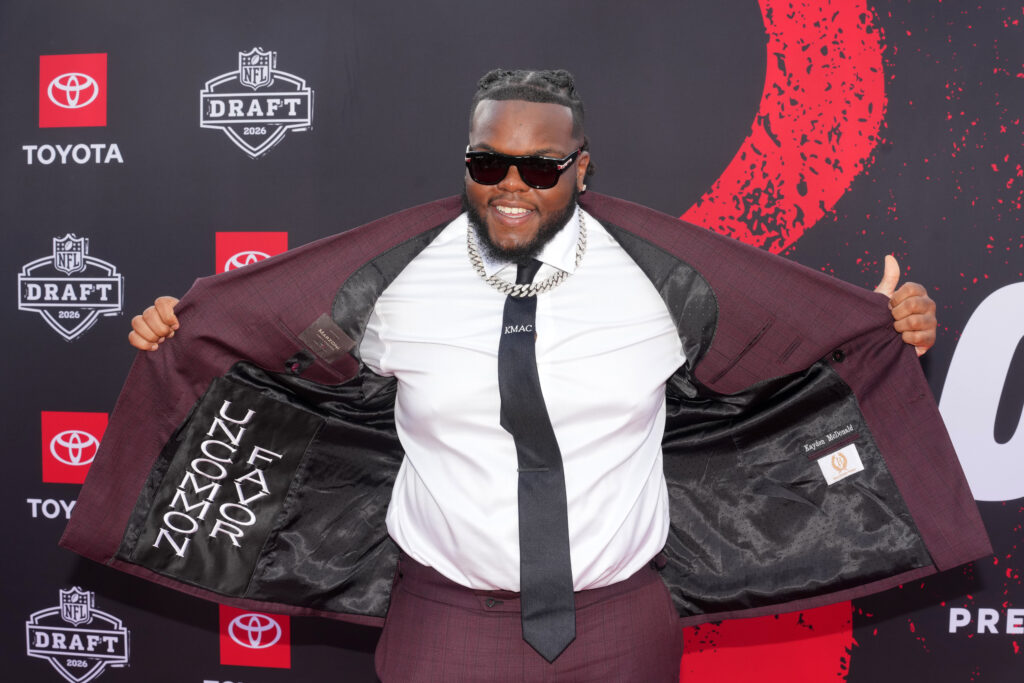
Round 2, Pick 36 (from LV): Kayden McDonald, DT, Ohio State
Kayden McDonald was easily my favorite selection Houston made in this draft. He was the best nose tackle in the class and a premier run defender, giving the Texans a dominant interior presence who should immediately improve the entire front seven. McDonald’s ability to occupy blockers and clog rushing lanes will create more opportunities for both Will Anderson Jr. and Danielle Hunter off the edge. This was one of the few picks where value, fit, and upside all aligned perfectly for Houston, and I expect McDonald to become an impactful piece very early in his career.
Round 2, Pick 59: Marlin Klein, TE, Michigan
Marlin Klein was one of the biggest reaches in the entire draft according to my board. I viewed him as a seventh-round talent, yet Houston selected him late in the second round after a run on tight ends began. Klein projects primarily as a blocking tight end, but even within that role there were several tighter ends I thought were superior blockers while also offering more upside as receivers. He lacks ideal athletic traits and never produced much in the passing game at Michigan. Houston clearly valued his toughness and fit within the offense, but this was a puzzling gamble far above his value.
Round 4, Pick 106 (from WAS): Febechi Nwaiwu, G, Oklahoma
The Texans double dipped on guards early by selecting Febechi Nwaiwu. He came off the board slightly earlier than expected, but the value is fine. I understand the fit much more here than with Houston’s earlier reaches. Nwaiwu was one of the most reliable pass-blocking interior linemen in college football and consistently handled pressure well against quality competition. He brings toughness, stability, and starting upside to an offensive line that desperately needed reinforcements. I would not be surprised if both Nwaiwu and Rutledge are starting games for Houston by the end of the season.
Round 4, Pick 123 (from LAC): Wade Woodaz, LB, Clemson
Wade Woodaz is a smart linebacker with intriguing upside, but this was another reach relative to my board. Woodaz saw a major regression in production during his senior season, posting fewer tackles, sacks, pass breakups, forced fumbles, and interceptions despite playing a full year. Initially, it seemed Houston drafted him as a possible replacement for Azeez Al-Shaair, but the Texans later re-signed Al-Shaair to a major extension, leaving Woodaz without a clear pathway to a starting role. He still could prove to develop well for their defense, but the value isn’t there and I don’t see him becoming a starter for this team in the near future.
Round 5, Pick 141 (from CLE/LV): Kamari Ramsey, S, USC
Kamari Ramsey was one of the better value selections in Houston’s class. I had Ramsey graded as an early fourth-round prospect, so landing him in the fifth round was good value. He likely will not see major defensive snaps immediately because of Houston’s depth at safety, but it would not surprise me if he finds his way onto the field over Reed Blankenship eventually. Ramsey plays with good instincts, toughness, and versatility in coverage, and he has the upside to eventually develop into a long-term starter.
Round 6, Pick 204: Lewis Bond, WR, Boston College
The Lewis Bond selection was underwhelming from both a value and roster construction perspective. Bond is undersized yet is also slower than the average receiver despite being just 5’9. While he is a respectable route runner and competes hard, his production profile was limited and I did not personally view him as a draftable player due to a devastating lack of athleticism. Houston already has a crowded receiver room as well, making it difficult to envision a clear pathway for Bond to make the roster. He projects as a depth receiver and practice squad developmental option.
Round 7, Pick 243 (from SF): Aidan Fisher, LB, Indiana
Aidan Fisher was decent value in the seventh round and at least provides quality depth at linebacker and on special teams. Fisher lacks high-end athletic upside, which limits his long-term ceiling defensively, but he plays hard and consistently finds himself around the football. The bigger issue is roster fit after Houston had already selected Woodaz earlier in the draft and retained Al-Shaair long term. Fisher’s most realistic early role will likely come on special teams, though he could eventually develop into a reliable rotational linebacker with enough growth.
Texans Draft Class Summary
Houston addressed multiple major needs, but they reached very far down the board consistently throughout the draft and never had a home run selection to make up for it. Kayden McDonald was the lone selection I truly loved from both a value and talent standpoint, while several other picks felt like throw-aways. They brought in players that could become long-term starters, but overall this class lacked strong value or upside throughout and simply did not move the needle enough for a team trying to contend in my eyes.
Overall Grade: D
Indianapolis Colts
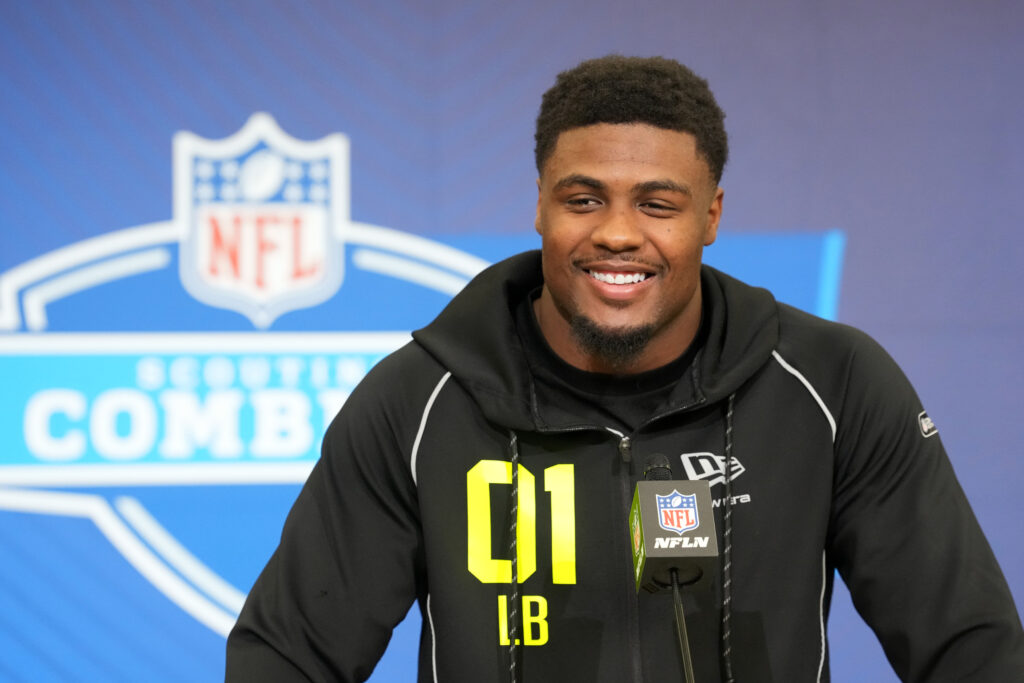
Round 2, Pick 53: CJ Allen, LB, Georgia
CJ Allen was an excellent addition for Indianapolis and immediately gives the Colts a potential leader in the middle of their defense. Allen is one of the best tacklers and run defenders in the class, consistently displaying strong instincts and physicality against the run. Coverage remains the weakest part of his game, but the athletic tools and football IQ are there for him to eventually develop into a more complete linebacker. Indianapolis needed stability at the position, and Allen should quickly establish himself as an immediate starter and defensive signal caller.
Round 3, Pick 78: A.J. Haulcy, S, LSU
A.J. Haulcy was one of the best value picks Indianapolis made all weekend. I viewed Haulcy as a second-round talent because of his production, reliability, and overall instincts in the secondary. He slid largely due to concerns about his athletic ceiling, but the tape consistently showed a player capable of making plays around the football. Haulcy should compete for an immediate starting role opposite Cam Bynum and gives Indianapolis another smart, dependable piece in the secondary who can contribute both in coverage and against the run.
Round 4, Pick 113: Jalen Farmer, OG, Kentucky
Jalen Farmer may quietly become one of the biggest steals of the Colts’ draft class. Farmer is an outstanding athlete for the guard position with excellent upside as both a pass blocker and run blocker at the next level, and I love the value as I had Farmer as a late second-round talent. Indianapolis already possesses a strong offensive line, so he may not see immediate playing time, but this is exactly the type of developmental player worth investing in during the middle rounds. Farmer has long-term starting upside and could eventually develop into a cornerstone piece along the interior offensive line.
Round 4, Pick 135: Bryce Boettcher, LB, Oregon
The Colts doubled down at linebacker with Bryce Boettcher, another productive and physical defender who consistently displayed strong tackling ability in college. Like Allen, coverage remains the biggest question mark in his game, which makes the fit slightly awkward because the two players share similar weaknesses. Still, Indianapolis entered the draft extremely thin at linebacker and needed additional depth badly. Boettcher should immediately contribute on special teams and could eventually push for a starting role depending on how quickly he develops within the defense.
Round 5, Pick 156: George Gumbs Jr., EDGE, Florida
George Gumbs Jr. was one of the weaker value selections in Indianapolis’ class according to my board. I had Gumbs as a 7th round prospect because his pass-rushing upside feels fairly limited. However, he brings toughness, physicality, and strong special teams value to the roster. Indianapolis clearly valued his motor and ability to contribute in multiple phases early in his career. While I am not confident he will become a major rotational edge rusher, Gumbs at least offers reliable depth and special teams upside.
Round 6, Pick 214: Caden Curry, EDGE, Ohio State
I liked the value on Caden Curry more than the Gumbs selection. Curry consistently produced at Ohio State while facing top-level competition and showed much more production as a pass rusher. He lacks ideal size or athletic traits, which caused him to slide deeper into the draft, but the tape itself was much stronger than where he was ultimately selected. Curry has a good chance to outperform his draft slot and could eventually become a reliable rotational edge defender for Indianapolis.
Round 7, Pick 237: Seth McGowan, RB, Kentucky
Seth McGowan was a decent selection late in the draft and gives Indianapolis quality depth at running back. He enters behind both Jonathan Taylor and DJ Giddens on the depth chart, which likely limits his immediate opportunities offensively. However, McGowan runs hard, offers good athleticism, and has enough ability to capitalize if opportunities are created. Given Taylor’s injury history, it would not be surprising to eventually see McGowan be thrust into a meaningful role earlier than we’d expect.
Round 7, Pick 254: Deion Burks, WR, Oklahoma
Deion Burks was the biggest steal of Indianapolis’ class in my eyes. Despite being undersized, Burks brings elite speed, explosiveness, and return ability to the table. I viewed him as a round 3-4 talent because of the dynamic vertical threat he provides offensively along with his special teams ability. He fits perfectly into a Rashid Shaheed-style role where his speed can stress defenses vertically while also creating dynamic opportunities as a returner. If Burks develops properly, he could dramatically outperform his seventh-round draft position and become one of the better late-round picks in the class.
Colts Draft Class Summary
Considering Indianapolis lacked a first-round pick and only held one selection in each of the second and third rounds, this was a very strong overall class. The Colts consistently found value throughout the draft and added four players I viewed as top 100 prospects. Allen, Haulcy, and Farmer all have strong starting upside, while Burks could end up becoming one of the biggest steals in the entire class. Indianapolis improved both the depth and long-term stability of its roster with this group.
Overall Grade: A
Jacksonville Jaguars
Round 2, Pick 56: Nate Boerkircher, TE, Texas A&M
The Jaguars’ selection of Nate Boerkircher has received far more criticism than it deserves. Boerkircher was the best blocking tight end in the entire draft class and offers better athletic upside than many give him credit for. I had him as a third-round talent so the value was not ideal, but this draft clearly showed that NFL teams valued tight ends much higher than they have in the past. Teams are looking to replicate the success the Rams found with multiple tight end sets using Tyler Higbee, Colby Parkinson, and Terrance Ferguson. Yes the selection of Boerkircher was a reach down my board by one round, but compared to other tight end selections such as the Texans taking Klein just three picks later, this selection is far far better. With that being said, the Jaguars had more pressing needs in my eyes and Boerkircher is already 24 years old with limited receiving production in college.
Round 3, Pick 81: Albert Regis, DT, Texas A&M
Albert Regis was another moderate reach according to my board as I had Regis as a fourth-round talent, but the fit made plenty of sense for Jacksonville’s defense. The Jaguars badly needed additional size and toughness along the interior defensive line, and Regis brings both of those traits to the table. He is a strong run defender with good power at the point of attack and should contribute immediately within the defensive tackle rotation. While I barely had him outside of my top 100 players, Regis fills a legitimate need and has enough upside to eventually become a reliable starter if he develops properly.
Round 3, Pick 88: Emmanuel Pregnon, OG, Oregon
Emmanuel Pregnon was easily the best selection Jacksonville made and was one of the biggest steals in the entire draft according to my board. I had Pregnon graded as a late first-round prospect and viewed him as the top pure guard in the class behind only Vega Ioane. Pregnon is a powerful mauler who will look to put every defender he comes across in the dirt. He offers incredible athletic traits and displays great technique especially as a pass blocker. His age likely caused him to slide down boards already being 24, but Jacksonville may have landed an immediate starting right guard and long-term franchise piece without spending premium draft capital. This was an outstanding selection both in value and fit, and overall is a better player than I expected to be available to them at any point in this draft without trading up.
Round 3, Pick 100: Jalen Huskey, S, Maryland
Jalen Huskey was one of the more confusing selections in Jacksonville’s draft class. Huskey produced well in college and showed good instincts as a ball hawk, but he lacks the athletic upside or speed I typically look for at the position. I viewed him as more of a fifth or sixth-round prospect, making this another significant reach relative to my board. Safety also was not a major need for Jacksonville after Antonio Johnson emerged as the league’s highest rated safety last season while they just brought in both Eric Murray and Caleb Ransaw last offseason. Huskey enters a crowded room and may struggle to carve out a major role, but they may move either Huskey or Ransaw to cornerback to provide more depth on the perimeter behind Travis Hunter and Montaric Brown.
Round 4, Pick 119: Wesley Williams, EDGE, Duke
Wesley Williams was another player Jacksonville selected far earlier than I expected. Williams has solid length and good instincts off the edge, but the explosiveness and consistency as a pass rusher are lacking. I viewed him as more of a seventh-round talent because the overall upside is fairly limited compared to other edge rushers available in this range. Still, edge depth was a legitimate need for Jacksonville, and Williams at least provides developmental depth behind the Jaguars’ starting pass rushers. He will likely need to contribute on special teams early while refining his pass-rushing ability.
Round 5, Pick 164: Tanner Koziol, TE, Houston
Tanner Koziol was decent value in the fifth round and was the 13th player at the position drafted despite being my TE10. However the selection itself was difficult to understand after Jacksonville already invested heavily at tight end earlier in the draft. Koziol was ridiculously productive in college and offers great length as a pass catcher, but his lack of athleticism and weight limit some of his upside. The Jaguars already have Brenton Strange starting, selected Boerkircher in the second round, and have Quentin Morris as a strong third tight end, making another investment at the position feel unnecessary. I’m assuming the Jaguars will roster all four players and I like the player and value, but was a TE3 or 4 worth the selection?
Round 6, Pick 191: Josh Cameron, WR, Baylor
Josh Cameron was a solid depth addition at receiver and fit the value range I expected for him. Jacksonville did not have a major need at wide receiver, but Cameron gives them a reliable rotational outside option behind their top weapons. This addition is essentially their Tim Patrick replacement, who left in free agency. I expect Cameron to see the field early on, just not very often. He is a good physical presence for them outside, but he is stuck behind maybe the most talented receiver quartet in the league in Thomas Jr., Washington, Meyers, and Hunter. Overall, the value and fit make sense as he is the last piece to their receiver room in my eyes.
Round 6, Pick 203: CJ Williams, WR, Stanford
The CJ Williams selection was one of the most puzzling picks Jacksonville made throughout the draft. After just selecting Cameron and having an extremely crowded receiver room already, adding another receiver did not make sense to me. In my evaluation Williams didn’t standout in any way, was too inconsistent to produce well, and lacks athletic upside teams would fall for banking on upside. I personally did not have a draft-able grade on Williams and I’m struggling to see how Williams even finds himself on the 53-man roster unless he beats out Cameron for the job or they carry 6 wideouts.
Round 7, Pick 233: Zach Durfee, EDGE, Washington
Zach Durfee may quietly become one of the best value picks made in the draft. Durfee offers elite athletic traits with outstanding explosiveness, length, and speed rushing off the edge. Injuries complicated much of his college career and caused him to slide heavily down boards, but the physical upside here is tremendous for a seventh-round selection. Jacksonville needed additional edge depth badly, and Durfee gives them a developmental pass rusher with much higher upside than most players typically available at this point in the draft. He was even named ESPN’s annual “Prospect X” as a potential uncovered diamond in this year’s class. Durfee had a tough road to the league, but his upside and leadership skills could turn this into a home run addition for the Jaguars.
Round 7, Pick 240: Parker Hughes, LB, Middle Tennessee State
Parker Hughes was an excellent late-round addition and again one of my favorite picks in Jacksonville’s class. Hughes combines high-level athleticism with strong production after being the first player at Middle Tennessee to record over 100 tackles since 2013, while also running a sub-4.4 40-yard dash at 6’0 225. To put it simply, Hughes is an athletic freak and put up numbers that haven’t been seen at his school in over a decade while serving as a 3 time captain. Linebacker was one of Jacksonville’s biggest needs entering the draft, so while it took them too long to address the need, this pick makes tons of sense. Hughes should immediately contribute heavily on special teams and has enough athletic ability to potentially develop into a starting linebacker despite his draft position.
Jaguars Draft Class Summary
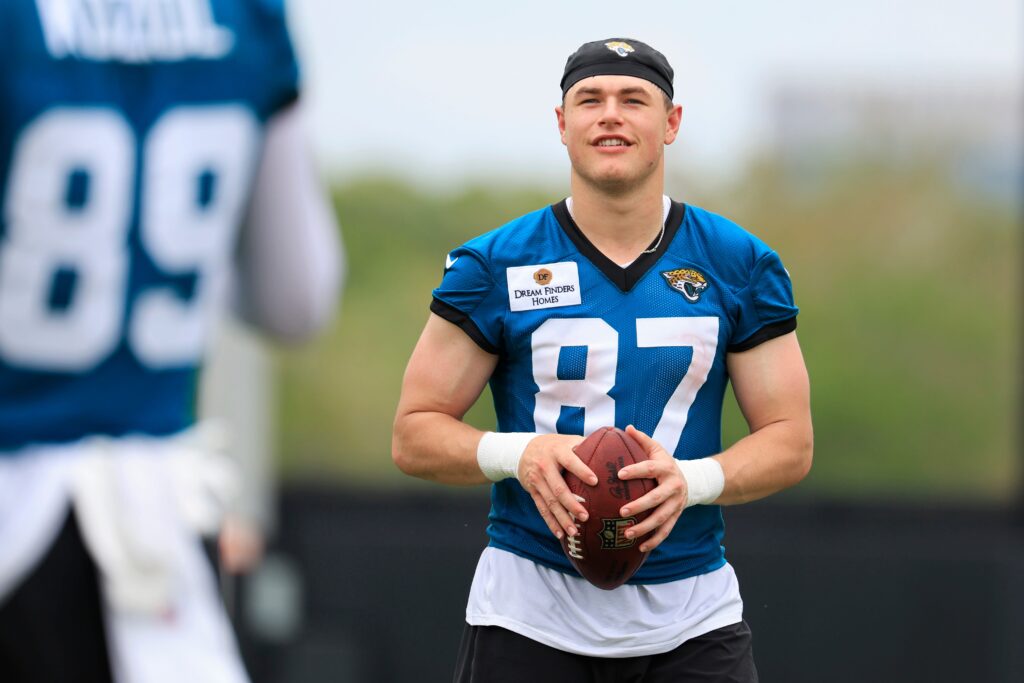
Jacksonville’s draft class was easily the most polarizing in the league. Emmanuel Pregnon heavily carries the overall value of the class, while players like Boerkircher and Regis at least project as good scheme fits who should contribute early. However, the Jaguars consistently reached down the board and made several questionable positional investments. Outside of Pregnon, two of my favorite picks Jacksonville made were funnily enough their seventh-round selections. The class has upside, but overall I thought the Jaguars left too much value on the board and never properly addressed positions I viewed as needs in running back, corner, and linebacker.
Overall Grade: D+
Tennessee Titans
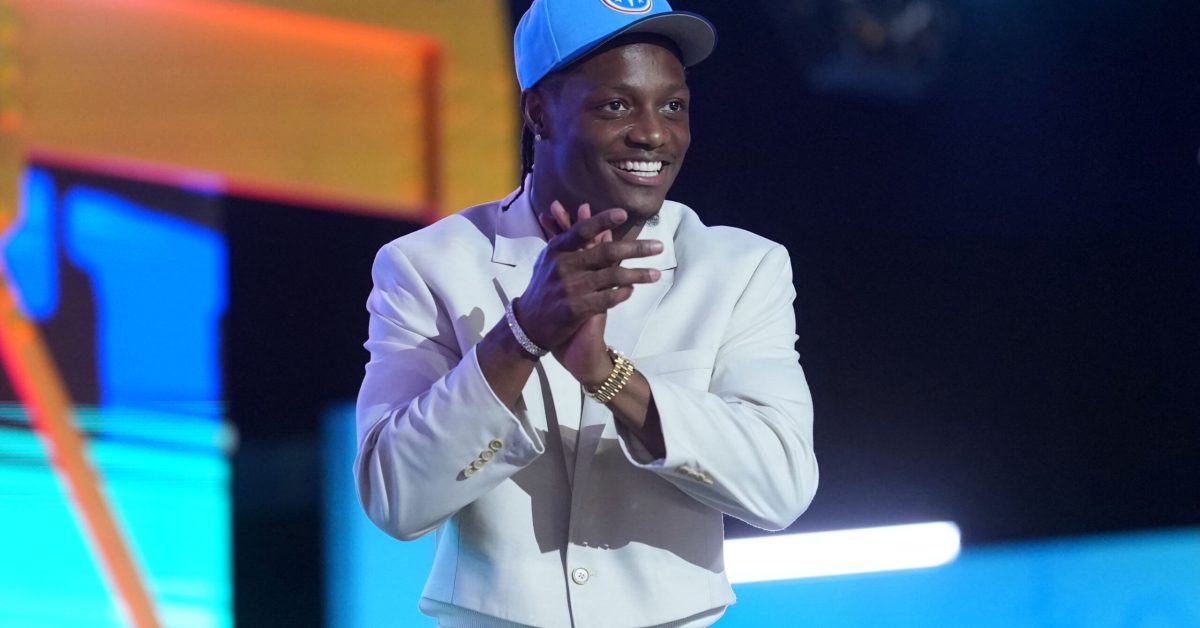
Round 1, Pick 4: Carnell Tate, WR, Ohio State
Carnell Tate immediately gives Tennessee a true No. 1 receiving option for Cam Ward and the offense moving forward. While I viewed Tate as a slight reach at fourth overall, he still drastically upgrades a receiver room that needed another high-end playmaker. Tate brings strong route running, reliable hands, and the ability to consistently win downfield. I personally thought Arvell Reese would have been the ideal selection here for Tennessee, but Tate still projects as an immediate impact player who should quickly become the focal point of the passing attack alongside the recently signed Wan’Dale Robinson.
Round 1, Pick 31: Keldric Faulk, EDGE, Auburn
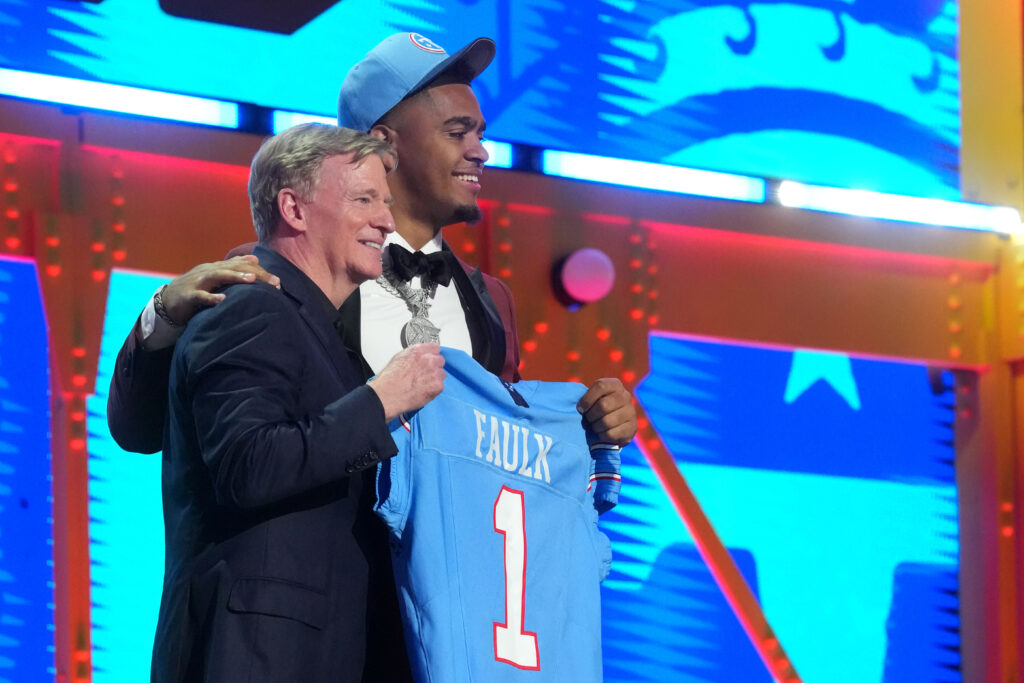
Trading back into the first round for Keldric Faulk was one of my favorite moves Tennessee made during the draft. Faulk possesses outstanding physical tools with elite length, strength, and athletic upside as an edge defender. He is already one of the best run defenders in the entire class, just his pass-rushing consistency still needs major refinement. Tennessee clearly valued the traits and long-term upside here, and I believe Faulk has the potential to develop into a high-level starting edge rusher if his pass-rush plan continues improving over the next few seasons.
Round 2, Pick 60: Anthony Hill Jr., LB, Texas
Anthony Hill Jr. was one of the biggest steals of the second round according to my board. I viewed Hill as an early second-round talent and my LB3 overall because of the athleticism, versatility, and coverage ability he brings to the position. Tennessee managed to land him much later than expected, giving the defense an immediate starter with tremendous range and playmaking ability. Hill should quickly become a major contributor for the Titans and dramatically improve the overall speed and physicality of their linebacker room moving forward.
Round 5, Pick 142: Fernando Carmona, OG, Arkansas
Fernando Carmona is a physically gifted offensive guard with the size and movement skills teams look for along the interior offensive line. However, his tape remained inconsistent throughout college, and he still needs significant technical development before he can become a reliable NFL starter. I viewed this as a reach relative to my board because of how raw his overall game still is. Tennessee clearly valued the traits and developmental upside, but Carmona likely will need time before he is ready to contribute consistently at the professional level.
Round 5, Pick 165: Nicholas Singleton, RB, Penn State
Nicholas Singleton was one of my favorite value picks Tennessee made. Singleton was my top running back remaining on the board at the time and a player I viewed as a fourth-round talent. He possesses every physical trait teams want at the position with size, speed, explosiveness, and strong burst as a runner. Penn State leaned more heavily on Kaytron Allen as the season progressed which hurt Singleton’s stock, but the upside remains very intriguing. Tennessee now adds another talented runner who could eventually challenge for a starting opportunity over Tony Pollard or Tyjae Spears.
Round 6, Pick 184: Jackie Marshall, DT, Baylor
Jackie Marshall is an interesting developmental prospect because of the athletic traits he brings after transitioning from linebacker to defensive tackle earlier in his career. His burst and movement ability stand out compared to many defensive tackles, but the lack of ideal strength and length creates clear concerns about how he will hold up against NFL offensive linemen. I viewed this as another reach relative to my board, though Tennessee clearly prioritized upside and athletic tools with this selection over immediate production or polish.
Round 6, Pick 194: Pat Coogan, C, Indiana
Pat Coogan projects as a smart, experienced center who could eventually become a quality backup along the interior offensive line. He processes the game well mentally and consistently displayed strong awareness at Indiana, which should help him transition to the next level. However, Coogan lacks the athletic traits that would normally make you optimistic about his long-term upside as a starter. Tennessee needed additional offensive line depth, and Coogan at least provides reliability and experience even if his ceiling ultimately feels somewhat limited.
Round 7, Pick 225: Jaren Kanak, TE, Oklahoma
Jaren Kanak was one of the more fascinating late-round developmental tight ends in the draft. After spending the first 3 seasons of his college career at linebacker, Kanak transitioned to tight end and immediately flashed intriguing upside because of his athleticism and speed putting up over 500 yards but 0 touchdowns. He still remains very raw at the position and needs major refinement as both a blocker and route runner, but the physical tools are worth gambling on this late in the draft.
Titans Draft Class Summary
The Titans improved with this draft, however their lack of draft capital after the second round left them with a multitude of major needs unaddressed. Their first three selections all project as immediate impact starters, but I don’t see any of their later additions making much impact early on aside from maybe Singleton. Tennessee will improve this upcoming season without a doubt, but after this draft they are still too weak of a roster in my eyes to truly compete with good teams consistently. Until they prove differently it’s looking like they’ll be sitting at the bottom of the division yet again.