
Buffalo Bills
Round 2, Pick 35: TJ Parker, OLB, Clemson
The Bills made one of the smartest moves in the draft by trading down out of the first round and still landing T.J. Parker early in the second. Buffalo added additional draft capital, avoided a first-round contract, and still landed a player I viewed as a first-round talent. Parker fills one of the biggest needs on the roster as a young pass rusher with strong upside and proven production at Clemson. He still needs refinement technically, but the athletic traits and physical tools are very intriguing. With Gregory Rousseau and Bradley Chubb already on the roster, Buffalo can afford to develop Parker patiently while still getting situational production early in his career. There is the negative of losing out on the 5th year option on Parker, but being able to accumulate resources and still get a first round talent on my board during day 2 is incredible.
Round 2, Pick 62: Davison Igbinosun, CB, Ohio State
Davison Igbinosun went slightly earlier than I personally would have selected him, as I had him graded closer to the third round, but the overall fit makes a lot of sense for Buffalo. The Bills needed another outside corner capable of starting opposite Christian Benford, and Igbinosun fits the physical identity of their defense very well. He is a long, aggressive boundary corner who plays with confidence and consistently challenges receivers at the catch point. While he still has some inconsistencies in coverage technique, Buffalo added a promising defender who should start for them out of the gate to improve their defense.
Round 4, Pick 102: Jude Bowry, T/G, Boston College
Jude Bowry was selected right around where I expected him to go and gives Buffalo valuable versatility along the offensive line. Bowry has the size and toughness to potentially develop as Dion Dawkins’ eventual replacement at left tackle, but he also has the flexibility to slide inside and compete at guard immediately. After losing David Edwards in free agency, the Bills needed more depth and long-term security up front. Bowry may not be an instant starter, but he gives Buffalo another young offensive lineman capable of filling multiple roles while developing behind veteran players.
Round 4, Pick 125: Skyler Bell, WR, Connecticut
Skyler Bell was one of my favorite value additions in Buffalo’s class. I viewed Bell as a third-round talent because of the explosiveness and versatility he brings offensively. The Bills have a somewhat unconventional receiver room stylistically, but Bell gives Joe Brady another dynamic weapon who can line up in multiple spots and create after the catch. He may not immediately become a top target in the offense, but there is a realistic pathway for him to eventually climb the depth chart and become a consistent contributor alongside DJ Moore and Khalil Shakir.
Round 4, Pick 126: Kaleb Elarms-Orr, LB, TCU
Kaleb Elarms-Orr was another solid selection by Buffalo and a player I had valued around this range. He is a quick, instinctive linebacker who thrives attacking downhill against the run and displays good range sideline to sideline. Buffalo has continued trying to get younger and faster defensively, and Elarms-Orr fits that approach perfectly. He may initially contribute more heavily on special teams and in rotational packages, but he has enough athleticism and instincts to eventually compete for a starting role within the defense.
Round 5, Pick 167: Jalon Kilgore, S, South Carolina
Jalon Kilgore may end up being the best value selection in Buffalo’s entire class. I had Kilgore graded as a third-round talent because of the physicality, versatility, and instincts he brings to the safety position. He is excellent attacking downhill against the run while also flashing strong awareness in zone coverage by reading quarterbacks and creating opportunities on the football. His man coverage technique still needs development, but the overall upside is very intriguing. Kilgore has a legitimate chance to eventually compete for a starting role within Buffalo’s secondary.
Round 5, Pick 181: Zane Durant, DT, Penn State
Zane Durant was another strong value addition for Buffalo in the later rounds. Durant is an elite athlete for the defensive tackle position and consistently flashed explosiveness off the line at Penn State. His lack of ideal size and struggles handling double teams limited his overall production, but the physical upside is undeniable. Buffalo added another developmental defensive lineman with intriguing traits who can rotate in early while refining the weaker parts of his game. If the Bills can maximize his athleticism, Durant could eventually become a disruptive interior pass rusher.
Round 7, Pick 220: Toriano Pride Jr., CB, Missouri
Toriano Pride Jr. was an excellent late-round pickup and one of my favorite seventh-round selections overall. Pride was my top remaining cornerback available at this stage and also happened to be the fastest cornerback at the combine after running a 4.32 forty-yard dash. Buffalo added an elite athlete with real developmental upside for very little cost. Even if Pride initially contributes mostly on special teams, the physical tools alone make him an intriguing long-term project who could eventually become a valuable rotational cornerback.
Round 7, Pick 239: Tommy Doman Jr., P, Michigan
Buffalo addressed special teams late in the draft by selecting Tommy Doman as a potential long-term replacement at punter. Doman does not possess the strongest leg in the class, but his elite hang time made him one of the most consistent punters in college football at limiting return opportunities. The Bills clearly valued field-position control and coverage support over pure distance with this selection. While punter selections rarely generate excitement, Doman fits the style of special teams player Buffalo has consistently prioritized under this regime.
Round 7, Pick 241: Ar’maj Reed-Adams, OG, Texas A&M
Ar’maj Reed-Adams was another strong value addition late in the draft and gave Buffalo more depth along the interior offensive line. Reed-Adams is a large, physical guard who fits well within Buffalo’s downhill rushing attack and provides important depth after the loss of David Edwards. He likely will not compete for an immediate starting role, but the Bills did a good job consistently adding developmental offensive linemen throughout this class. Reed-Adams has enough strength and size to eventually become a quality rotational player if he continues developing technically.
Bills Draft Class Summary
Buffalo did an outstanding job maximizing its draft resources after moving out of the first round. The Bills consistently stayed patient with their board, rarely forced selections, and found quality value throughout the class. Despite having no first round selections and just two picks in the top 100, they managed to come away with 5 players I had top 100 on my board in Parker, Igbinosun, Bell, Elarms-Orr, and Kilgore. They also had two more players who just missed the cut as early fourth round talents on my board in Bowry and Durant. Overall, the Bills did a remarkable job with the capital they had and did enough in my eyes to not just stay afloat, but to even improve going into next year.
Overall Grade: A
Miami Dolphins
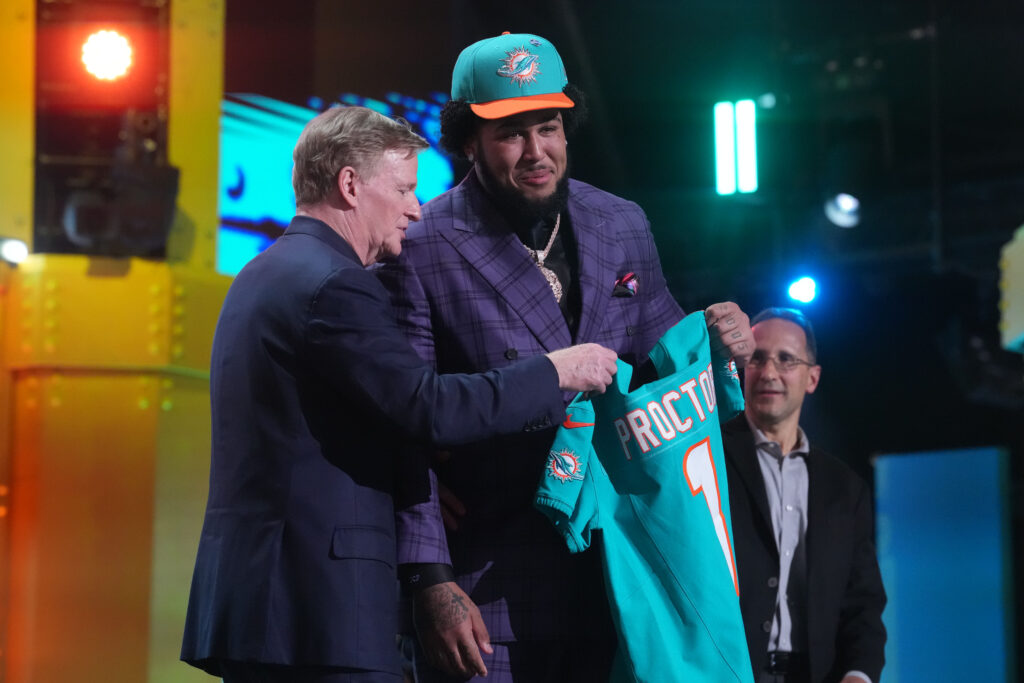
Round 1, Pick 12: Kadyn Proctor, OT, Alabama
The Dolphins opened the draft by selecting Kadyn Proctor, who is expected to transition inside and play guard at the NFL level. I do believe guard is ultimately the best fit for Proctor’s skillset because of his power and physicality, but this was still a fairly large reach according to my board. I had Olaivavega Ioane graded significantly higher and believed he would have been the ideal fit for Miami’s offensive line. Proctor still projects as a quality starter long term and fills a major need, but passing on the clear top guard in the class could eventually become a decision Miami regrets.
Round 1, Pick 27: Chris Johnson, CB, San Diego State
Chris Johnson was a very solid selection by Miami both in terms of value and positional need. Cornerback was one of the biggest weaknesses on the roster so going out to get a trustworthy talent on the boundary was crucial for the Dolphins. I had Johnson graded as a late first-round talent and my CB4 in the class. While he was the second corner taken off the board, this was about where I valued Johnson and I was not accounting for my CB2 Jermod McCoy’s injury history. Ultimately I think this was a necessary pick and Johnson’s combination of athleticism, length, and upside make him the top cornerback of the team right away.
Round 2, Pick 43: Jacob Rodriguez, LB, Texas Tech
Jacob Rodriguez was my favorite addition in Miami’s entire draft class. I had Rodriguez graded as a late first-round talent and my LB2 overall because of the leadership and complete skillset he brings. He is instinctive against the run, moves extremely well in coverage, and consistently flies sideline to sideline making plays. Rodriguez also brings strong football IQ as a defensive signal caller and has an incredible knack for finding the football causing an absurd amount of turnovers. I fully expect him to establish himself as a long-term starter next to Jordyn Brooks and eventually takeover as the captain of Miami’s defense.
Round 3, Pick 75: Caleb Douglas, WR, Texas Tech
Caleb Douglas was one of the biggest reaches in the entire third round according to my board. I had Douglas ranked as my WR23 overall, yet Miami selected him as the 11th receiver off the board. Douglas will have every opportunity to prove me wrong considering the Dolphins’ receiver room has been completely gutted leaving Douglas as the immediate top receiver on the team, but there was an abundance of receivers I would have preferred at this selection as I had Douglas going 3 rounds later. Douglas is a quick and long receiver with a great catch radius. However he has struggled with drops, isn’t a refined route runner, and lacked ideal production to warrant this early of a pick. This simply felt like a very desperate selection, and while I can see why the Dolphins may have loved Douglas’ upside, the value here is a big negative.
Round 3, Pick 87: Will Kacmarek, TE, Ohio State
Will Kacmarek was another significant reach according to my board. Miami selected him as the eighth tight end, meanwhile he was the 16th tight end on my board and a late day 3 talent. Kacmarek similarly to Douglas does at least have a clear pathway to getting early play time because the Dolphins lack established talent at tight end outside of Greg Dulcich. Still, the value simply did not line up with where Miami selected him. The Dolphins clearly prioritized offensive need over overall prospect value throughout large portions of this draft. Even with the increased value of the position and the big run on tight ends, this is just a poor choice.
Round 3, Pick 94: Chris Bell, WR, Louisville
Chris Bell may end up becoming the biggest steal of Miami’s draft class. I viewed Bell as a second-round talent and my WR9 overall because of the size, production, and explosiveness he displayed when healthy. Injury concerns surrounding his ACL recovery caused him to slide even further than expected, but the upside here is extremely intriguing. Bell has the ability to win at all levels of the field and would’ve had a legitimate chance to go round 1 if he didn’t get hurt. If he fully returns to form, Miami could end up with one of the better receivers in this class.
Round 4, Pick 130: Trey Moore, EDGE, Texas
Trey Moore was another selection I struggled to understand from a value standpoint. I viewed Moore as a seventh-round talent because the overall upside as a pass rusher did not stand out enough to justify a mid-round investment. Miami likely views him as a developmental edge player opposite Chop Robinson moving forward, but there were several pass rushers still available whom I felt much more comfortable projecting into NFL rotations. Moore does bring some versatility as a hybrid linebacker-edge defender, though this still felt like a major reach overall.
Round 4, Pick 138: Kyle Louis, LB, Pittsburgh
Kyle Louis was one of the stronger value picks Miami made in the middle rounds. I viewed Louis as a third-round talent and he was my LB6 in the class because of the athleticism and coverage upside he brings at linebacker. He moves extremely well laterally, plays fast in space, and consistently impressed throughout the pre-draft process. The only real question with this selection is positional allocation after Miami already invested heavily at linebacker earlier with Rodriguez. Even so, Louis has the talent and versatility to eventually become a valuable contributor within the Dolphins’ defense.
Round 5, Pick 158: Michael Taaffe, S, Texas
Michael Taaffe was a smart and sensible addition for Miami at a position of major need. Safety was one of the thinnest areas on the roster, and Taaffe projects as a high-floor player who could realistically compete for early playing time. He is an instinctive defender with strong leadership qualities and consistently displayed reliability in the Texas secondary. Miami addressed a critical weakness while also selecting a player around where I expected him to go, making this one of the cleaner and more understandable selections in the class.
Round 5, Pick 177: Kevin Coleman Jr., WR, Missouri
Kevin Coleman Jr. was selected around where I expected him to go and gives Miami another rotational option at receiver. Coleman is a productive slot receiver who consistently found ways to contribute offensively, though his overall upside is somewhat capped because of his combination of lacking height and speed. Miami clearly wanted to aggressively rebuild the receiver room throughout this draft, and Coleman provides another dependable depth piece capable of contributing underneath and creating after the catch in short areas.
Round 5, Pick 180: Seydou Traore, TE, Mississippi State
Seydou Traore was another selection that was a reach according to my board, as I personally did not have a draft-able grade on him. Miami clearly wanted to completely rebuild the tight end room double dipping at the position, but neither of the players they selected were prospects I valued highly. Traore does possess intriguing size and developmental upside as a pass catcher, though his overall polish and consistency remain major concerns. Given Miami’s lack of depth at tight end, he could still eventually compete for snaps despite the poor value.
Round 6, Pick 200: DJ Campbell, OG, Texas
DJ Campbell was a reasonable late-round addition and provides more depth along the interior offensive line. Jonah Savaiinaea struggled heavily during his rookie season, so it makes sense for Miami to bring in competition and insurance behind him at guard. Campbell likely will not receive many opportunities early unless injuries occur or the current starters continue to struggle heavily, but he has enough size and physicality to eventually compete for a larger role. Miami did a solid job here adding affordable developmental depth to the offensive line.
Round 7, Pick 224: Max Llewellyn, EDGE, Pitt
Max Llewellyn was one of the better value selections Miami made and a player I thought offered solid value relative to his draft position. Llewellyn was my EDGE20 overall and Miami took him as the 24th edge defender selected. He wins with a polished pass-rush approach and flashes a surprisingly deep move set for a late-round prospect. While he still needs to become more consistent defending the run and finishing plays, the upside as a rotational pass rusher is very real. Miami finally added a true pure edge defender here rather than another hybrid projection.
Dolphins Draft Class Summary
Miami entered the draft with more draft capital than any team in the league and made more picks than anyone with 13 total selections including two first-round picks and six picks within the first three rounds. Despite those resources, the overall result feels extremely underwhelming. The Dolphins failed to land a single player I viewed as a top 20 prospect and only came away with five players I had top 100 on my board, two of whom being linebackers. I simply couldn’t see eye to eye with Miami’s selections as they consistently reached very far down my board to hastily take “their guy”. Given the state of the roster and the opportunities available, several of these players will likely get real chances to contribute early. But the Dolphins should’ve come away with a class that would blow me away as one of, if not the best hauls in the league. Instead, it feels like they were shooting darts blindfolded with half of these picks.
Overall Grade: D
New England Patriots
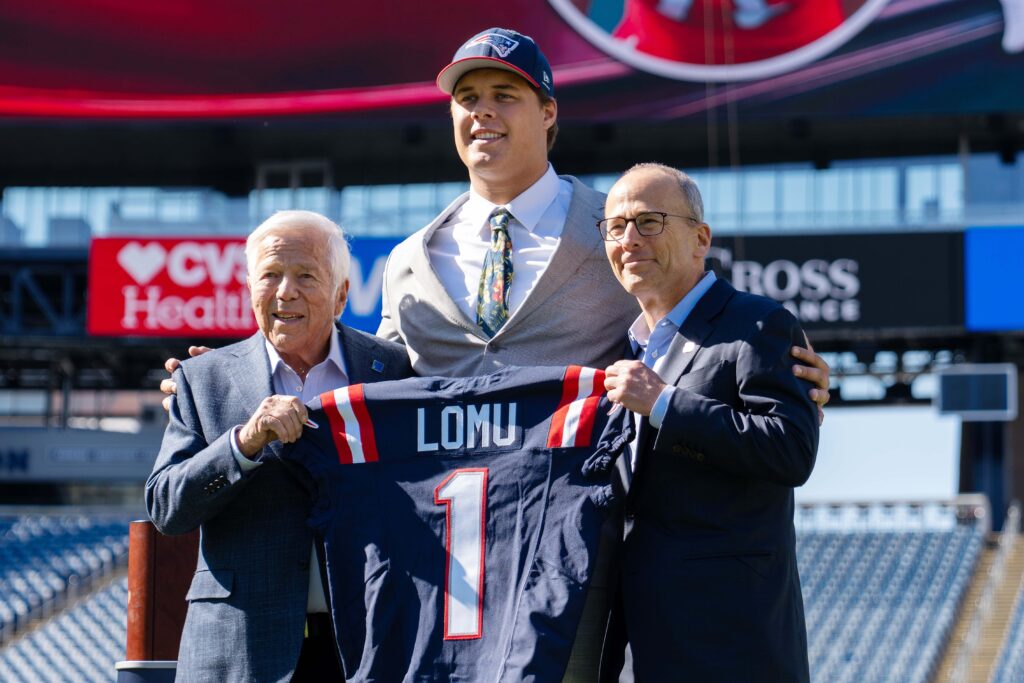
Round 1, Pick 4: Caleb Lomu, OT, Utah
The Patriots opened their draft by selecting Caleb Lomu, a massive and athletic offensive tackle who should immediately compete with Morgan Moses at right tackle. Overall, I thought the value was fair and the fit made plenty of sense for New England. The Patriots have clearly prioritized protecting Drake Maye long term, and now they have secured two young cornerstone tackles to build around offensively. Lomu still needs technical refinement, but the size, movement skills, and physical upside are all there for him to eventually become a long-term starter on the offensive line.
Round 2, Pick 38: Gabe Jacas, EDGE, Illinois
Gabe Jacas was one of my favorite selections in New England’s class. I had Jacas graded as a second-round talent and my EDGE10 overall, and the Patriots landed him as the 12th edge defender selected. Jacas brings explosiveness, motor, and pass-rushing upside to a defense that badly needed more young talent off the edge. He will likely begin the season rotating behind Harold Landry and Dre’Mont Jones, but I would not be surprised at all if Jacas eventually develops into the Patriots’ top pass rusher by the end of the year. This was an excellent fit and another smart investment into a premium position.
Round 3, Pick 69: Eli Raridon, TE, Notre Dame
The Patriots joined the massive tight end run by selecting Eli Raridon out of Notre Dame. Personally, I viewed this as a reach because I did not expect tight ends to come off the board as aggressively as they did, but relative to the rest of the class the selection lines up reasonably well. I had Raridon as my TE9 overall and he ended up becoming the ninth tight end selected. He possesses a massive frame, strong blocking upside, and intriguing developmental traits. While he is unlikely to challenge Hunter Henry immediately, Raridon has the tools to eventually become a starting-caliber tight end if he continues developing.
Round 5, Pick 144: Karon Prunty, CB, Kentucky
Karon Prunty was an aggressive fifth-round swing by New England on a physically talented cornerback. Prunty is long, competitive, and consistently attacks the football well at the catch point, making him an intriguing developmental outside corner. However, there are also major concerns with consistency and discipline in coverage. He transferred multiple times throughout college and played for four different programs, which makes projecting his long-term development somewhat difficult. The athletic tools are absolutely there, but this is a player who will need significant refinement before becoming a reliable contributor defensively.
Round 6, Pick 182: Dametrious Crownover, OT, Texas Tech
Dametrious Crownover was one of the better value selections in New England’s class. I had Crownover graded as a fourth-round talent because of the rare size, length, and athletic upside he brings at tackle. He likely will not see much playing time early considering the Patriots already invested heavily at offensive tackle, but he gives the team outstanding developmental depth. Crownover has the physical traits to eventually become an excellent swing tackle and potentially even a future starter if his technique continues improving over time.
Round 6, Pick 191: Namdi Obiazor, LB, NC State
Namdi Obiazor was selected almost exactly where I expected him to go and gives New England another athletic developmental linebacker to work with. Obiazor is a good overall athlete with intriguing upside and enough physical tools to eventually carve out a role defensively. The Patriots will likely rely heavily on veterans Christian Elliss and Robert Spillane early on, allowing Obiazor time to develop behind experienced players. While he may initially contribute more on special teams, the long-term developmental upside makes this a sensible late-round addition.
Round 7, Pick 220: Behren Morton, QB, Texas Tech
The Patriots made a somewhat surprising quarterback selection by drafting Behren Morton in the seventh round. I personally did not have Morton graded as a draftable player and fully expect Tommy DeVito to hold onto the primary backup role entering the season. Still, Morton makes sense as a practice squad developmental quarterback who can help stabilize depth behind Drake Maye. He likely will not see meaningful playing time barring injuries, but New England at least added another young quarterback to develop within the system.
Round 7, Pick 238: Jam Miller, RB, Alabama
Jam Miller projects primarily as a depth addition within New England’s running back room. He is a compact one-cut runner who plays with toughness and decisiveness, but he lacks the athletic upside or explosiveness typically associated with future starting-caliber running backs. Miller should fit nicely as a rotational power option behind TreVeyon Henderson and Rhamondre Stevenson while also potentially contributing on special teams. This was not a flashy selection, but it does provide the Patriots with additional depth and physicality in the backfield.
Round 7, Pick 251: Quintayvious Hutchins, EDGE, Boston College
Quintayvious Hutchins was selected around where I expected him to go if he was ultimately drafted. I had Hutchins graded as my EDGE30 overall and viewed him primarily as a developmental pass rusher and special teams contributor. He possesses good strength and flashes some intriguing power rushing ability, but he will need to battle heavily just to secure a roster spot. If Hutchins ultimately makes the team, his early contributions will almost certainly come on special teams while the coaching staff works to develop his pass-rush consistency.
Patriots Draft Class Summary
The Patriots started their draft very well in my eyes with Caleb Lomu and Gabe Jacas, two players who should immediately help improve premium positions on both sides of the ball. However, after those first two selections, the class became far less impressive. Crownover was excellent value in the sixth round, but outside of that selection the Patriots later selections were simply underwhelming lacking ideal traits or production to warrant the additions. Most importantly, New England completely failed to address its biggest weakness, wide receiver. Unless the Patriots make a major move before the season begins, Drake Maye is still working with a very disappointing group of pass catchers. While this class improved the roster in certain areas, it simply didn’t do enough in my eyes to replicate the success New England had last season.
Overall Grade: D+
New York Jets
Round 1, Pick 2: David Bailey, EDGE, Texas Tech
The Jets made the selection I expected by taking David Bailey second overall to become the future centerpiece of their pass rush. There is an argument that Arvell Reese could have been the better overall player available, but Bailey is an outstanding scheme fit and immediately fills in as a pure edge rusher rather than an athlete. Bailey brings explosiveness, physicality, and high-end pass-rushing upside to a defense that now suddenly has excellent depth off the edge alongside Will McDonald IV, Joseph Ossai, and Kingsley Enagbare. Bailey has all the traits necessary to become the long-term face of not just this defense, but the entire team for years to come if he can properly develop.
Round 1, Pick 16: Kenyon Sadiq, TE, Oregon
Kenyon Sadiq was selected right around where I expected him to go, and I really like how he fits into the Jets’ young offense overall. My only hesitation with this pick is that I already believed Maason Taylor was a very good, young starting tight end, making the positional investment somewhat questionable. Still, tight end value has clearly exploded around the league, and pairing Sadiq with Taylor gives the Jets arguably the best young tight end duo in football. Sadiq brings athleticism, versatility, and receiving upside that should make him a major weapon within the offense for years to come.
Round 1, Pick 30: Omar Cooper Jr., WR, Ohio State
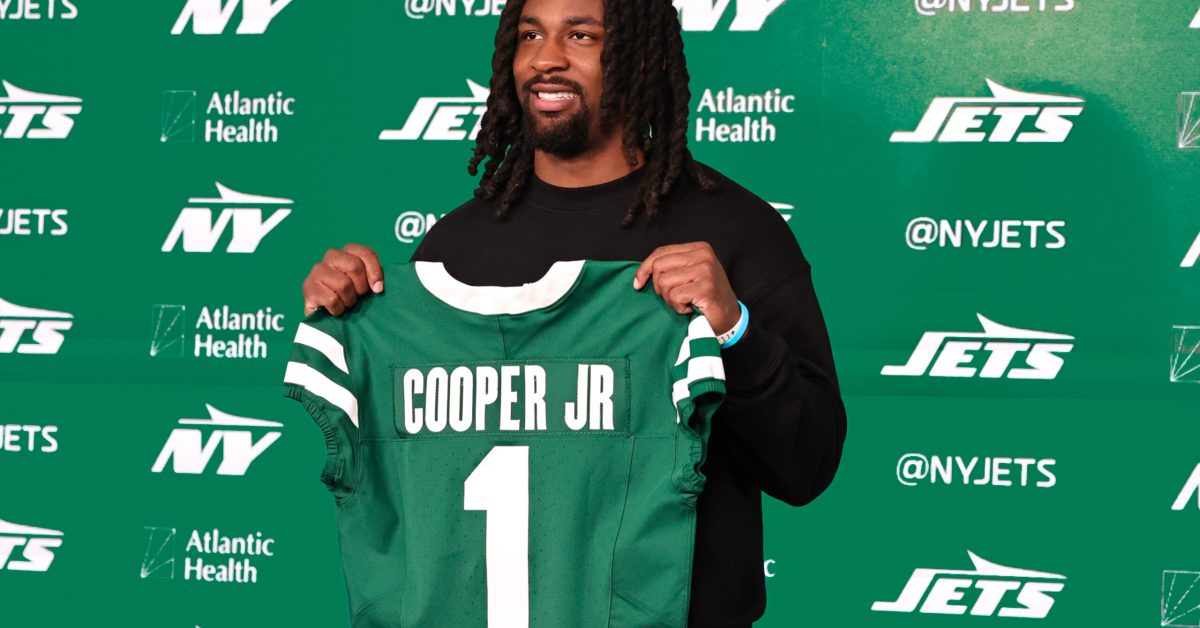
I absolutely loved the Jets trading back into the first round to land Omar Cooper Jr. I expected Cooper to hear his name called a bit earlier in the first round, so the value is there. More importantly, the Jets addressed a massive need by finally giving Garrett Wilson a true running mate at receiver. Cooper is a dynamic playmaker who can stretch the field vertically while also creating separation consistently underneath. Simply put, the Jets offense left a lot to be desired in terms of weapons. Now with the additions of both Sadiq and Cooper, this is one of the most young quarterback friendly offenses in the entire league.
Round 2, Pick 42: D’Angelo Ponds, CB, Indiana
D’Angelo Ponds was another excellent selection by New York and one that lined up almost perfectly with my board. Outside of the injured Jermod McCoy, Ponds was my highest remaining cornerback available at the time. He offers tremendous versatility because of his ability to play both in the slot and outside at a high level. The Jets now have significantly more flexibility within the secondary, and Ponds should immediately step into a starting role. He is instinctive, competitive, and athletic enough to become a long-term fixture in the defense.
Round 4, Pick 109: Darrell Jackson Jr., DT, Florida State
Darrell Jackson Jr. was a selection I really liked from a value standpoint. I had Jackson graded as a third-round talent, so getting him in the fourth represented strong value for the Jets. My only hesitation is that defensive tackle was not necessarily one of the team’s biggest needs considering the amount of talent already in the room with T’Vondre Sweat, David Onyemata, Harrison Phillips, and Mazi Smith. Still, Jackson has the upside to eventually become a long-term starter next to Sweat, even if it may take some time before he consistently sees meaningful snaps.
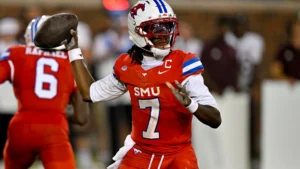
Round 4, Pick 121: Cade Klubnik, QB, Clemson
I liked the Jets taking a swing on a young quarterback, but Cade Klubnik would not have been my preferred option at the position. I had Klubnik graded as my QB8 overall and viewed him more as a late Day 3 developmental prospect. There were several quarterbacks with significantly higher athletic upside still available when the Jets made this selection. Klubnik does provide valuable depth behind Geno Smith and could eventually compete for playing time, but his ceiling appears limited because he relies heavily on pure passing ability without ideal physical traits or size. He projects more comfortably as a long-term backup than a true franchise quarterback.
Round 6, Pick 197: Anez Cooper, OG, Miami
Anez Cooper was selected right around where I expected him to go and gives the Jets another massive body along the interior offensive line. Cooper plays with strength and physicality and brings plenty of college experience into the NFL. He may initially serve primarily as a backup guard, but there is enough upside for him to eventually challenge Dylan Parham for a starting role down the line. New York did a good job adding affordable offensive line depth while continuing to build around its young offensive core.
Round 7, Pick 231: VJ Payne, S, TCU
VJ Payne was another late-round value addition that I really liked for New York. Payne was the 17th safety selected despite being my 13th-ranked safety and carrying a sixth-round grade on my board. He possesses intriguing physical traits, including good speed and strength, allowing him to fit multiple alignments defensively. Safety was also a smart position for the Jets to address considering Minkah Fitzpatrick is getting older and Andre Cisco struggled during his first year with the team. Payne has legitimate developmental upside and could eventually compete for a starting role in the secondary.
Jets Draft Class Summary
I did not think the Jets had a single truly poor selection throughout this draft. Even Cade Klubnik, who was the biggest reach according to my board, at least made sense as a needed quarterback gamble in the middle rounds. New York dramatically improved its roster by consistently attacking positions of need and adding multiple players with immediate starting potential where they were valued. Bailey, Sadiq, Cooper, and Ponds all project as both immediate and long-term starters moving forward, while Jackson and Payne offered strong value later in the draft. My biggest issue with the class is that the Jets passed on the opportunity to develop a young linebacker behind DeMario Davis and still do not have a clear long-term answer at quarterback. However, they did a tremendous job building a young offense and defense capable of supporting a future franchise quarterback whenever they find one.