
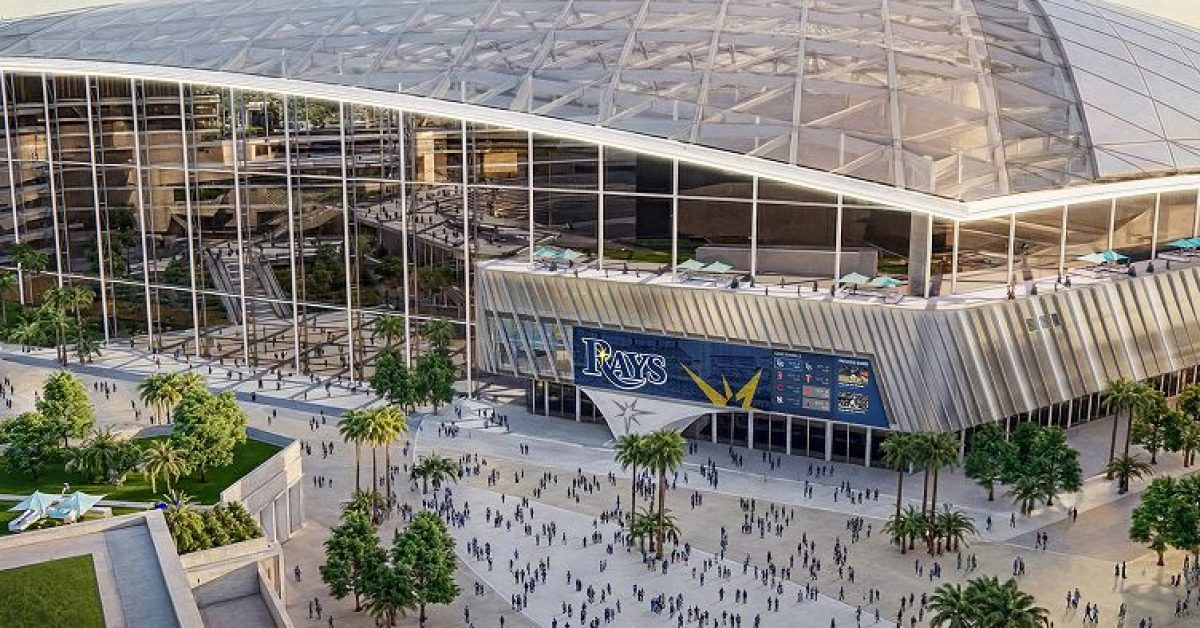

The Tampa Bay Rays announced plans for what they are coining their “forever home”. The new renderings have the stadium placed on approximately 130 acres of Tampa’s Westshore District, encompassing part of Hillsborough College’s Dale-Mabry campus.
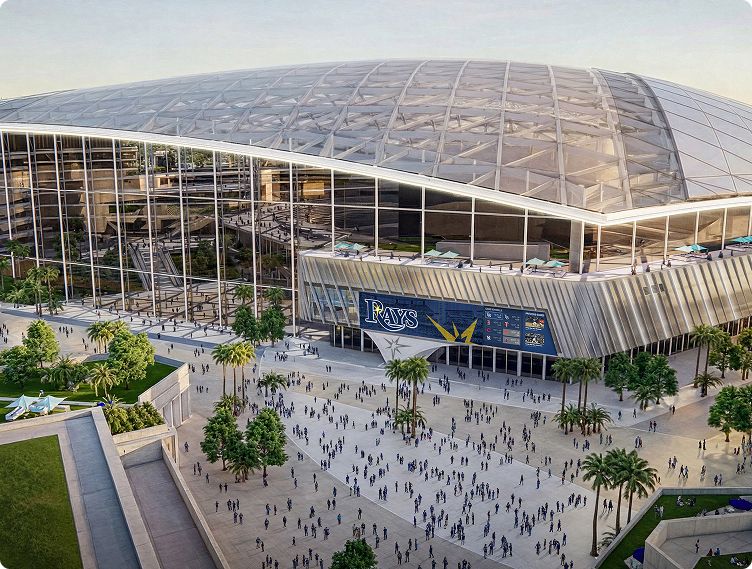
The ballpark will have an estimated capacity of 31,000, which would be the lowest capacity in Major League Baseball. The goal is to give fans the ultimate game-day experience by providing the perfect blend between baseball and Tampa Bay culture.
With the introduction of the new ownership group, this is a step the new regime is taking to establish long-term roots in Tampa Bay while silencing speculation about the team relocating outside of Florida.
Four sections of the ballpark have been highlighted by the team as key destinations to make it a hub for all in the Tampa Bay Area:
The Champions Quarter is described as a “destination neighborhood that blends baseball and culture into a walkable, retail-rich district that brings people together well beyond game days.
The Innovation Edge, developed in partnership with Hillsborough College, will be “a hub for learning, health, performance, and discovery.” This will give students at Hillsborough College incredible educational opportunities for career growth and opportunities within the Rays organization.
The Canopy is “where culture and community meet”. It will be a park-like area where people can go to enjoy everyday life, regardless of game days.
Lastly, The Row is a street that connects the other three areas of the park, ensuring everything the stadium has to offer is within walking distance. The goal of The Row is to make the walk the destination, encouraging people to visit the area because of the convenience of the locations.
The goal of this ballpark is to enrich the community in a way that is much bigger than just baseball. There will be an estimated 11,908 new on-site jobs across the eight-million-square-foot property. The project is expected to attract nearly 10 million annual visitors and generate approximately $34 billion in economic impact over the next 30 years.