
The edge rusher group in this class stands out for its combination of high-end talent at the top and real depth throughout the board. There are multiple players with clear first-round traits, several more with starting-caliber upside, and a large middle tier that brings different skill sets depending on scheme fit and usage. The separation between prospects often comes down to refinement, consistency, and how complete their games are rather than a lack of ability. It is a group that offers impact options at every stage of the draft and should produce contributors across a wide range of roles early in their careers.
1. Arvell Reese — Ohio State
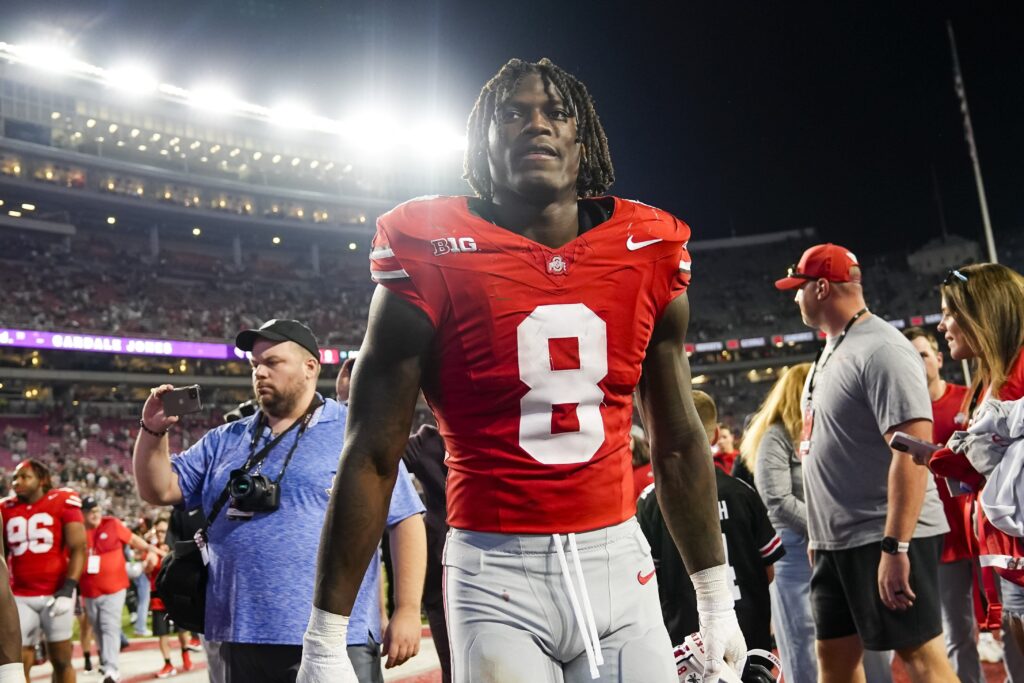
Arvell Reese separates himself with rare closing speed and range that fundamentally changes how offenses have to account for him once he is triggered as a rusher. He plays with an explosiveness that allows him to erase space almost instantly, turning what looks like a stable pocket into immediate pressure situations. His ability to accelerate through pursuit angles also shows up when plays break down, where he consistently finds ways to arrive in the frame even after initial containment. The raw athletic traits are among the most dynamic in the class, especially in terms of how quickly he can close from depth.
There is still a developmental layer to his game in terms of rush sequencing and hand usage. Too often, he relies on athletic stress rather than structured pass rush plans, which leads to stalled reps against well-coached tackles. His timing as a rusher is improving, but he does not yet consistently set up counters or manipulate protection with intent. When his first move is neutralized, he can lose momentum in the rep rather than resetting effectively.
Against the run, Reese’s range is a major asset because he can chase down plays from the backside and erase mistakes across the formation. However, his discipline in maintaining gap integrity can waver when he is overly aggressive in pursuit. He is best when playing in space and attacking downhill rather than being asked to sit and read for extended stretches. The projection here is built on elite movement ability that defensive coordinators will look to unlock more consistently over time.
Value: Early Round 1
2. David Bailey — Texas Tech
David Bailey wins with immediate first-step explosiveness that consistently forces offensive tackles into reactive sets before they are fully balanced. His ability to threaten the edge instantly creates protection stress, especially when he is aligned wide and allowed to attack vertically. Once he gains leverage, he shows impressive ability to flatten and finish around the corner. His burst is not just initial quickness, but sustained acceleration through contact points.
The refinement in his pass rush is still developing, particularly in how he sequences moves after his first attempt is met with resistance. He can rely heavily on speed-to-the-edge wins, which works at the college level but becomes more predictable against disciplined protection schemes. There are flashes of counters, but they are not yet consistent enough to define his rush identity. His effectiveness increases significantly when he is allowed to play aggressively rather than structurally constrained.
In run defense, Bailey’s physical profile still requires added play strength to consistently hold up against NFL offensive tackles. He can be displaced when blockers get into his frame early, especially in power schemes that force him to anchor rather than attack. However, his effort and range allow him to stay involved even when initially moved off his spot. His overall projection remains heavily tied to his ability to convert traits into more complete edge play.
Value: Early Round 1
3. Reuben Bain Jr. — Miami
Reuben Bain brings a compact, powerful style that allows him to consistently affect the pocket even without elite length or ideal frame measurables. He wins with leverage, hand strength, and a low center of gravity that makes him difficult to dislodge once he gains contact. His rush style is efficient rather than flashy, and he consistently finds ways to collapse space through controlled violence. Even when he does not finish sacks, he stays disruptive within the pocket structure.
His run defense is one of the most stable aspects of his game due to his ability to anchor and maintain leverage through contact. He does not get uprooted easily and consistently holds his ground against double teams and downhill runs. His compact build actually works in his favor in congestion, allowing him to stay balanced through contact. He is a dependable presence in all early-down situations.
As a pass rusher, Bain wins more through pressure accumulation than isolated explosive wins. He consistently generates movement in the pocket through sustained effort and hand strength. While he is not a pure edge bender, his ability to stay active and finish through contact makes him highly effective. His profile is built on stability, consistency, and controlled disruption.
Value: Early Round 1
4. Keldric Faulk — Auburn
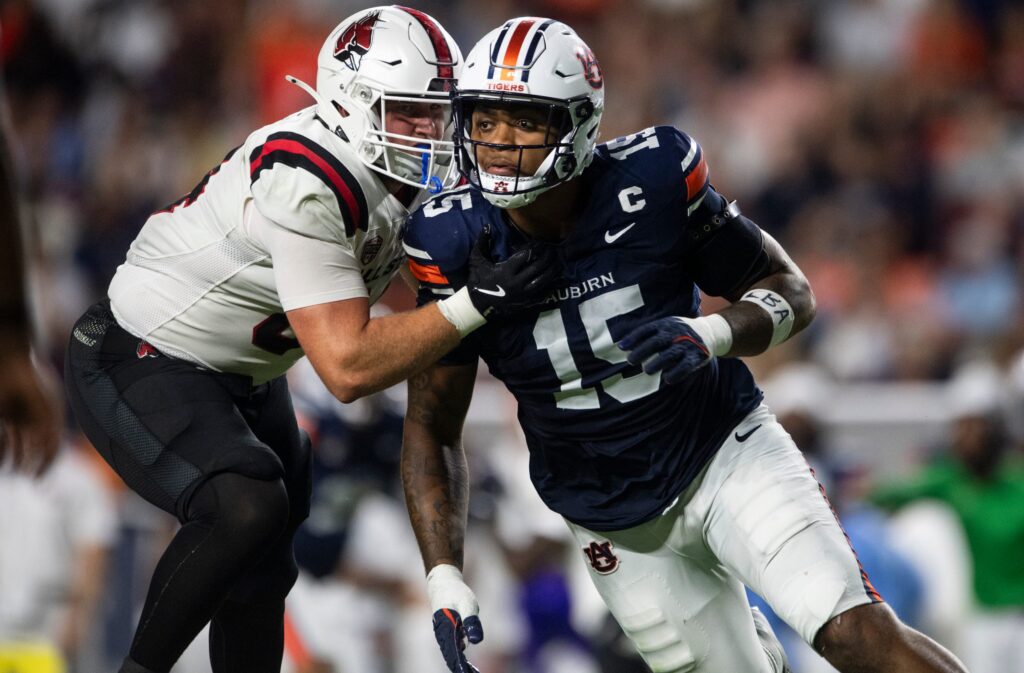
Keldric Faulk is a power-driven edge defender who imposes his physicality on reps through length, strength, and early engagement at the point of attack. He consistently creates pocket compression by getting into blockers first and forcing them to react to his strength rather than his speed. His long frame allows him to dictate contact zones and control space in tight quarters. When he lands clean hands, he becomes extremely difficult to move.
Against the run, Faulk functions as a foundational edge setter who can absorb force and maintain lane discipline. He holds up well against tight ends and offensive tackles when his pad level is correct, and he rarely loses leverage once he is squared up. His ability to anchor provides defensive coordinators with stability on early downs. He is most effective when asked to control rather than chase.
His pass rush is still evolving, particularly in terms of counters and secondary moves when his initial power rush is stalled. He can overwhelm with strength at the college level, but NFL tackles will force him to expand his toolbox. There are flashes of disruption, but not yet sustained variety in how he wins. His projection depends on whether his pass rush development catches up to his physical foundation.
Value: Round 1
5. TJ Parker — Clemson
TJ Parker wins through controlled power and leverage that allows him to consistently move blockers off their base. He does not rely on pure athletic burst, but instead dictates engagement through strength and positioning. His ability to compress the pocket is steady, and he rarely loses reps outright when he is properly aligned. His game is built on physical control rather than explosiveness.
In run defense, Parker is a reliable presence who maintains gap discipline and holds his assignments with consistency. He is not easily displaced and plays with a strong base that allows him to anchor effectively against downhill runs. His strength translates well into early-down responsibilities, where he can absorb contact and reset the line of scrimmage. He provides stability in structure.
As a pass rusher, Parker’s development hinges on expanding his counter package and improving his ability to win when initial power is absorbed. He can stall against technically sound tackles who neutralize his first move. While his strength gives him a foundation, his pass rush ceiling is still tied to added versatility. He projects as a physical, steady edge who wins through control rather than volatility.
Value: Round 1
6. Cashius Howell — Texas A&M
Cashius Howell brings legitimate burst and natural bend that immediately translate into edge stress against offensive tackles. His first-step explosiveness allows him to consistently win outside leverage early in reps. Once he gains the corner, he shows the ability to flatten his rush path and convert pressure into disruption. His athletic profile gives him clear pass rush juice.
His run defense is less consistent due to length limitations and occasional struggles holding up against power. When blockers get into his frame early, he can be displaced from his gap responsibility. However, his effort and closing speed allow him to remain involved in plays even when initially neutralized. His defensive impact is more pronounced in passing situations.
As a pass rusher, Howell wins through speed, instinct, and natural feel for timing. His inside spin adds a secondary dimension when tackles overset against his speed rush. While his frame limits some physical matchups, his ability to stress protection schemes is real. His production is driven by athletic traits that translate quickly.
Value: Round 1
7. Akheem Mesidor — Miami
Akheem Mesidor is one of the more technically refined edge defenders in the class, with advanced hand usage and sequencing that allows him to consistently stay active through contact. He does not rely on raw athletic traits, instead winning through manipulation and timing. His ability to chain moves together makes him difficult to neutralize on extended reps. He plays with a clear understanding of how to work protection structures.
In the run game, Mesidor is steady and assignment sound, using leverage and hand placement to maintain control against blockers. While he is not overpowering, he consistently holds his ground and avoids being displaced cleanly. His discipline in gap integrity allows him to stay reliable across different fronts. He brings consistency rather than volatility.
As a pass rusher, Mesidor’s ability to adjust mid-rep is his defining trait. He rarely gets stuck on a single move and can reset his rush when initial plans fail. His game is built on precision, timing, and adaptability. He projects as a high-floor edge due to his technical stability. However, he severely lacks athleticism and is already 25 years old, diminishing his upside for development at the next level.
Value: Round 1–2
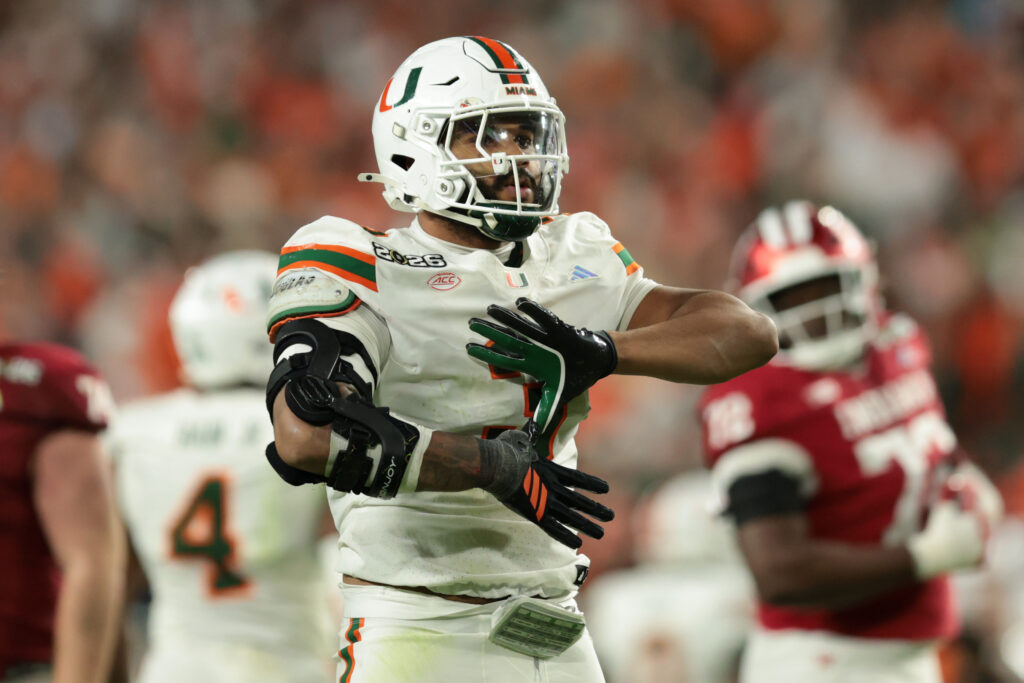
8. Malachi Lawrence — UCF
Malachi Lawrence flashes explosive first-step quickness that allows him to immediately threaten offensive tackles off the snap. When timed correctly, he can stress the edge and force protection adjustments within the first second of the rep. His natural bend allows him to flatten his path and close effectively on the quarterback. The athletic traits are clearly present.
His consistency is the primary concern, especially when he faces physical tackles who can absorb his initial rush. In those situations, he can struggle to sustain pressure or finish through contact. His run defense also remains inconsistent due to strength limitations at the point of attack. He plays better when attacking rather than absorbing.
As a pass rusher, Lawrence is still developing a structured plan beyond his speed-based wins. His counters are not yet reliable, which limits his ability to sustain pressure when his first move is stopped. His upside is tied directly to refinement and development of his rush sequencing. The traits are exciting, but the polish is still catching up.
Value: Round 1–2
9. R Mason Thomas — Oklahoma
R Mason Thomas is an explosive edge rusher who consistently wins early in reps with elite burst and sudden acceleration. His ability to get around the corner quickly forces tackles into recovery mode almost immediately. He can convert speed into power when attacking the edge aggressively. His impact is often felt before protection schemes fully adjust.
In run defense, Thomas shows effort and pursuit speed but lacks ideal strength when engaged directly. He can be displaced by larger linemen when forced to anchor. However, his ability to chase plays from the backside gives him value in space. He is more impactful in motion than in static contact situations.
As a pass rusher, Thomas wins through athletic advantage rather than extended hand fighting. His finishing consistency still needs refinement, especially against stronger tackles who can recover. His production is built on explosive traits rather than sustained sequencing. His ceiling depends on adding more control to his rush style.
Value: Round 2
10. Gabe Jacas — Illinois
Gabe Jacas is a physically dominant edge defender who wins through leverage, strength, and direct contact at the line of scrimmage. His wrestling background is evident in how he controls engagements and maintains balance through contact. He consistently collapses space when he establishes first contact. His style is built on physical dominance rather than finesse.
Against the run, Jacas is one of the more reliable defenders in this tier due to his ability to hold ground and maintain gap integrity. He rarely loses control once engaged and plays with consistent physicality. His strength allows him to anchor against both tight ends and offensive tackles. He brings stability to the edge.
As a pass rusher, Jacas lacks a deep counter package and can stall when his initial power rush is neutralized. His production is steady but not explosive, relying on physicality rather than variation. He is most effective when allowed to dictate contact early. His value comes from reliability rather than volatility.
Value: Round 2
11. Zion Young — Missouri
Zion Young wins with length, discipline, and a steady understanding of his role on the edge. He isn’t a flashy pass rusher, but he consistently stays in control of reps and forces quarterbacks off their first read by maintaining leverage. His ability to play within structure makes him a reliable piece in multiple fronts. While he doesn’t create sudden disruption, he rarely loses contain or gets washed out of plays.
Against the run, Young shows his most consistent value as a disciplined edge setter. He uses his length to keep tackles off his frame and plays with enough strength to hold the edge against standard NFL run schemes. He doesn’t explode into contact, but he stays square and makes offenses earn everything outside. His tackling angles are steady, and he finishes plays without overextending himself.
As a pass rusher, the ceiling is defined more by steadiness than burst. He can win when tackles overset or when he works off effort and positioning, but he lacks the suddenness to consistently collapse the pocket early in reps. His hands are functional rather than dominant, and he doesn’t yet threaten tackles with a varied rush plan. The projection is a rotational edge who stabilizes a defense rather than one who drives it.
Value: Round 2
12. Dani Dennis-Sutton — Penn State
Dani Dennis-Sutton brings a physically imposing frame with the kind of length and power that naturally creates disruption at the line of scrimmage. He flashes the ability to win reps simply by overwhelming blockers at contact. When he plays with leverage, he can collapse the edge and force quarterbacks to move off their spot. The raw traits are clearly NFL-caliber, even if the consistency is still developing.
His run defense is ahead of his pass rush refinement at this stage. He can set a firm edge, stack blockers, and hold his gap integrity against most college run schemes. However, there are still reps where his pad level rises and he loses control of leverage battles. When he stays disciplined, he looks like a true every-down defensive end, but that doesn’t show up snap to snap yet.
As a pass rusher, Dennis-Sutton flashes more than he sustains. He has moments where his length and strength collapse protection quickly, but he doesn’t yet string moves together consistently. His counter game is still forming, and he relies heavily on his first move to generate pressure. The long-term projection hinges on whether he can turn flashes into structure.
Value: Round 3
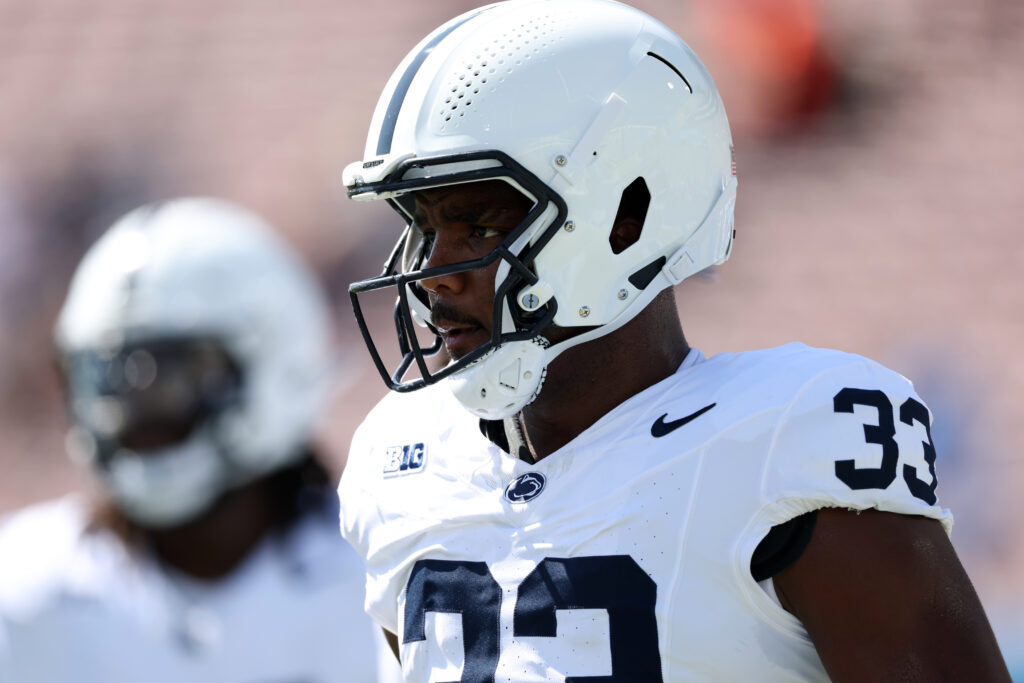
13. Joshua Josephs — Tennessee
Joshua Josephs wins with pure burst and length that stress offensive tackles immediately off the snap. When he times his get-off correctly, he creates instant panic in protection sets. His ability to bend the edge and flatten toward the quarterback gives him a real speed-rush profile. The traits are clear, even if the finishing consistency isn’t fully there yet.
His pass rush success is heavily dependent on winning early in reps. When tackles recover or anchor quickly, Josephs can struggle to counter through contact. He has moments where his length allows him to disengage, but he doesn’t yet have a reliable secondary move. That makes his pressure production somewhat volatile week to week.
Against the run, Josephs shows effort but inconsistent anchoring ability. He can get displaced by stronger tight ends and tackles when he doesn’t win immediately at the point of attack. His pursuit speed helps him chase plays down, but his base still needs development. The profile is that of a speed rusher who must stay in advantageous situations to be effective.
Value: Round 3
14. Derrick Moore — Michigan
Derrick Moore has a prototypical frame with the burst and length to become a disruptive edge defender when everything syncs. He flashes quick wins off the snap that put tackles on their heels early in reps. There are moments where his combination of traits looks like a high-end starter profile. The challenge is turning those flashes into consistent production.
His pass rush arsenal is still developing, but the raw ability is visible. He can win on timing and first-step acceleration, and he has shown glimpses of counter moves when tackles overset. However, he doesn’t yet sustain pressure through extended reps. When his first move is stopped, the rep often stalls.
In the run game, Moore is serviceable but not dominant. He can set an edge when disciplined, but he doesn’t consistently win leverage battles against bigger linemen. His physical traits suggest more growth is possible with added strength and refinement. The projection is still based on upside rather than proven consistency.
Value: Round 3
15. Keyron Crawford — Auburn
Keyron Crawford is an explosive edge defender who flashes real juice off the snap. His ability to get into tackles quickly creates immediate disruption in passing situations. When he’s on time, he can bend and convert speed into pressure effectively. The athletic tools are clearly NFL-level.
However, his pass rush plan is still very raw and inconsistent. He relies heavily on his first step and hasn’t fully developed a structured counter system when blocked initially. That leads to stalled reps against more patient tackles. The production can come in bursts rather than sustained stretches.
Against the run, Crawford is still learning how to consistently anchor and control contact. He can be washed when caught upright, especially against power schemes. His effort helps him stay involved in plays, but his technique needs refinement. The upside is clear, but the floor depends on development.
Value: Round 3
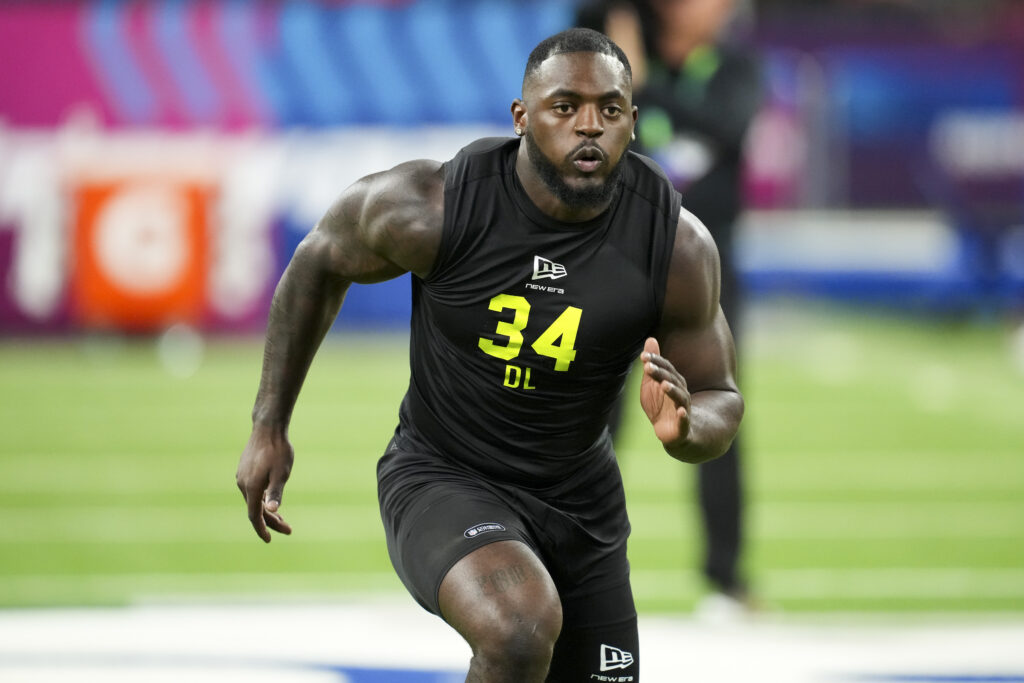
16. Romello Height — Texas Tech
Romello Height is a versatile edge defender with a diverse rush package and the ability to attack from multiple angles. He can threaten tackles with speed, bend, and inside counters that keep blockers guessing. When his timing is right, he creates consistent pressure. His movement skills are his defining trait.
The biggest limitation is his lack of mass and functional strength. When offensive linemen get hands on him early, he can struggle to disengage. That shows up most clearly in the run game, where he can be moved off his spot. He is more of a space player than a physical edge setter.
As a pass rusher, Height is at his best when working in space and attacking from wide alignments. He is less effective when forced into prolonged contact situations. His value is tied to scheme fit and usage rather than three-down dominance. He profiles as a situational pressure player early in his career.
Value: Round 3–4
17. LT Overton — Alabama
LT Overton is a physically gifted defensive lineman with the ability to align across multiple spots on the front. His combination of size, strength, and movement ability gives him schematic versatility. When his technique is clean, he can collapse pockets and disrupt run fits. The tools are clearly NFL-caliber.
The issue is inconsistency in converting those tools into steady production. There are snaps where he dominates contact, and others where he fades out of plays entirely. His pad level and hand usage vary too much snap to snap. That inconsistency limits his current impact.
As a pass rusher, Overton flashes power-based disruption but lacks a refined rush identity. He can win with strength, but doesn’t consistently sequence moves or counter when blocked. His ceiling depends on whether coaching can stabilize his technique. The raw talent is there, but it is still fragmented.
Value: Round 3–4
18. Mason Reiger — Wisconsin
Mason Reiger brings explosive burst off the edge paired with a legitimate spin move that can create immediate separation from blockers. When he wins early in reps, he can generate quick pressure and finish plays efficiently. His athletic traits show up most clearly in straight-line rush situations. There is real flash in his pass rush profile.
However, his game becomes less consistent when plays extend or when he is forced into run defense responsibilities. He can struggle to maintain gap discipline and gets caught out of position at times. His tackling also needs refinement, especially in space. The volatility shows up more against structured offenses.
The projection is a pass-rush specialist who must maximize his early-down wins. When he is allowed to attack downhill, he is at his best. When asked to be a complete edge defender, the limitations become more visible. His role is best defined by pressure creation rather than every-down stability.
Value: Early Day 3
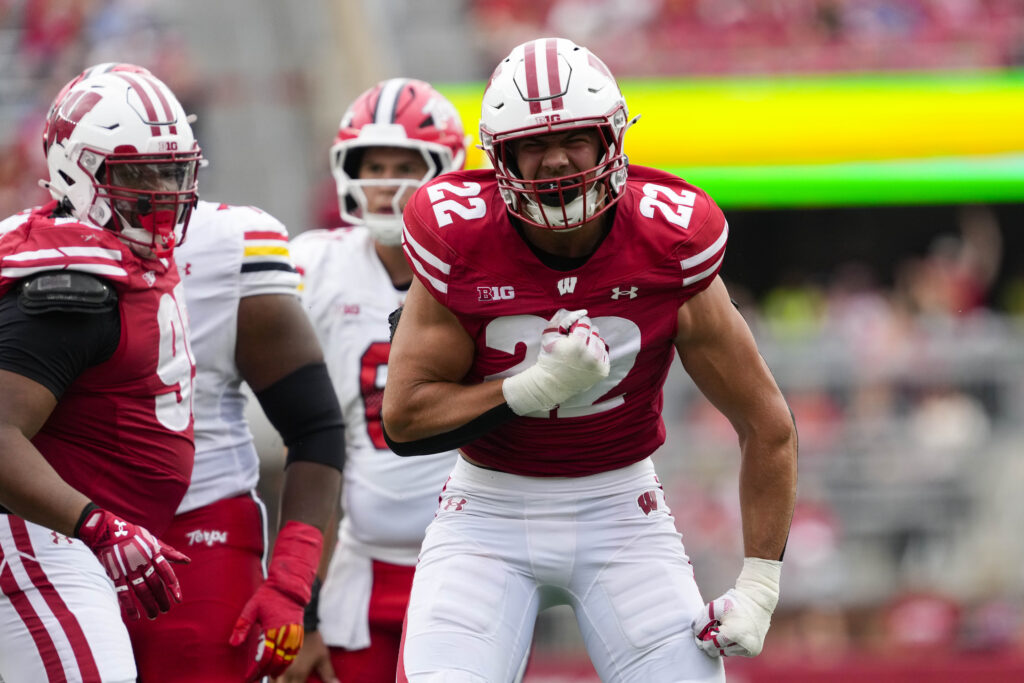
19. Jaishawn Barham — Michigan
Jaishawn Barham plays with clear physicality and downhill urgency that translates well when he is attacking as a rusher. His ability to generate power at contact allows him to disrupt plays in the backfield. He can overwhelm blockers when he gets moving forward. The traits suggest a strong foundation.
His pass rush consistency is still developing, especially in terms of plan and sequencing. He can win off pure effort or strength, but doesn’t yet have a structured rush identity. That leads to uneven pressure production. When his initial move is stopped, he can struggle to adjust.
In the run game, Barham is aggressive but still refining discipline. He can overrun gaps or lose containment when attacking too quickly. His physical tools are real, but control is still catching up. The projection is based on athletic upside rather than polish.
Value: Early Day 3
20. Max Llewellyn — Iowa
Max Llewellyn brings one of the more developed pass rush toolkits in this tier, with multiple ways to win off the edge. He can work speed, spin, and inside counters effectively when he times things correctly. His ability to generate pressure in different ways makes him a consistent threat in passing situations. The skill variety stands out on film.
However, his run defense and overall consistency lag behind his pass rush ability. He can get caught out of position or lose leverage against stronger blockers. There are also stretches where his production dips when he cannot win early in reps. That inconsistency limits his every-down projection.
The upside is tied to his pass rush creativity and ability to stay disruptive in sub-packages. He is most effective when attacking freely and not constrained by heavy run responsibilities. His ceiling is a situational difference-maker with upside if consistency improves. The toolbox is there, but not fully stabilized.
Value: Early Day 3
21. Anthony Lucas — USC
Anthony Lucas is a traits-heavy edge defender whose evaluation is driven more by projection than production, but the physical foundation is legitimately intriguing. At 6-foot-6 with a massive wingspan, he naturally constricts running lanes and can control the point of attack when he lands his hands early. His 2025 tape showed real year-over-year improvement, especially in run defense where he became more consistent setting edges and finishing plays.
There is enough functional strength to imagine him playing a stable role in multiple fronts, particularly as a base end in a 4-3 system. The issue is that his pass rush profile still lags behind his frame, with average burst off the snap and limited counter development when his initial move is stalled. That gap between tools and production is what defines his current range as a prospect.
The long-term upside hinges entirely on whether a coaching staff can turn his length into usable pass rush wins. He does not yet threaten tackles consistently as a speed rusher, and his sack production over a large sample is a legitimate concern. Still, players with his frame and incremental development trend can take meaningful steps once they are in a structured NFL development system. His role early will likely be defined by run defense and containment while his pass rush toolbox slowly expands.
Value: Early Day 3
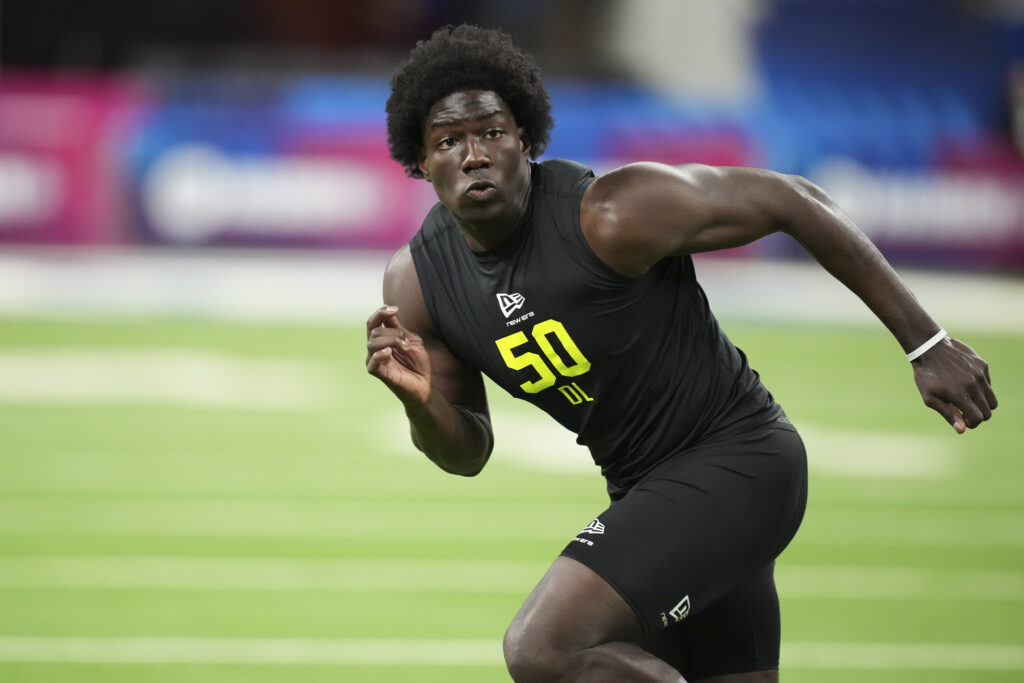
22. Nadame Tucker — Western Michigan
Nadame Tucker is one of the most explosive pure pass rushers in this tier, with a first step that consistently puts tackles in recovery mode. His ability to bend and corner despite a limited developmental background shows up immediately on tape, especially in 2025 where his production spiked against higher-level competition. His hand timing is advanced for his experience level, and he can convert speed to pressure in a way that translates directly to third-down situations.
There is real polish in how he chains movements together for a relatively young player in terms of exposure. However, his frame and lack of length create natural limitations that show up the moment he is forced into sustained contact. He is at his best when he is attacking free and not asked to anchor or absorb power.
The run defense remains the biggest concern and is the primary reason he projects as a specialized piece rather than an every-down defender. He gets washed by size and struggles to maintain gap integrity when blockers get into his chest early. His tackling consistency also fluctuates when plays extend beyond his initial rush lane. Even with those limitations, his pass rush ability is legitimate enough to carve out an NFL role quickly if deployed correctly.
Value: Day 3
23. Vincent Anthony Jr. — Duke
Vincent Anthony Jr. brings a polished and versatile pass rush skill set that allows him to stress offensive tackles in multiple ways. He has enough length and bend to win the edge, and his use of moves like the ghost rush and euro step gives him real variety when attacking protection schemes. His ability to dip under blocks and flatten toward the quarterback makes him dangerous when he times reps correctly. There is also enough athleticism for limited zone drop responsibilities, which adds situational flexibility.
The concern is that his effectiveness drops significantly when he is forced to play through contact or defend the run consistently. He can get displaced at the point of attack and struggles to anchor against stronger linemen.
His pass rush is at its best when he is allowed to operate as a sub-package specialist. When tackles sit on his outside rush, his inside counters can feel rushed or inconsistent, which limits his ability to sustain pressure over long drives. Still, the flashes are strong enough to suggest he can produce in a defined role early in his career. His value comes from situational disruption rather than three-down stability.
Value: Day 3
24. Michael Heldman — Central Michigan
Michael Heldman is a long-term starter with a solid frame and a steady production profile, highlighted by a noticeable spike in 2025. He has enough size and strength to function as a base end and can hold up in the run game against standard collegiate schemes. His hands are active and he shows a willingness to engage and shed blockers rather than just try to run around them.
There is also some evidence of functional athletic testing that suggests more upside than his tape consistently shows. However, his play speed and recognition do not always match his measurable traits, leading to uneven impact snaps. He is effective in controlled environments but less disruptive when facing more dynamic offenses.
As a pass rusher, Heldman relies more on effort and structure than a refined or diverse rush plan. He does not consistently threaten tackles with speed or counter explosiveness, and his wins tend to come from persistence rather than separation. The lack of elite competition also makes it harder to fully project how his game translates. He profiles as a developmental depth piece who can compete for rotational snaps while continuing to refine his technique and rush instincts.
Value: Day 3
25. Tyreak Sapp — Florida
Tyreak Sapp is a power-based edge defender whose game is defined by violence at contact and strong run defense fundamentals. He consistently wins with heavy hands and leverage, often resetting the line of scrimmage when he strikes cleanly. His ability to stack and shed makes him one of the more reliable edge setters in this tier. He plays with discipline in run fits and rarely loses contain when executing his assignment.
As a pass rusher, he relies heavily on power and timing rather than pure athleticism, which limits his ceiling as a sack producer. His cross-chop and inside moves are effective but not consistently threatening against top-tier tackles.
The tradeoff in his profile is clear: he is more dependable than dynamic. His run defense ability is NFL-ready, but his pass rush upside is capped by average burst and closing speed. He will likely never be a high-volume sack player, but he can stay on the field due to his physicality and reliability. His value lies in being a stabilizing edge presence rather than a primary disruptor.
Value: Day 3
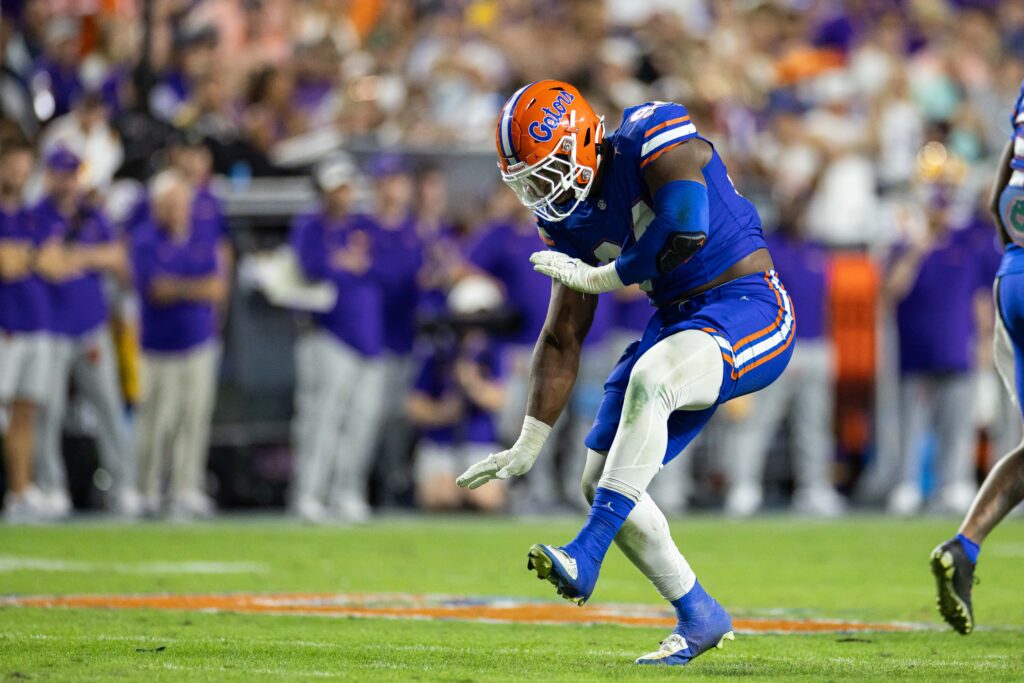
26. Caden Curry — Ohio State
Caden Curry plays with one of the most disruptive motors in the class, consistently creating chaos through effort, timing, and hand violence. His get-off is immediate, and he frequently wins the snap before offensive linemen are fully set. He has enough pass rush tools, including a functional spin move and hand counters, to stay productive against high-level competition. His run defense is equally impactful when he maintains leverage and plays disciplined football.
The combination of traits and production makes him one of the more complete defenders in this range. However, his frame and size limitations create questions about how he holds up against NFL power schemes over time.
At the next level, his effectiveness will depend on how well he maintains strength without sacrificing quickness. He is not built to consistently win with length or power alone, so his game must continue to rely on timing and technique. The upside is a versatile edge who can contribute immediately in multiple situations. The concern is whether his size limits him from becoming more than a high-level complementary starter.
Value: Day 3
27. Mikail Kamara — Indiana
Mikail Kamara is a quick, explosive edge rusher whose game is built on burst, leverage, and active hands. He consistently creates pressure by winning early in reps and forcing tackles into recovery mode. His hand sequencing is advanced, and he can string moves together to keep blockers off balance.
The ability to force fumbles and generate splash plays gives him clear situational value. However, his lack of size and length shows up when he is forced to play through contact or defend the run. He can get washed by double teams and struggles to consistently anchor at the point of attack.
His pass rush profile is strong enough to project him as a sub-package weapon at the next level. He is most dangerous when allowed to attack freely without heavy run responsibilities. The inconsistency comes when offenses force him into more balanced situations. Even so, his pass rush traits are legitimate enough to carve out a defined NFL role early.
Value: Day 3
28. George Gumbs Jr. — Florida
George Gumbs Jr. is an explosive and highly athletic edge defender whose upside is driven by vertical burst and closing speed. He has legitimate first-step juice and can win early in reps with speed and bend. His pass rush arsenal includes effective counters like the cross-chop and euro-step that allow him to change angles mid-rush. He also shows enough fluidity to drop into short zones without looking uncomfortable.
However, his technique is still raw, particularly in how he initiates contact and sequences moves. He can get stalled when blockers get into his frame early.
His run defense remains a work in progress, with issues in edge-setting discipline and consistency of effort in pursuit angles. He sometimes overruns plays and loses containment leverage. The upside is clear, but the development curve is steep and heavily dependent on coaching. He projects as a developmental pass rusher with rotational upside if his fundamentals stabilize.
Value: Day 3
29. Quintayvious Hutchins — Boston College
Quintayvious Hutchins is a high-energy edge defender who plays with consistent effort, physicality, and natural bend around the corner. Despite his undersized frame, he competes with leverage and uses his quickness to win around tackles. His spin move is a legitimate weapon and creates separation when his first rush is contained. He also brings value in coverage drops and has enough movement ability to function in space on occasion.
His tackling has improved significantly over his career, showing better control and finishing ability. However, his size limitations are constant and show up against longer, stronger offensive linemen.
The projection is heavily tied to role usage at the next level. He is best deployed as a situational rusher who can also contribute on special teams. His lack of length makes him vulnerable against power schemes, and he will need protection in run-heavy situations. Still, his motor and movement skills give him a chance to stick on an NFL roster as a rotational piece.
Value: Day 3
30. Aidan Hubbard — Northwestern
Aidan Hubbard is an athletic edge defender with solid movement skills and enough burst to flash as a pass rusher in space. He has good short-area agility and can redirect well when working laterally along the line. His effort in pursuit stands out, and he consistently chases plays down from behind.
There are moments where his upfield burst and slanting ability create disruption in backfields. However, his lack of size and strength limits his ability to consistently win against stronger offensive linemen. He can be displaced at the point of attack and struggles to anchor in the run game.
As a pass rusher, he has tools but not yet a defined identity. He can flash speed-to-power and some bending ability, but he lacks a consistent counter system when initial moves are stopped. His ceiling depends heavily on adding strength and refining his hand usage. For now, he projects as a developmental edge with rotational upside in specific packages.
Value: Day 3