![Jacksonville Jaguars wide receiver Brian Thomas Jr. (7) comes out of the tunnel before the start of an NFL football game between the Carolina Panthers at Jacksonville Jaguars at EverBank Stadium Sunday September 7, 2025. [Doug Engle/Florida Times-Union]](https://neweraprep.org/wp-content/uploads/elementor/thumbs/USATSI_27027869-1-scaled-rqgmbe0vl6sv2dty0yq01sa0di8oadudn7s1nwhv9k.jpg "Syndication: Florida Times-Union")

Every fantasy football season is defined by the players who dramatically outperform their average draft position. While first-round stars provide the foundation of a championship roster, it’s the undervalued players selected in the middle and late rounds that often separate contenders from everyone else.
Whether it’s a quarterback on the verge of becoming an elite fantasy option, a running back stepping into a featured workload, or a young receiver ready for a breakout campaign, identifying these players before your league mates can provide an enormous advantage on draft day. Some of the players on this list are already established stars who simply aren’t being valued highly enough, while others are young talents whose situations create an opportunity to vastly exceed expectations.
Here are the biggest fantasy football sleepers at every position heading into the 2026 season.
Quarterback Sleepers
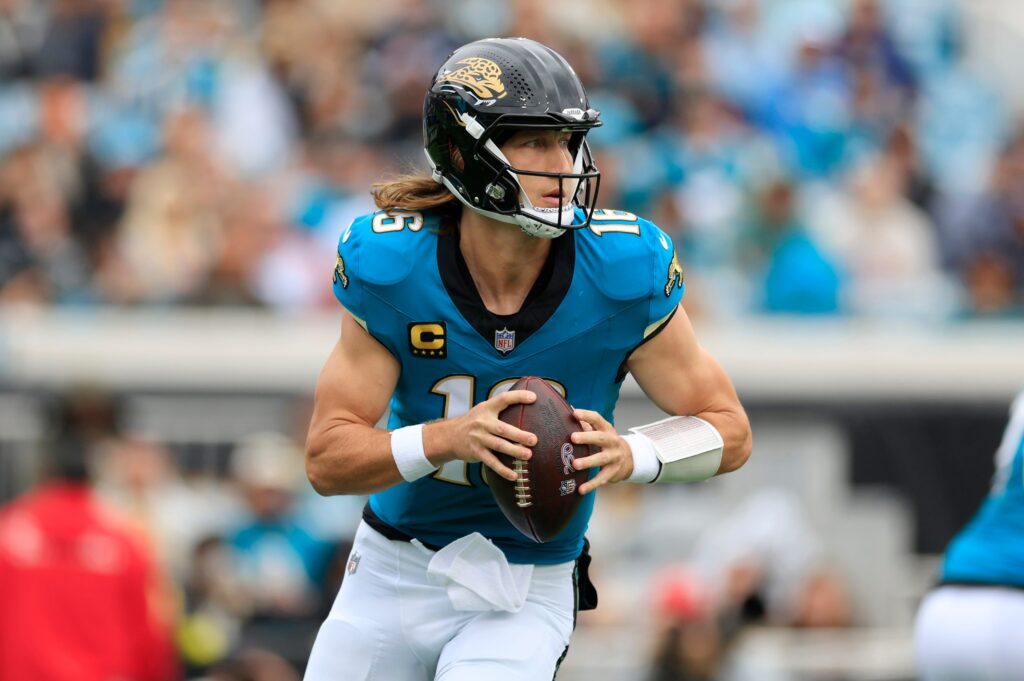
Trevor Lawrence, Jacksonville Jaguars (Consensus QB9)
Trevor Lawrence enters draft season as the consensus QB9, but he has a legitimate opportunity to finish as the highest-scoring quarterback in fantasy football. While several quarterbacks are consistently being drafted ahead of him, Lawrence possesses just as much upside thanks to the environment surrounding him and the progress he made throughout last season.
Lawrence was one of the most productive fantasy quarterbacks during the second half of the season after becoming fully comfortable in Liam Coen’s offensive system. Rather than learning a brand new offense again, he now enters his second season under Coen with offensive coordinator Grant Udinski remaining in Jacksonville, giving the Jaguars rare continuity on offense. That familiarity should allow Lawrence to build upon the efficiency he displayed down the stretch instead of starting from scratch once again.
Although Travis Etienne Jr. departed in free agency, Jacksonville’s offense is arguably even deeper entering this season. Brian Thomas Jr. returns fully healthy after battling injuries, Travis Hunter adds another dynamic weapon, Brenton Strange continues developing into one of the better young tight ends in football, and the Jaguars added two talented rookie tight ends to further strengthen the offense. Parker Washington, Jakobi Meyers, and rookie running back Bhayshul Tuten round out one of the deepest collections of skill-position talent in the NFL.
If Jacksonville becomes one of the league’s highest-scoring offenses as many expect, Lawrence has every opportunity to reward fantasy managers who wait at quarterback. His current QB9 price leaves plenty of room for him to outperform expectations, and his ceiling is as high as any quarterback in fantasy football.
Matthew Stafford, Los Angeles Rams (Consensus QB16)
Matthew Stafford being drafted as the QB16 is one of the biggest values at any position in fantasy football. While fantasy managers naturally gravitate toward younger quarterbacks with rushing upside, Stafford continues to lead one of the NFL’s premier offenses and is being drafted as little more than a low-end starter.
Even without adding fantasy points on the ground, Stafford has consistently proven capable of producing elite passing numbers. He finished as the league leader in touchdown passes during his MVP campaign last season and continues to operate one of the league’s most explosive offenses. Simply put, quarterbacks leading elite offenses rarely come this cheaply in fantasy drafts.
There will always be concerns surrounding Stafford’s age and durability, but his current draft cost more than accounts for that risk. Rather than spending a premium pick on one of the top quarterbacks, fantasy managers can build stronger rosters early before selecting Stafford well after pick 100. Even managers worried about injury could justify pairing him with Ty Simpson late in drafts, as Simpson possesses the athletic ability and supporting cast to potentially become a top-10 fantasy quarterback if forced into action.
Stafford may not provide rushing production, but his touchdown upside and offensive environment make him one of the best quarterback values available this season.
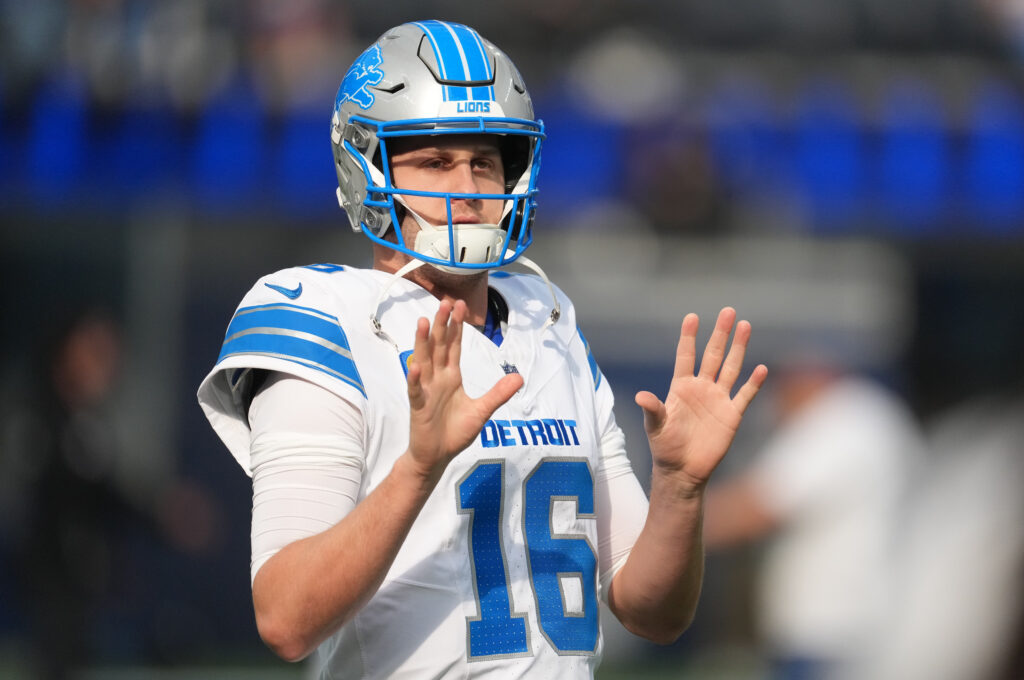
Jared Goff, Detroit Lions (Consensus QB20)
For fantasy managers who prefer waiting until the final rounds to draft a backup quarterback, Jared Goff stands out as one of the safest options on the board. Despite finishing as the QB9 in fantasy football last season, he is barely being drafted within the top 20 quarterbacks.
Detroit enters the year with much of the same offensive foundation that helped him succeed last season. The Lions retained their strong offensive line adding first round tackle Blake Fisher and kept their talented group of pass catchers intact. With their young weapons continuing to progress this offense should only get better from last season. Now with a full year without Ben Johnson the offensive scheme should be more defined for the offense to function properly, allowing Goff to thrive even further.
The loss of David Montgomery could also result in Detroit leaning more heavily on its passing attack, creating additional opportunities for Goff to produce. He may not possess the week-winning upside of some other quarterbacks, but fantasy managers shouldn’t overlook the value of a reliable backup who can be comfortably inserted into lineups during bye weeks or favorable matchups.
Expecting Goff to repeat a QB9 finish may be ambitious, but a drop all the way to QB20 seems equally unrealistic. At his current value, he offers excellent stability late in fantasy drafts.
Running Back Sleepers
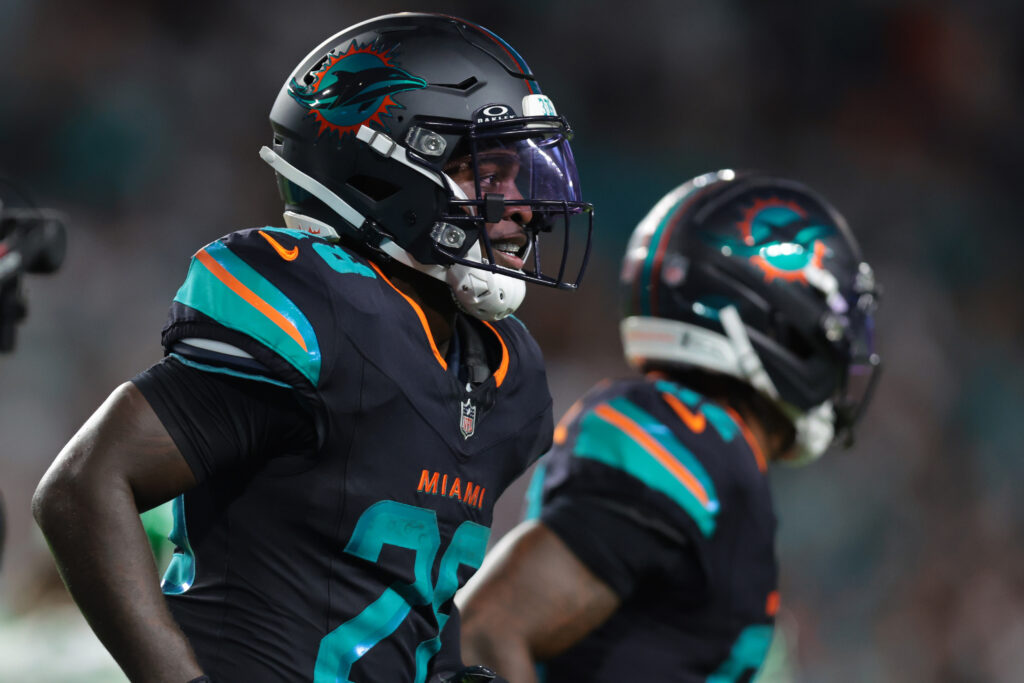
De’Von Achane, Miami Dolphins (Consensus RB10)
While De’Von Achane is already viewed as one of fantasy football’s better running backs, he still isn’t being drafted nearly high enough. Currently ranked as the RB10 on Yahoo and RB6 on ESPN, Achane has legitimate upside to finish as the highest-scoring running back in fantasy football.
Achane was already one of the league’s most explosive runners last season, but his workload could increase dramatically entering 2026. With Tyreek Hill and Jaylen Waddle no longer leading the offense, Miami’s offensive identity should revolve around Achane both as a runner and as a receiver. Few backs possess his combination of elite speed, home-run ability, and receiving upside, making him one of the most dangerous fantasy weapons in football whenever he touches the ball.
The biggest question has always been durability. If Achane remains healthy throughout the season, he could realistically challenge for one of the largest workloads in the NFL. Pairing that volume with his elite explosiveness creates league-winning upside that very few running backs can match.
I currently value Achane as my RB3 behind only Jahmyr Gibbs and Bijan Robinson, and as one of the top overall players in fantasy football. The fact he can still be selected in the second round makes him one of the best values in the entire draft.
Travis Etienne Jr., New Orleans Saints (Consensus RB18)
Travis Etienne Jr. enters the season as the consensus RB18, a ranking that feels far too low for a player with his combination of explosiveness and versatility. While many fantasy managers have cooled on Etienne after an inconsistent finish to his time in Jacksonville, a change of scenery could be exactly what he needed to return to being one of fantasy football’s most productive running backs.
Etienne remains one of the most dynamic runners in the NFL and is among the league’s best receiving backs out of the backfield. His ability to create explosive plays as both a runner and pass catcher gives him multiple avenues to fantasy production each week. In New Orleans, he’ll also benefit from playing alongside Tyler Shough, whose mobility should force defenses to respect the quarterback on read-option concepts and take some pressure off the running game. That added dimension should create more running lanes than Etienne saw in recent seasons.
The Saints’ backfield also presents a favorable opportunity for Etienne to establish himself as the clear lead back. Alvin Kamara has been one of the NFL’s premier running backs for nearly a decade, but signs of age began to show last season. While Kamara should still have a role in the offense, expecting him to handle another featured workload seems unrealistic. That creates a path for Etienne to become the focal point of New Orleans’ rushing attack while maintaining the receiving workload that has always made him such an attractive fantasy option.
There is legitimate top-10 upside if Etienne fully settles into that lead role. At his current RB18 valuation, fantasy managers are drafting him much closer to his floor than his ceiling, making him one of the strongest values available in the middle rounds.
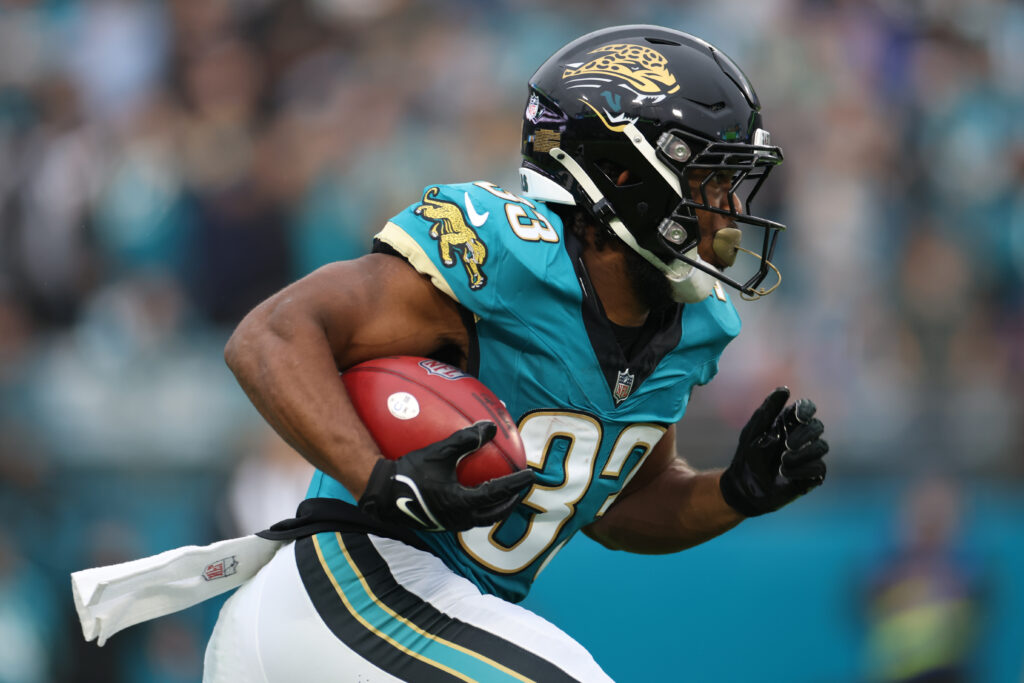
Bhayshul Tuten, Jacksonville Jaguars (Consensus RB23)
Bhayshul Tuten’s fantasy value has steadily climbed throughout the offseason, but even as the consensus RB23, he still feels undervalued. The sophomore enters one of the league’s most exciting offensive situations with a legitimate opportunity to immediately become Jacksonville’s featured running back.
From everything we’ve seen throughout the offseason, Tuten has established himself as the clear top option in the Jaguars’ backfield ahead of Chris Rodriguez Jr. His combination of elite speed, burst, and home-run ability fits perfectly within Liam Coen’s offense, and he has looked explosive every time he’s stepped onto the field during offseason workouts and training camp.
Perhaps the biggest reason to target Tuten is the opportunity in front of him. With Travis Etienne Jr. no longer in Jacksonville, Tuten projects to inherit much of the workload that Etienne handled last season, and there is even reason to believe he could become more productive in this offense. Jacksonville is loaded with talent at quarterback, receiver, and tight end, which should consistently prevent defenses from stacking the box against the running game.
I currently rank Tuten as my RB18, ahead of established veterans like David Montgomery and D’Andre Swift. Fantasy managers drafting him as merely a low-end RB2 could end up landing one of the biggest breakout running backs of the season if Jacksonville’s offense performs as expected.
Bucky Irving, Tampa Bay Buccaneers (Consensus RB25)
Bucky Irving’s sophomore season never truly had a chance to get going. Injuries repeatedly interrupted his year, preventing him from finding consistency and leading to the least efficient season of his young career. Because of that, fantasy managers appear to be overreacting, allowing him to fall all the way to RB25.
This feels much closer to Irving’s floor than his realistic expectation. He enters the season healthy, still just in his third NFL campaign, and remains the clear starting running back in one of the league’s more reliable offenses. The talent that made him one of fantasy football’s most exciting young backs during his rookie season hasn’t disappeared simply because injuries derailed one year.
There is certainly some risk attached to Irving. Durability will remain a concern until he proves he can stay on the field for an entire season, and another injury-plagued campaign would make it difficult for him to return value. However, that’s exactly why his draft price has become so appealing.
Fantasy football is often about identifying players whose downside is already reflected in their ADP while their upside remains largely ignored. Irving fits that description perfectly. If he stays healthy, a return to the level of play he showed as a rookie could easily result in a top-10 fantasy finish at the position.
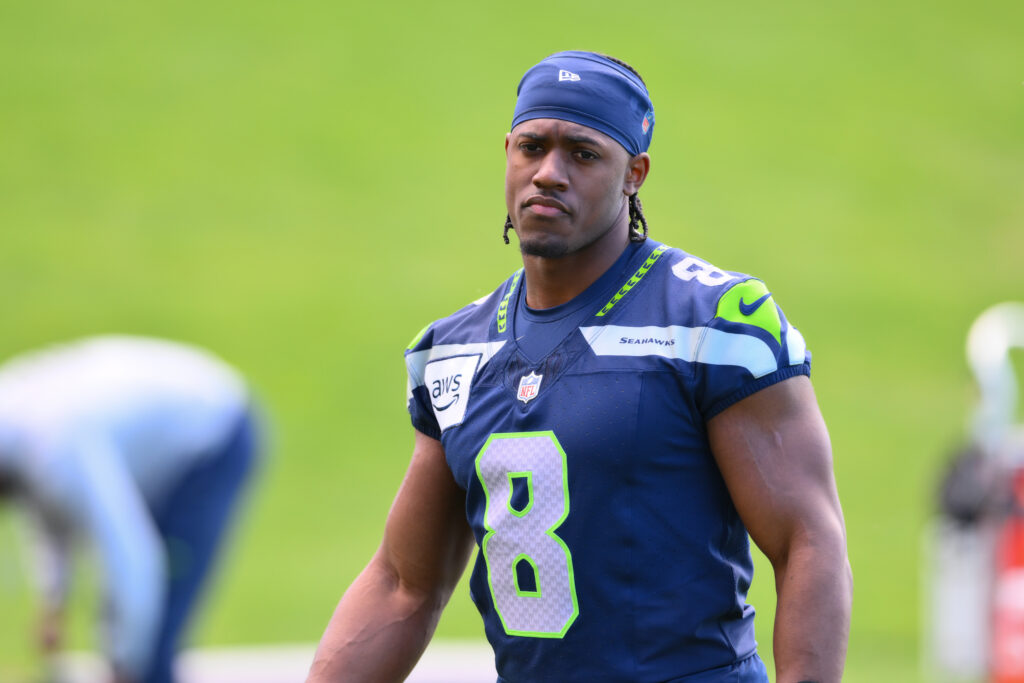
Jadarian Price, Seattle Seahawks (Consensus RB28)
Jadarian Price is one of my favorite rookie running backs to target this season because of both his talent and his situation. Despite currently being drafted as the consensus RB28, there is a realistic path for him to become Seattle’s featured back before the season reaches its halfway point.
Following Kenneth Walker’s departure, the Seahawks’ backfield has become a competition between Price and Zach Charbonnet. Charbonnet has shown flashes throughout his career, but Price enters the league with significantly higher upside and the type of skill set that Seattle invested a first-round pick to acquire. Teams simply don’t spend that kind of draft capital on a running back without expecting him to become a major contributor.
Price possesses the vision, burst, and physical running style necessary to handle a heavy workload while also contributing in the passing game. Even if Seattle opens the season with a committee approach, it wouldn’t be surprising to see Price gradually earn more touches as the year progresses.
By the second half of the season, there’s a strong possibility he’s the unquestioned lead back in Seattle. Considering where he’s currently being drafted, that kind of upside is difficult to pass on during the middle rounds of fantasy drafts.
Kyle Monangai, Chicago Bears (Consensus RB37)
The sophomore running back may be in for a big season under one of the best offensive play callers in the league. Ben Johnson will continue to pound the rock and Monangai proved he could produce well even in a limited backup role.
However heading into his second season it seems in practice so far that Monangai may be thriving while the veteran D’Andre Swift subtly declines. If Monangai were to takeover as the top running back for Chicago either due to a Swift injury or exclusively due to being the better talent, he would have the upside to finish within the top 15 running backs in the league easily.
Even if he were to remain the second option out of the backfield for the entire season, this is still a low ranking. Most of the backup running backs in the league either will never be fantasy viable as the backup, don’t have a clear path to becoming the starter, or both. Monangai however has a promising path to potentially overtaking Swift, can be viable as the backup, and is a second year player with incredible upside.
He may not become a league winning addition, but this is a selection that will leave people puzzled later on as to why he was drafted so late.
Demond Claiborne, Minnesota Vikings (Consensus RB67)
For managers looking for a true late-round lottery ticket, Demond Claiborne deserves serious consideration. Currently sitting all the way down at RB67, he likely won’t even be selected in many standard fantasy leagues, but the opportunity for him to carve out a meaningful role shouldn’t be ignored.
Minnesota’s running back room lacks long-term security. Aaron Jones and Jordan Mason are the two veterans ahead of Claiborne on the depth chart, but neither impressed consistently last season as both showed signs of regression. Running back was widely viewed as one of the Vikings’ biggest needs entering the offseason, and Claiborne represents their most significant addition at the position.
Rookies selected this late in fantasy drafts rarely need to contribute immediately to become worthwhile investments. Claiborne simply needs an opportunity. If Jones continues to decline or injuries create an opening, Claiborne has the talent to steadily earn more touches as the season progresses.
He’s far from a player fantasy managers should rely on early in the year, but as one of the deepest sleepers on the board, Claiborne possesses the type of long-term upside that’s worth stashing at the end of drafts. If things break his way, he could eventually emerge as Minnesota’s starting running back and become one of the better waiver-wire stories of the season.
Wide Receiver Sleepers
DeVonta Smith, Philadelphia Eagles (Consensus WR14)
DeVonta Smith has quietly been one of the most reliable fantasy wide receivers over the past several seasons, yet he enters 2026 as just the consensus WR14. While that’s certainly a respectable ranking, it still feels too low for a player whose situation has improved significantly entering this season.
Smith has consistently finished as a productive fantasy option despite sharing targets with A.J. Brown. Now, with Brown no longer in Philadelphia, Smith is expected to become the unquestioned top receiving option in the Eagles’ offense. That alone should lead to a significant increase in target volume, giving him far more week-to-week consistency than fantasy managers have become accustomed to.
One of the few criticisms of Smith’s fantasy profile has been his streakiness. There were weeks where he looked like a league-winning receiver, followed by quieter performances when Brown dominated the target share. As the clear No. 1 option, those fluctuations should become far less frequent. His combination of route running, reliable hands, and expanded opportunity gives him legitimate top-10 upside.
Being drafted outside the top 12 receivers gives fantasy managers an opportunity to acquire a player whose role has improved considerably without paying the premium typically associated with a team’s top receiving threat.
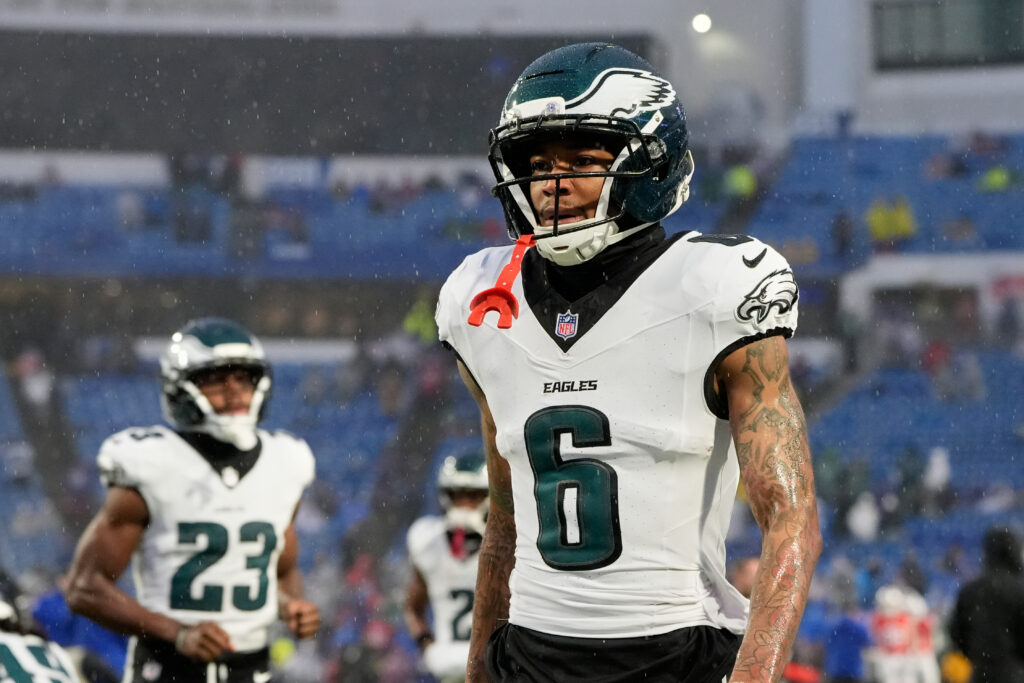
Malik Nabers, New York Giants (Consensus WR18)
Malik Nabers is another player whose fantasy value feels more influenced by injury concerns than his actual talent. Currently being drafted as the consensus WR18, Nabers possesses one of the highest ceilings of any receiver outside the first few rounds.
When healthy, there is no debate about his role. He is the focal point of New York’s passing attack and one of the league’s most explosive young receivers. His ability to create separation at every level of the field makes him a target magnet, and his big-play ability allows him to produce fantasy points in bunches.
The arrival of Jaxson Dart should also benefit Nabers. A talented young quarterback willing to push the football downfield fits perfectly with Nabers’ skill set, and the two have the potential to quickly develop into one of the league’s better quarterback-receiver duos.
The biggest concern is durability. Injuries have followed Nabers early in his career, and fantasy managers are understandably hesitant because of that history. However, that’s precisely why he’s being drafted outside the elite tier of receivers. If he stays healthy for a full season, there is little reason to believe he can’t finish among the top five fantasy wide receivers.
Mike Evans, San Francisco 49ers (Consensus WR31)
Mike Evans being drafted as the consensus WR31 is one of the biggest surprises at the wide receiver position. While age naturally causes fantasy managers to hesitate, his current value has dropped far beyond what his production suggests it should.
Last season was difficult for Evans as injuries prevented him from finding his usual consistency. However, it’s important to remember that prior to last year, Evans had played at least 13 games in each of his previous 11 NFL seasons. One injury-shortened campaign shouldn’t erase more than a decade of dependable production.
The change in offensive environment only makes his outlook more appealing. Kyle Shanahan has consistently proven to be one of the NFL’s best offensive minds, routinely manufacturing touches for his top playmakers. His offenses have elevated receivers throughout his coaching career, allowing players such as Jauan Jennings and Kendrick Bourne to become fantasy-relevant options.
Evans is arguably the most complete receiver Brock Purdy has ever played with. His size, route running, contested catch ability, and red-zone dominance should immediately make him one of the centerpieces of San Francisco’s passing attack. Considering the lack of proven receiving depth behind him outside of Ricky Pearsall, Evans should continue seeing the volume necessary to comfortably outperform his current WR31 ranking if he stays healthy.
Jordyn Tyson, New Orleans Saints (Consensus WR36)
Jordyn Tyson is one of my favorite rookie wide receivers to target in fantasy drafts because of both his talent and the situation surrounding him. Currently being drafted as the consensus WR36, Tyson has a legitimate opportunity to dramatically outperform that ranking.
Tyson will be catching passes from Tyler Shough, who just helped Chris Olave finish as the WR6 in fantasy football last season. That alone creates optimism for New Orleans’ passing game, but Tyson’s outlook becomes even more intriguing when considering the uncertainty around the rest of the receiving corps.
Olave remains an outstanding receiver when healthy, but injuries have consistently limited his availability throughout his career. If he were to miss significant time once again, Tyson would immediately become the Saints’ unquestioned top receiver with very little proven depth competing for targets. That kind of opportunity could lead to one of the highest target shares in football.
Even if Olave remains healthy, Tyson still has a chance to emerge as one of the better rookie receivers in this class. His talent is undeniable, and there’s a legitimate argument that he could eventually prove to be the best receiver from his draft class. At his current draft price, fantasy managers are making a calculated bet on talent with enormous upside.
Parker Washington, Jacksonville Jaguars (Consensus WR37)
Parker Washington continues to be one of the most overlooked wide receivers in fantasy football despite proving his value over the second half of last season. Entering 2026 as the consensus WR37, Washington is being drafted below several receivers who failed to produce anywhere near his level down the stretch.
Washington finished last season on an incredible run, averaging 22 fantasy points per game over his final three regular season contests. Even before that stretch, he had become a reliable plug-and-play option whenever fantasy managers needed a receiver. His chemistry with Trevor Lawrence steadily improved throughout the year, and by season’s end he had become one of Jacksonville’s most dependable offensive weapons.
Despite beginning last season lower on the depth chart, Washington still nearly reached the 1,000-yard mark and ultimately finished as the fantasy WR32. That production alone suggests his current WR37 ranking undervalues what he accomplished, especially considering he now enters the season with an established role from Week 1.
While Brian Thomas Jr. and Travis Hunter will naturally command attention from opposing defenses, Washington’s consistency and reliability should continue earning him a large share of targets. I wouldn’t expect him to maintain a 22-point fantasy average, but I do expect him to lead Jacksonville in receptions and comfortably outperform his current draft position.
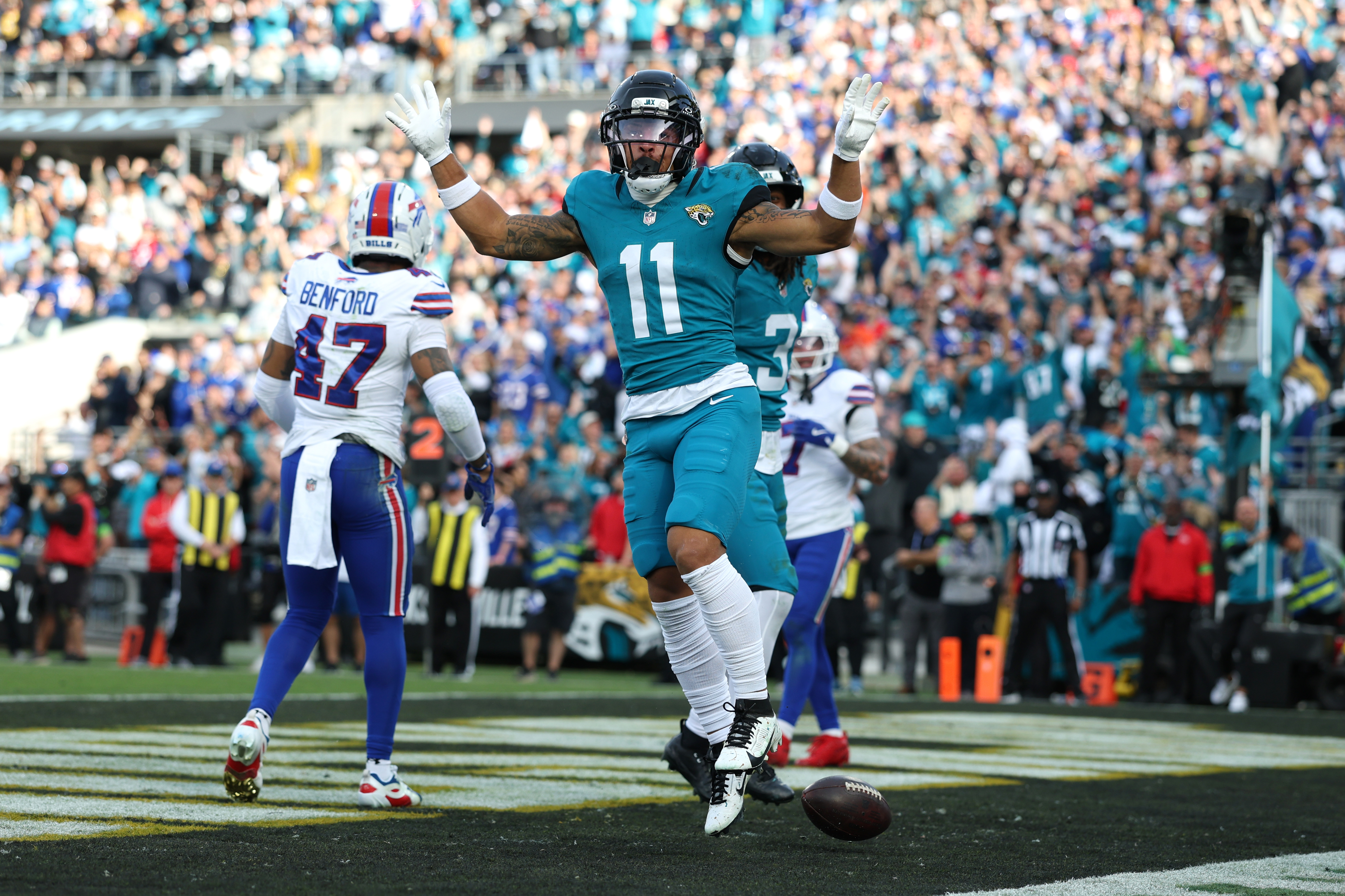
Brian Thomas Jr., Jacksonville Jaguars (Consensus WR39)
Perhaps the biggest surprise of any fantasy ranking is seeing Brian Thomas Jr. sitting all the way down at WR39. Simply put, one of the league’s most gifted young receivers is being drafted as nothing more than a low-end WR3 despite possessing legitimate star potential.
Thomas battled injuries throughout his sophomore season, preventing him from building on the remarkable rookie campaign that saw him finish as the WR3 in fantasy football. Now healthy once again, he enters his second full season in Liam Coen’s offense with a far better understanding of both the scheme and his connection with Trevor Lawrence.
Everything coming out of Jacksonville this offseason has been overwhelmingly positive. Thomas has reportedly looked every bit like the superstar receiver the Jaguars believed they drafted, consistently making explosive plays throughout training camp while reminding everyone why he was viewed as one of the NFL’s brightest young receivers.
There is certainly more competition for targets this season with Parker Washington, Travis Hunter, Jakobi Meyers, and Brenton Strange all expected to contribute, but talent usually wins out over the course of a full season. Thomas remains the most physically gifted receiver on the roster, and if Trevor Lawrence takes the step forward many expect, Thomas could be the biggest beneficiary.
A finish inside the top 16 fantasy wide receivers feels far more realistic than his current WR39 valuation. If Jacksonville’s offense becomes one of the league’s highest-scoring units as expected, Thomas has every opportunity to remind fantasy managers why he was once considered one of the game’s premier young stars.
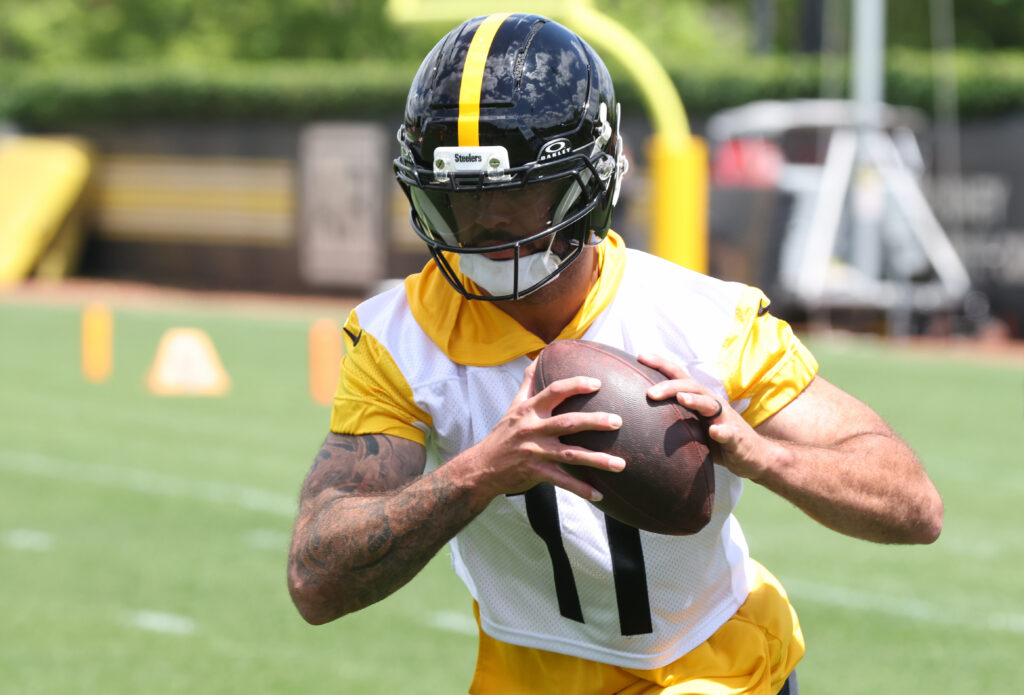
Michael Pittman Jr., Pittsburgh Steelers (Consensus WR44)
Michael Pittman Jr. may not be one of the flashiest names available in fantasy football drafts, but he is one of the safest values at the wide receiver position. Currently being drafted as the consensus WR44, Pittman is coming off a season in which he finished as the WR18 in fantasy football. A drop of more than 25 spots in the rankings feels like an overcorrection for a player who has consistently produced throughout his career.
Following his move to Pittsburgh, Pittman steps into an offense looking for a dependable chain mover and physical presence in the passing game. While he may not possess the game-breaking speed of some younger receivers, his size, route running, and ability to win contested catches make him an ideal target in both critical situations and the red zone.
Pittman may never be the type of receiver who posts 150 yards and two touchdowns every week, but there’s tremendous value in players who consistently provide solid production without disappearing from the game plan. He projects as the type of receiver fantasy managers can confidently insert into their lineup knowing they’ll receive reliable weekly production rather than hoping for a boom-or-bust performance.
If you’re searching for upside late in your draft, there are certainly riskier options with higher ceilings. However, if your roster already has plenty of explosive players, Pittman offers outstanding value as dependable depth who should comfortably outperform his current WR44 ranking.
Matthew Golden, Green Bay Packers (Consensus WR50)
Matthew Golden was one of fantasy football’s favorite sleeper picks entering last season, but after an underwhelming rookie campaign, much of the excitement surrounding him has disappeared. Now entering his second season as just the consensus WR50, Golden once again finds himself in position to become one of fantasy’s biggest breakout candidates.
While Golden struggled to carve out a major role as a rookie, the path toward significantly more playing time has become much clearer entering 2026. Green Bay could find itself leaning more heavily on the passing game if Josh Jacobs’ off-the-field situation results in a suspension, placing greater responsibility on Jordan Love and the receiving corps.
Golden also benefits from uncertainty around the players ahead of him. Jayden Reed has shown flashes but has struggled with consistency, while Christian Watson continues to battle injuries that have followed him throughout his career. If Watson misses time once again, Golden could quickly establish himself as Green Bay’s top outside receiver alongside tight end Tucker Kraft.
Even if everyone remains healthy, Golden has the talent to earn a larger role than he held as a rookie. Neither Watson nor Reed has firmly established themselves as the unquestioned star of the offense, leaving the door open for a sophomore breakout. At WR50, fantasy managers are paying very little for a player with legitimate starting upside.
Jalen Nailor, Las Vegas Raiders (Consensus WR65)
Jalen Nailor is one of the deepest wide receiver sleepers available this year, and his path to relevance is much clearer than many fantasy managers realize. Entering the season as the consensus WR65, Nailor has an opportunity to emerge as the Raiders’ top receiver on the outside.
The biggest factor working in Nailor’s favor is the lack of established competition. While Brock Bowers is unquestionably the focal point of Las Vegas’ passing attack, the Raiders’ wide receiver room lacks proven production. Tre Tucker will compete for targets, but Nailor has an opportunity to establish himself as the team’s most reliable option on the perimeter.
Familiarity also plays an important role. Nailor previously spent time with both Kirk Cousins and new head coach Klint Kubiak during his years in Minnesota. Although he was never asked to be a featured receiver while sharing the field with Justin Jefferson and Jordan Addison, he now enters an offense where there are far fewer obstacles standing between him and a meaningful workload.
He isn’t a player fantasy managers should expect to become an immediate weekly starter, but if he earns the top receiver role, he’ll have little trouble outperforming his current WR65 valuation. He’s an excellent late-round flier with a realistic path toward consistent fantasy relevance.
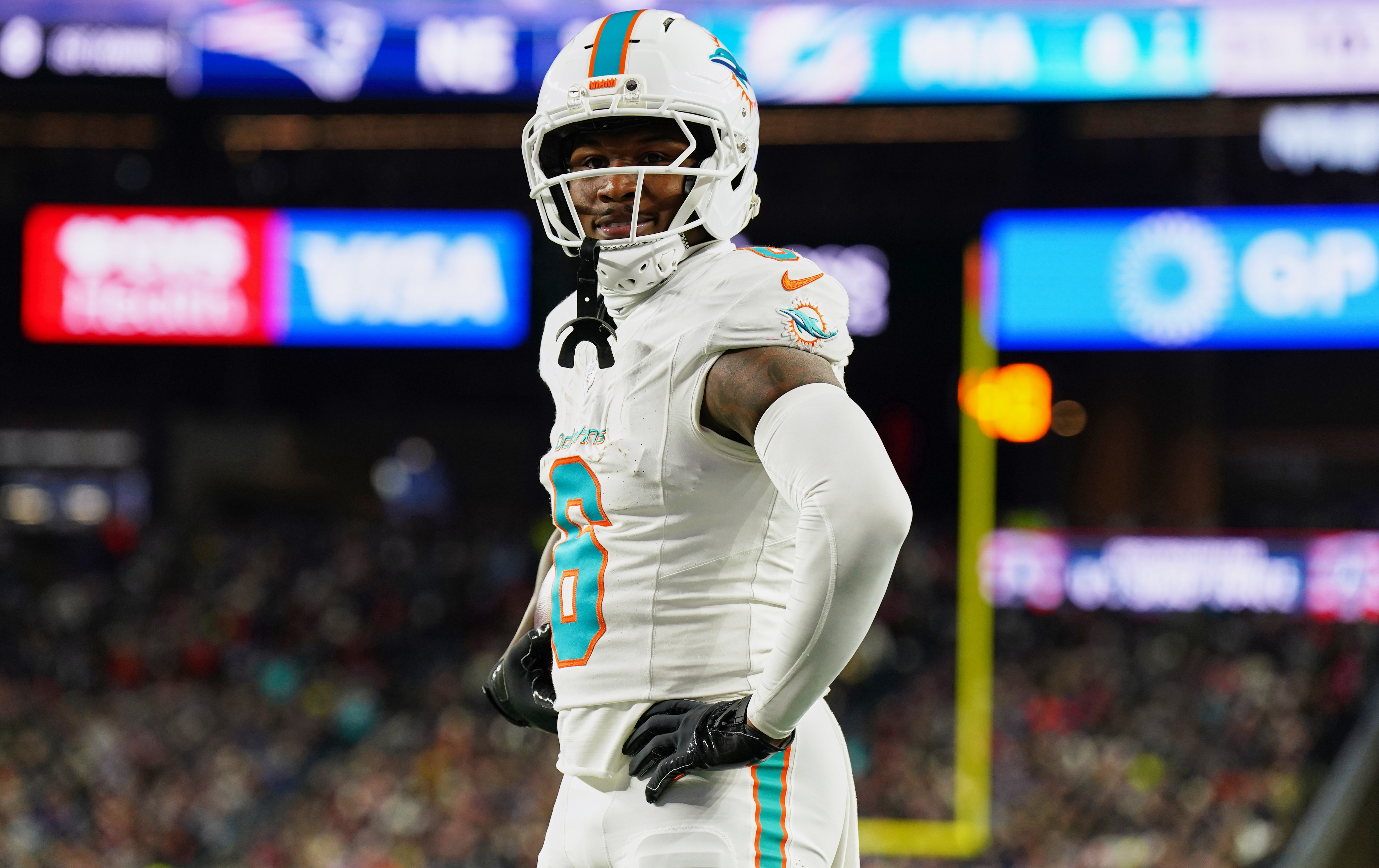
Malik Washington, Miami Dolphins (Consensus WR80)
One of my favorite late-round targets in fantasy football is Malik Washington. Currently being drafted as the consensus WR80, Washington is almost an afterthought in many fantasy leagues despite entering the season as the projected top receiver on Miami’s depth chart.
Washington has flashed his potential throughout his first two NFL seasons, but breaking into a receiving rotation featuring Tyreek Hill and Jaylen Waddle was always going to be nearly impossible for a former sixth-round pick. With both veteran receivers no longer on the roster, Washington finally has the opportunity to prove he can handle a featured role.
Unlike Las Vegas, where Brock Bowers is expected to command a massive target share, Miami doesn’t have an elite tight end dominating opportunities in the passing game. Instead, De’Von Achane figures to be the offense’s primary weapon alongside Washington, leaving an enormous number of targets available for the young receiver to capitalize on.
Considering his expected role, Washington’s WR80 ranking feels remarkably low. He has already shown he belongs in the NFL, and now he’ll finally have the volume necessary to translate that talent into meaningful fantasy production. At his current draft cost, he’s one of the easiest late-round selections fantasy managers can make. If you want to go another route though, rookie receiver Chris Bell I believe has the most upside of any of the receivers on Miami’s offense. Bell was a potential first round pick before suffering a torn ACL, if he gets healthy and is given an opportunity he could takeover as the clear best talent in this receiving room.
Tight End Sleepers
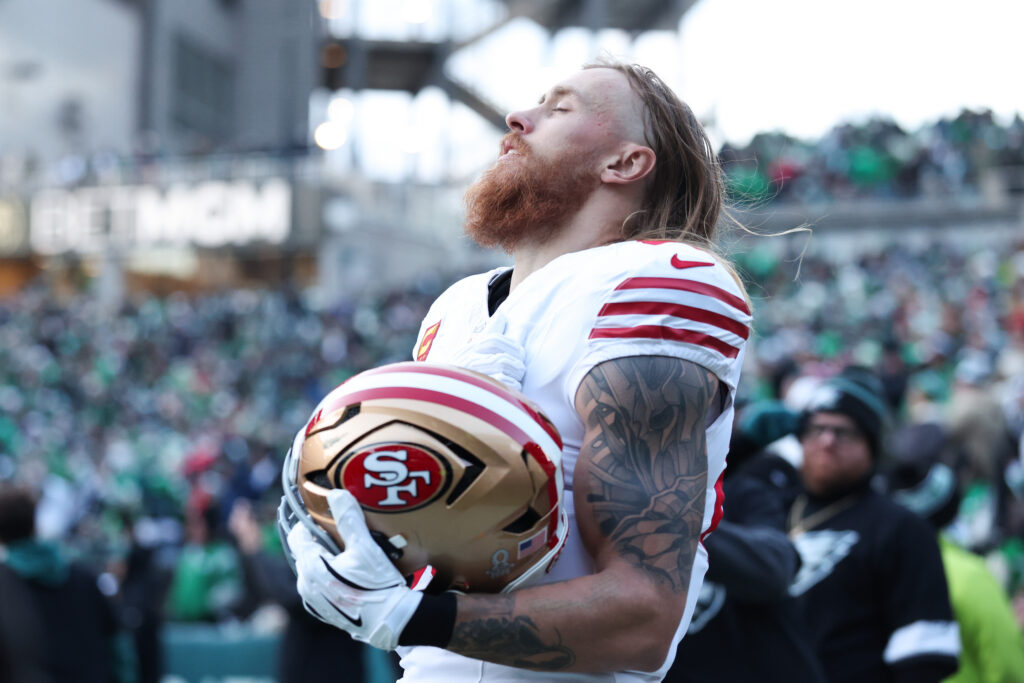
George Kittle, San Francisco 49ers (Consensus TE9)
George Kittle being drafted as the consensus TE9 is one of the biggest values at the tight end position. While fantasy managers have become increasingly focused on younger options or players with perceived breakout potential, Kittle continues to be overlooked despite remaining one of the NFL’s most complete and productive tight ends when healthy.
The biggest concern surrounding Kittle has always been durability, and it’s understandable why some fantasy managers are hesitant. He appeared in just 11 games last season, limiting his overall fantasy production and allowing several younger tight ends to pass him in the rankings. However, it’s important to remember that before last year, Kittle had played at least 14 games in each of the previous four seasons. One injury-shortened season shouldn’t completely overshadow years of elite production.
What’s especially surprising about Kittle’s current value is the players being drafted around him. Jake Ferguson, for example, is currently being selected just behind Kittle despite finishing last season with fewer receiving yards while scoring only one more touchdown. Ferguson also played six more games than Kittle, making the comparison even more difficult to justify. Several of the tight ends being drafted in Kittle’s range are players fantasy managers hope can produce similar numbers over a full season to what Kittle averages whenever he’s healthy.
Rather than settling for a lower-ceiling option simply because they appear to be safer, I’d much rather take the player capable of delivering elite weekly production. Even if Kittle were to miss time again, replacing a tight end for a few weeks is far easier than trying to find elite production on the waiver wire. And, of course, there’s always the possibility that Kittle stays healthy while the supposedly “safer” options miss time themselves.
Fantasy football often rewards managers who bet on talent rather than fear injury, and few players at the position possess Kittle’s combination of consistency, explosiveness, and week-winning upside. At TE9, he’s one of the easiest values to identify.
Kenyon Sadiq, New York Jets (Consensus TE20)
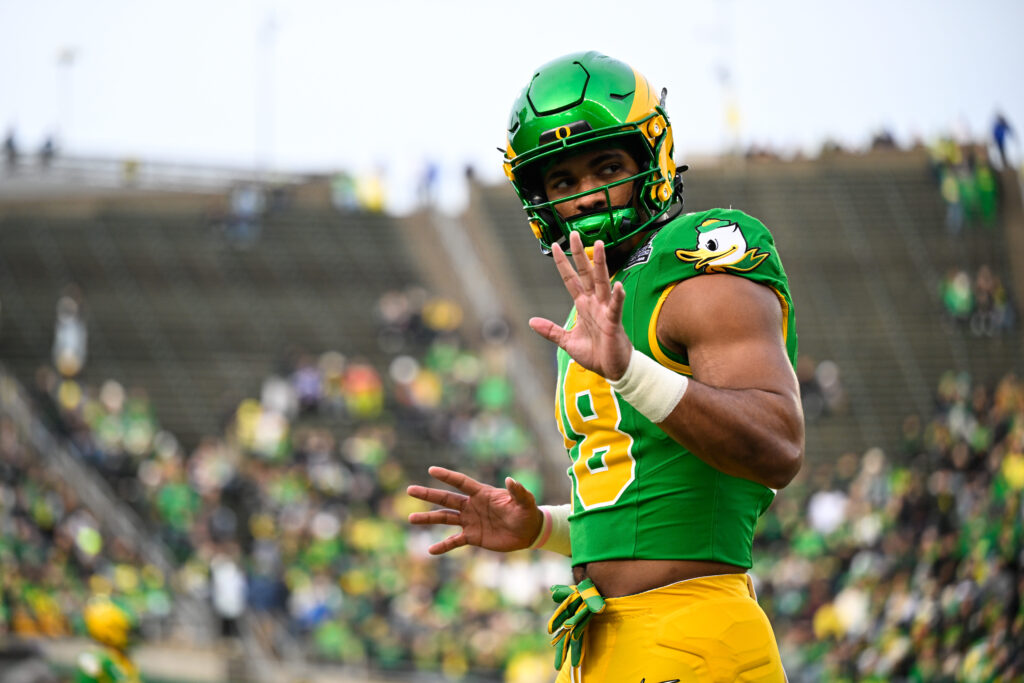
Kenyon Sadiq enters the NFL as my favorite rookie tight end for fantasy football and one of the most intriguing late-round sleepers at the position. Currently being drafted as the consensus TE20, Sadiq offers far more upside than most players available in that range.
Unlike many rookie tight ends who spend their first season learning the nuances of blocking and slowly earning offensive snaps, Sadiq projects primarily as a receiving weapon from Day 1. His speed and athleticism make him a mismatch against linebackers and safeties, while his ability to stretch the field vertically gives the Jets another explosive element in the passing game. He isn’t simply a possession tight end who catches short passes. He’s capable of turning routine receptions into long gains and creating splash plays that can swing fantasy matchups.
The path to fantasy relevance is also much clearer than many realize. New York doesn’t have an established star at tight end standing in his way, allowing Sadiq an immediate opportunity to earn meaningful targets. If he develops chemistry with his quarterback early in the season, he could quickly become one of the primary receiving options in the offense.
Recent history also supports taking chances on talented rookie tight ends. Last season saw multiple first-year players make an immediate fantasy impact, including Colston Loveland, Tyler Warren, Harold Fannin Jr., and Oronde Gadsden II. The position has evolved to where elite athletes are contributing much earlier in their careers, and Sadiq has all the tools to continue that trend.
Drafting Sadiq at TE20 is essentially selecting him near his floor. If he develops as expected, he has the talent and opportunity to finish among the better fantasy tight ends by the end of the season. While there will likely be some inconsistency as a rookie, his combination of athletic ability and receiving upside makes him an excellent late-round gamble for managers who choose to wait on the position.
Final Thoughts
Every fantasy football draft presents opportunities to find players who significantly outperform their average draft position, and those are often the players who decide championships. While early-round stars provide the foundation of a successful roster, identifying the right sleepers can create the kind of value that separates your team from the rest of the league.
This year’s sleeper class features a healthy mix of established veterans whose draft stock has fallen too far, ascending young stars ready to break out, and rookies with clear paths to meaningful roles. Players like Trevor Lawrence, De’Von Achane, and George Kittle have the talent to finish among the elite at their respective positions despite being drafted well below their ceilings. Others, such as Bhayshul Tuten, Jordyn Tyson, Kenyon Sadiq, and Malik Washington, represent calculated bets on opportunity and upside that could pay off in a big way.
No sleeper is guaranteed to become a league winner, but targeting players whose potential far exceeds their current cost is one of the most effective ways to build a championship-caliber fantasy roster. If even a handful of these players reach the ceilings they’ve shown they’re capable of, they’ll become some of the best values in fantasy football throughout the 2026 season.