
This offensive guard class is built on a mix of power, explosiveness, and technical projection, with a wide range of developmental timelines and immediate impact players. What stands out most is not just the raw athletic profiles, but how many prospects already show translatable strength and pass protection ability against high-level competition. While the group is not defined by a single dominant archetype, it offers teams flexibility to build different types of interior units depending on scheme and identity. The evaluations below reflect an emphasis on tape-driven traits, functional athleticism, and how each player projects at the next level.
1. Olaivavega Ioane – Penn State
Ioane enters evaluation as one of the most reliable interior pass protectors in the class based on how consistently he eliminates pressure from the interior. He keeps a firm anchor, rarely gives ground against bull rushes, and shows an advanced understanding of how to sustain protection through contact. His hand placement and timing allow him to control reps early, which prevents defenders from ever fully converting speed to power. Even when faced with complex interior movement, he maintains structure and does not panic under pressure. That level of composure gives him a very high baseline in pass protection.
What stands out further is how processed his recognition skills are when defenses attempt to stress him with stunts and games. He rarely overcommits to his initial assignment and is able to pass off work cleanly without losing pocket integrity. His eyes stay disciplined through the snap, which helps him avoid being manipulated by delayed movement or disguised pressure looks. That awareness is a major reason he stays consistent even against top-level competition. It creates a dependable interior presence that quarterbacks can trust.
The run game shows more mixed results compared to his pass protection profile. He can generate movement in tight areas, but his ability to climb and finish at the second level is limited by average mobility. When asked to work in space, his range becomes more restricted and he operates best in controlled, downhill schemes. He is most effective when staying square and working through contact rather than chasing targets. That combination still gives him a strong starting projection with clear schematic fit considerations.
Value: Round 1
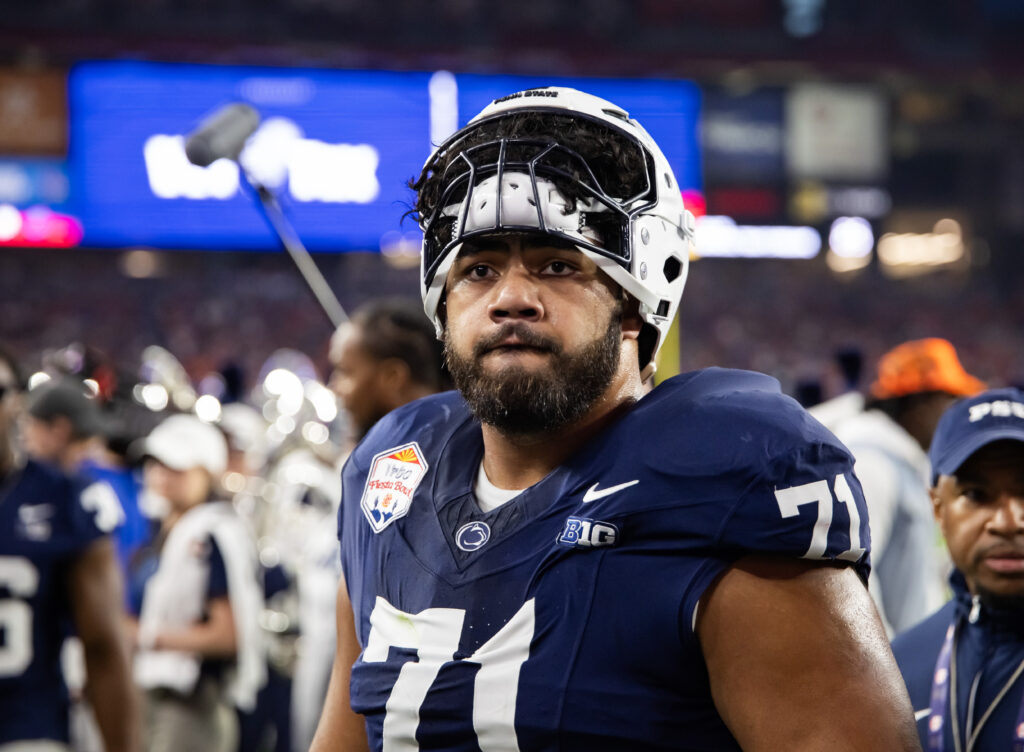
2. Kadyn Proctor – Alabama
Proctor’s evaluation begins with overwhelming size and raw strength that immediately show up when he is set in pass protection. He anchors extremely well against power rushers and rarely allows clean pocket disruption when his base is intact. His initial punch carries real force and can alter the timing of a rush before it develops fully. When he stays balanced, he becomes very difficult to move off his spot. That gives him a strong foundational trait for interior projection.
However, his tape becomes more inconsistent when he is forced into lateral movement or recovery situations. Quick inside counters and sudden direction changes expose stiffness in his lower half, leading to leverage losses. His mass can work against him when his feet are late, making recovery more difficult against NFL-level interior quickness. These issues are more pronounced at tackle and help clarify why his projection shifts inside. It is less about strength and more about movement efficiency under stress.
As a guard, his physical traits translate much more cleanly and effectively. He can generate downhill displacement in the run game and handle direct contact without losing structural integrity. There is still significant developmental upside given his age and physical tools. If his conditioning and footwork continue to refine, he has clear long-term starting potential. The ceiling remains tied to how well his movement improves rather than raw strength.
Value: Round 1–2
3. Emmanuel Pregnon – Oregon
Pregnon plays with controlled violence that consistently shows up in how he dictates contact at the point of attack. His anchor is immediate and firm, and once he lands his hands, defenders struggle to disengage or reset their rush. He wins early in reps through strong strike timing and excellent body positioning. That combination allows him to stay ahead of pressure rather than reacting to it. His pass protection foundation is extremely stable.
He is also one of the more consistent interior pass protectors in terms of long-term rep control. He does not overextend or chase movement, instead trusting his base and strength to absorb contact. Even when defenders try to manipulate his leverage, he maintains balance and structure through engagement. That creates a steady pocket presence that minimizes breakdowns. His ability to sustain contact is one of his defining traits.
The primary limitation appears when he is forced into lateral recovery or rapid directional adjustment. More agile interior rushers can stress his hips and force him into less efficient movement patterns. While he rarely loses cleanly, he can be delayed in re-establishing position after being displaced. The run game impact is strong in tight spaces but less dynamic in space. Overall, he projects as an early starter with high floor reliability.
Value: Round 1–2
4. Gennings Dunker – Iowa
Dunker plays with a physical, aggressive identity that immediately shows up in both run blocking and engagement style. He consistently generates movement at the line of scrimmage through strong leg drive and controlled power through contact. Once he establishes leverage, he finishes blocks with real intent and does not ease up through the whistle. That mentality gives him a clear edge in gap and power concepts. His run game identity is very defined.
He brings extensive experience in structured blocking schemes, which shows in his ability to execute combination blocks and sustain engagement through traffic. He understands angles and timing in run fits, allowing him to create displacement in controlled environments. His strength shows up most when he is allowed to work downhill rather than in space. That makes him particularly effective in systems that emphasize interior physicality. He consistently plays with effort and finish.
The limitations appear when he is asked to operate in space or recover against quicker interior defenders. His lateral movement is average, and he can struggle when forced to redirect or mirror sudden changes. These issues make him more of a guard projection despite prior tackle experience. His ceiling is tied to functional strength rather than athletic range. Still, his physical style gives him legitimate starting upside.
Value: Round 2
5. Chase Bisontis – Texas A&M
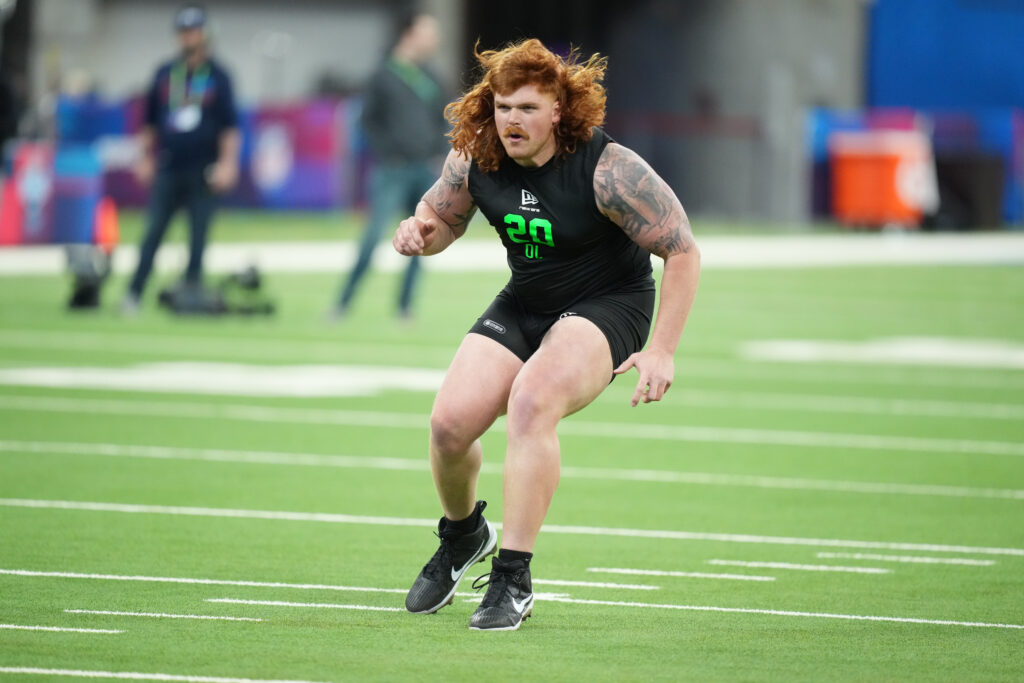
Bisontis shows strong short-area athletic ability that translates directly into both pass protection and run blocking efficiency. He stays balanced in his sets and does a good job of maintaining structure once his hands connect. That allows him to neutralize interior rushers early before they can fully threaten the pocket. His movement is controlled rather than reactive, which helps stabilize his pass sets. He plays with good functional awareness.
In the run game, his ability to climb and adjust in space stands out as a key strength. He consistently reaches second-level targets and shows the ability to sustain contact through movement. His foot speed allows him to stay engaged through longer developing plays. That makes him effective in zone concepts as well as interior combinations. His movement profile is one of his clearer strengths.
His main issue comes in timing and consistency against more technical pass rushers. When his hands arrive late, he can be forced into recovery mode and lose leverage. That leads to occasional breakdowns in posture and exposure inside his frame. Cleaning up hand timing is the key developmental factor for him. If that improves, he has clear starting potential.
Value: Round 2
6. Keylan Rutledge – Georgia Tech
Rutledge plays with an aggressive and physical demeanor that shows up immediately at contact. His hands strike with force and he consistently creates movement when he fits cleanly into defenders. That makes him a tone-setting interior presence in both phases of the game. He does not shy away from contact at any point in reps. His physical identity is very clear.
He also brings strong movement ability that allows him to operate in space effectively. When pulling or climbing, he shows the ability to arrive with force rather than simply positioning himself. That gives him value in run-heavy schemes that require interior linemen to work across multiple levels. His versatility across interior spots adds to his projection. He plays with consistent effort and aggression.
The inconsistency shows up in pass protection structure, where pad level and foot coordination can fluctuate. When his base narrows or his hands widen, he can lose leverage against interior counters. That creates occasional vulnerability against quicker defenders. Refinement in those technical areas will determine his long-term ceiling. He projects best as a developing starter.
Value: Round 2
7. Jalen Farmer – Kentucky
Farmer brings a strong physical profile with clear explosiveness at contact that shows up in both pass protection and run blocking. His hands strike with authority and consistently disrupt defensive timing when he connects early. He plays through contact with intent and does not shy away from finishing reps. That gives him a clear edge in physical matchups. His game is built on force.
In the run game, he is most effective when working downhill where his strength and mass create clear displacement. He also shows solid effectiveness as a puller, where his ability to arrive with momentum allows him to clear space quickly. His physical profile translates best in gap schemes rather than lateral movement systems. He consistently plays with finishing mentality through contact. That makes him valuable in structured run concepts.
The limitation is his recovery ability when forced into lateral adjustment or delayed movement. He can be slow to react to interior counters, which leads to occasional leverage breakdowns. That restricts his consistency against more agile defenders. While the physical tools are strong, the movement component remains a limiting factor. He projects as a power-based interior starter or high-level rotational piece.
Value: Round 2
8. Micah Morris – Georgia
Morris is one of the more interesting projection cases in the interior group due to how his tape and public valuation differ. He has consistently held up against high-level competition and shown the ability to remain stable in pass protection. His size and strength allow him to absorb contact and reset effectively when challenged. He does not play like a developmental-only prospect on film. There is real functional ability present.
In the run game, he flashes the ability to generate movement while maintaining enough balance to recover when initially displaced. He does not rely on elite athleticism but instead uses structure and leverage to stay consistent. His frame allows him to absorb power and remain engaged through contact. That gives him a solid baseline as a potential starter. His play style is more steady than flashy.
The reason for his lower consensus valuation appears tied to refinement and consistency rather than physical limitations. There are still technical areas that require development, particularly in sustained drive blocking and situational execution. However, the foundation is strong enough that he could outperform expectations significantly. If developed properly, he has clear steal potential relative to draft position.
Value: Round 3
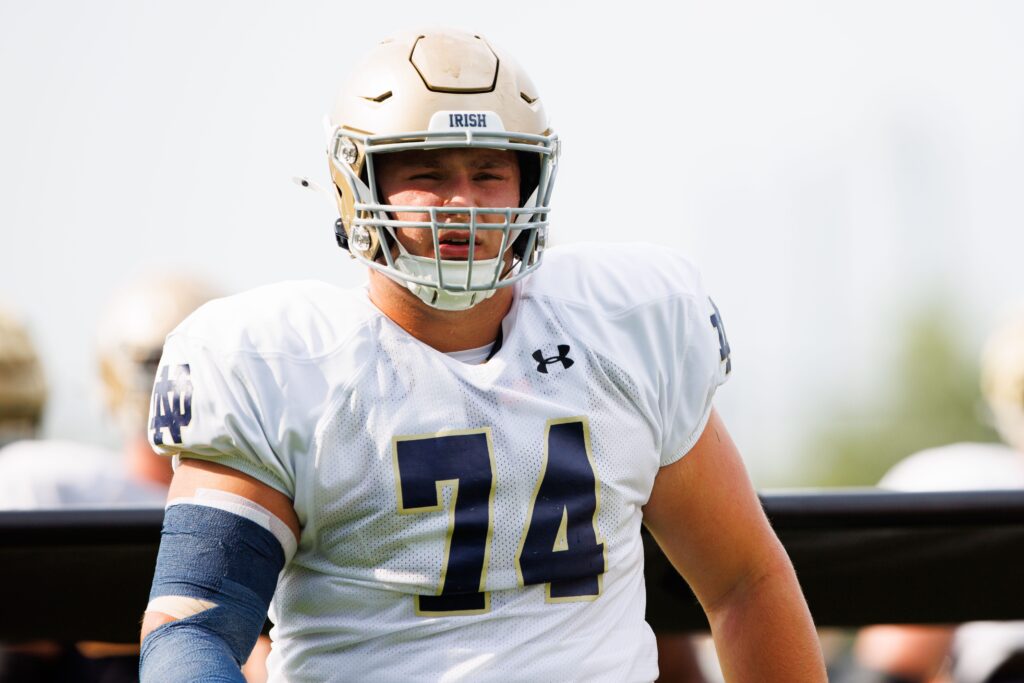
9. Billy Schrauth – Notre Dame
Schrauth is one of the most consistent interior pass protectors in the group, showing strong control over reps and excellent discipline in pass sets. He rarely allows clean penetration and maintains structure through contact effectively. His awareness against interior movement is reliable and keeps him from being manipulated. That gives him a strong baseline in protection. He is steady and controlled.
His footwork allows him to stay balanced and avoid overextension in most pass situations. He anchors well against power and is capable of resetting when initially displaced. That makes him a dependable interior presence in structured protection schemes. His communication and awareness also show up consistently. He plays with a composed approach.
The limitations are more evident in run blocking impact and athletic ceiling. He does not consistently generate displacement and can struggle to finish blocks in space. Durability is also a factor given multiple injury interruptions. That combination keeps his projection more grounded. He profiles as a reliable but lower-upside interior starter.
Value: Round 3–4
10. Jeremiah Wright – Auburn
Wright brings massive size and length that translate into strong contact presence at the point of attack. When he lands cleanly inside, he can generate immediate displacement and create movement in tight spaces. His physical style is consistent and force-driven. He plays with clear aggression through contact. That gives him a strong base identity.
He is functional in pass protection when set, using his frame to absorb power and limit direct penetration. His anchor can hold up when his technique is aligned and balanced. He also shows effort in finishing through the whistle. That gives him a baseline level of reliability. His physical traits carry his projection.
The limitations come in movement and processing speed, particularly against lateral stress and interior counters. He struggles to recover once displaced and can be late reacting to stunts. That narrows his range of effectiveness in more complex schemes. He projects best as a power-based depth interior lineman. His size gives him opportunity, but refinement is necessary.
Value: Round 3–4
11. Beau Stephens – Iowa
Stephens is a technically disciplined interior lineman who executes assignments with consistency and structure. He rarely loses track of responsibilities in run fits and shows strong timing on combination blocks. His awareness helps him stay in position and avoid breakdowns. That makes him a reliable schematic fit. He plays clean football.
In pass protection, he maintains a solid anchor and does not give up clean penetration easily. His hand placement and leverage allow him to sustain contact through reps. He is generally steady against basic movement and interior rush plans. That gives him dependable floor value. He does not often lose cleanly.
His limitations are primarily athletic, especially in space and lateral recovery. He struggles to consistently reach targets on the move and can be late adjusting to quicker defenders. That restricts his upside as a run-game mover. He projects more as a depth or rotational interior option. His reliability is his main strength.
Value: Day 3
12. Ar’maj Reed-Adams – Texas A&M
Reed-Adams has the physical tools to play at a higher level with size, length, and raw strength that show up in flashes. When he is technically sound, he can generate movement and hold up in pass protection effectively. His frame gives him natural leverage advantages when properly positioned. That creates an intriguing foundation. The tools are clearly present.
He shows effort and competitiveness through contact and does not shy away from physical matchups. There are moments where his strength and length allow him to reset engagements and recover from initial losses. His experience across multiple seasons also shows durability and exposure to high-level competition. That gives him developmental value. He has playable traits.
The main issue is consistency in technique, particularly with hand usage and pad level. Penalties and lapses in discipline have been recurring issues throughout his career. His footwork can also break down under stress, leading to balance problems. That inconsistency limits his projection. He is a traits-based developmental guard.
Value: Day 3
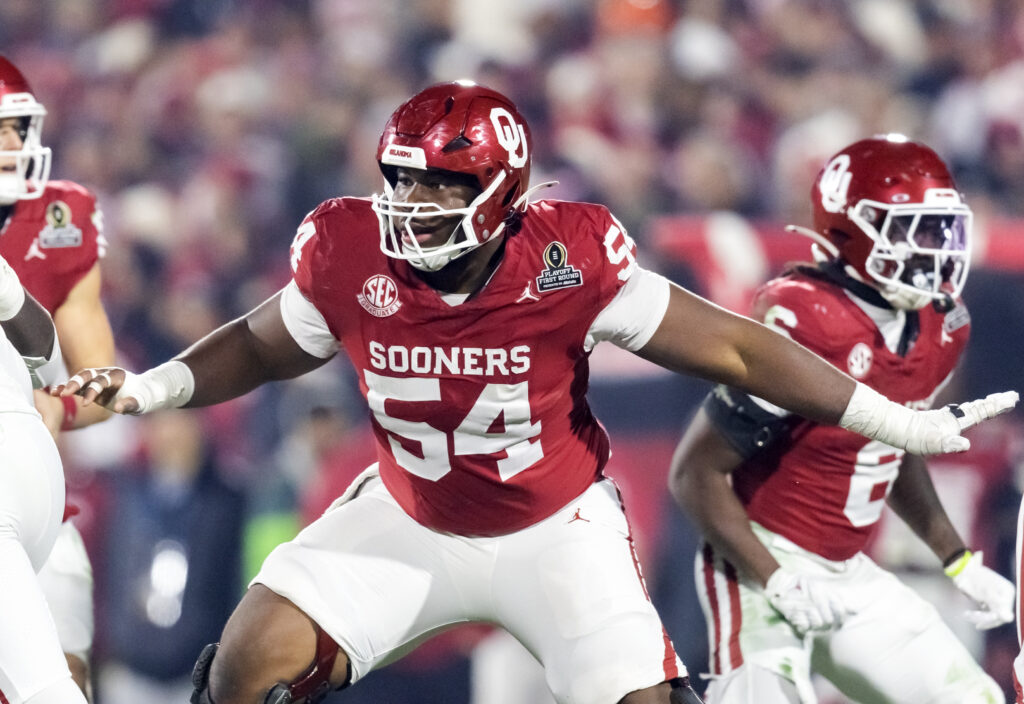
13. Febechi Nwaiwu – Oklahoma
Nwaiwu is a technically sound interior lineman who wins with positioning, hand placement, and awareness. He consistently lands clean strikes and uses length effectively to control engagement points. His anchor is stable and allows him to reset when initially displaced. That makes him reliable in pass protection. He is structured and controlled.
He processes line movement well and rarely loses track of stunts or delayed rushes. His ability to pass off work and stay organized helps maintain pocket integrity. In the run game, he is effective in combination blocking and controlled displacement schemes. He understands leverage and timing. That gives him a solid floor.
The limitations are primarily athletic, particularly in recovery speed and range in space. He struggles to consistently finish blocks on the move and can be late reacting to sudden directional changes. His upside is limited compared to more explosive interior prospects. He projects as a steady depth or rotational piece. His value comes from reliability.
Value: Day 3
14. Jaeden Roberts – Alabama
Roberts brings ideal size and strength that allow him to absorb power effectively in pass protection. When set properly, he can hold up against bull rushes and maintain pocket stability. His initial punch carries force and can disrupt rush timing. That gives him a solid baseline in protection. His frame is his strongest asset.
He shows flashes of improved pass set structure when operating with patience and control. His length helps him keep defenders at distance when engaged correctly. There are moments where he can sustain contact and reset effectively. That gives him developmental potential. His physical tools remain intriguing.
However, mobility limitations and stiffness in the lower half create consistent issues in both phases. He struggles in space and can be exposed by lateral movement or quick counters. Injuries have also impacted his consistency and movement quality. That restricts his long-term projection. He is a developmental depth option.
Value: Day 3
15. Anez Cooper – Miami
Cooper is a massive interior presence with clear length advantages that allow him to control contact points. When he establishes position, he can effectively wall off defenders and limit interior penetration. His strength shows up in tight spaces where movement is restricted. That gives him a strong physical baseline. His frame is his defining trait.
He functions best in controlled pass protection where he can anchor and absorb force without needing to redirect frequently. His hands are heavy enough to disrupt timing when he connects cleanly. He also shows effort in finishing through contact in the run game. That makes him functional in structured schemes. He plays with physical intent.
The limitation is movement ability, particularly in lateral agility and recovery. He struggles against quicker interior defenders who force him to adjust on the move. Processing speed can also lag in more complex defensive looks. That narrows his projection to depth or developmental roles. His size gives him opportunity, but refinement is needed.
Value: Day 3