![Jacksonville Jaguars wide receiver Parker Washington (11) runs on the field before an NFL football matchup at EverBank Stadium, Sunday, Jan. 4, 2026, in Jacksonville, Fla. The Jaguars defeated the Titans 41-7, capturing the AFC South title. [Corey Perrine/Florida Times-Union]](https://neweraprep.org/wp-content/uploads/elementor/thumbs/USATSI_27960852-scaled-rq13jhiroxnasxawrr693yoq0qyrkn3qmqoesmjnns.jpg "Syndication: Florida Times-Union")

The Jacksonville Jaguars enter training camp with expectations as high as they’ve been in years. After showing significant progress during Liam Coen’s first season as head coach, Jacksonville now enters Year 2 with continuity throughout the coaching staff, a roster built around young ascending talent, and legitimate aspirations of competing for a Super Bowl.
Much of the foundation is already in place. Trevor Lawrence is looking to build on another outstanding season, the Jaguars boast one of the NFL’s most exciting receiving corps, and the defense returns a talented core led by Josh Hines-Allen, Travon Walker, Foye Oluokun, Travis Hunter, and Antonio Johnson.
Although many starting roles appear settled entering camp, several key battles remain. There are multiple young players pushing for starting jobs, a few positions with uncertainty as to who will start, and the depth throughout the roster is stronger than it has been in recent years. Those battles will determine not only who makes the final 53-man roster, but also how Jacksonville’s depth chart looks heading into Week 1.
With training camp just around the corner, this is my projection of the Jaguars’ initial 53-man roster, complete depth chart, and the players I believe are just outside looking in.
Quarterback
Depth Chart
QB1: Trevor Lawrence
QB2: Nick Mullens
Analysis
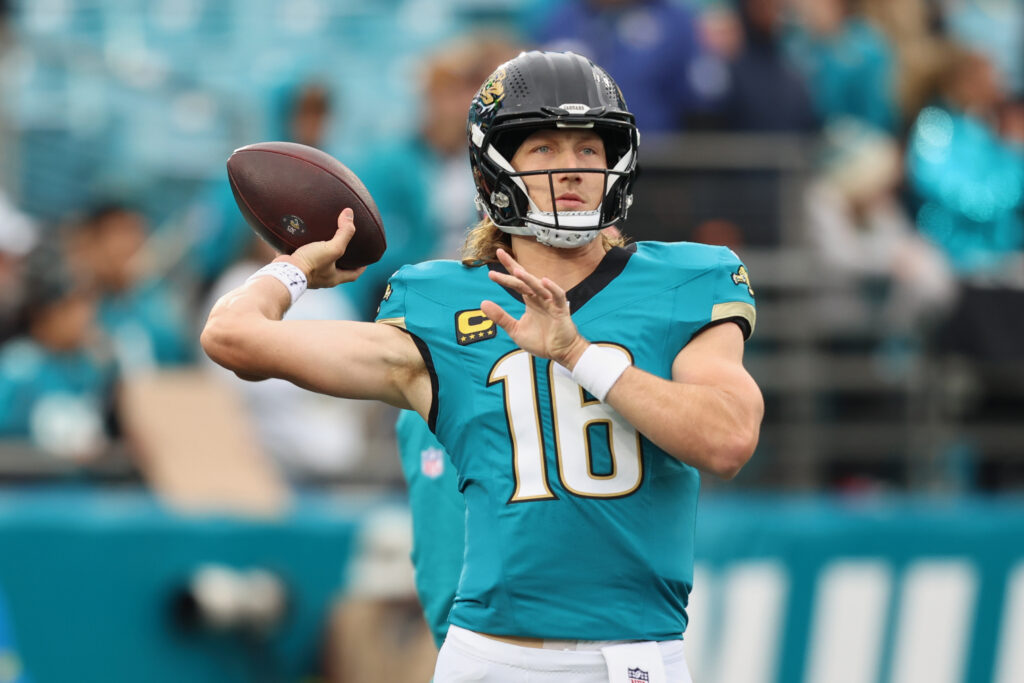
There is little mystery surrounding the quarterback room. Trevor Lawrence remains the unquestioned franchise quarterback and enters what could become the defining season of his career. After returning to elite form and entering the MVP conversation last season, Lawrence now enters his second season under Liam Coen with a much stronger supporting cast around him. Continuity within the offense should allow him to play faster mentally, while improved protection and an upgraded receiving corps give him every opportunity to elevate from playoff-caliber quarterback to legitimate Super Bowl contender.
Behind him, Nick Mullens projects as the clear backup despite failing to stand out during offseason practices. None of Jacksonville’s reserve quarterbacks have separated themselves, but Mullens possesses two qualities the coaching staff values most: experience and familiarity with the offensive system. His ability to manage and execute the offense efficiently makes him the safest option behind Lawrence.
The Jaguars are expected to carry just two quarterbacks on the active roster, trusting Mullens to manage the offense if needed while using the practice squad to develop additional depth.
Running Back
Depth Chart
RB1: Bhayshul Tuten
RB2: Chris Rodriguez Jr.
RB3: LeQuint Allen Jr.
RB4: J’Mari Taylor
Analysis
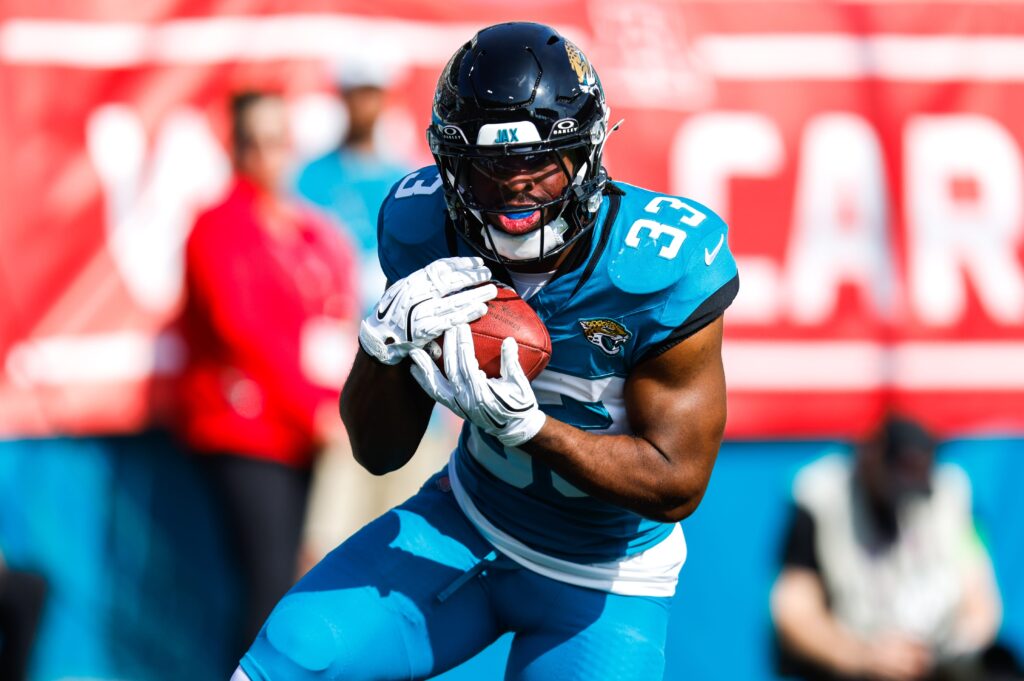
This running back room looks completely different than it did a year ago, and that change begins with sophomore Bhayshul Tuten. Jacksonville’s willingness to move on from Travis Etienne Jr. signaled complete confidence in Tuten’s ability to become the centerpiece of the rushing attack. Through offseason practices, he has done nothing to change that belief.
Tuten has consistently showcased game-breaking acceleration and elite long speed that very few running backs possess. His explosiveness is reminiscent of players like Jahmyr Gibbs and De’Von Achane, giving Jacksonville a home-run threat every time he touches the football. Combined with Liam Coen’s outside zone scheme, Tuten has all the tools to become one of the NFL’s breakout running backs in 2026.
Chris Rodriguez Jr. slots in as the second back after joining the Jaguars in free agency. While Tuten thrives on speed and explosive plays, Rodriguez provides the physical complement every offense needs. His downhill running style, ability to finish through contact, and effectiveness near the goal line should make him the primary short-yardage and red-zone option. The difference in skill sets between Tuten and Rodriguez gives Jacksonville tremendous flexibility depending on game situations.
LeQuint Allen Jr. rounds out the primary rotation as the third-down specialist. Allen may not receive the same rushing workload as the two players ahead of him, but he offers arguably the best pass protection of any running back in the league while also being a natural receiver out of the backfield. His versatility should earn him meaningful offensive snaps every week, and it would not be surprising if the sophomore eventually overtakes Rodriguez as the RB2 should his overall offensive impact continue to grow.
The final running back spot belongs to undrafted rookie J’Mari Taylor. Taylor has quietly become one of the biggest surprises of Jacksonville’s offseason program, consistently flashing explosiveness and toughness whenever given opportunities. With so much uncertainty behind the running back room, keeping Taylor on the active roster rather than risking him on waivers feels like the smarter long-term decision. Even if his offensive role is limited, his developmental upside makes him well worth one of the final roster spots.
Wide Receiver
Depth Chart
WR1: Brian Thomas Jr.
WR2: Parker Washington
WR3: Jakobi Meyers
WR4: Travis Hunter
WR5: Josh Cameron
WR6: CJ Williams
Analysis
Few teams in the NFL can match the combination of talent and versatility Jacksonville has assembled at wide receiver.
Brian Thomas Jr. remains the unquestioned No. 1 option. Although his sophomore season did not reach the heights many expected, his physical gifts remain undeniable. He boasts great length with elite speed and outstanding ball-tracking ability, Thomas has looked better throughout offseason practices than at any previous point in his career. He should once again serve as Jacksonville’s primary vertical threat, and a bounce back 1,000+ yard campaign seems trivial with how impressive BTJ has looked this offseason. If Lawrence takes the next step under Liam Coen, Thomas could easily find himself back among the NFL’s elite receivers.
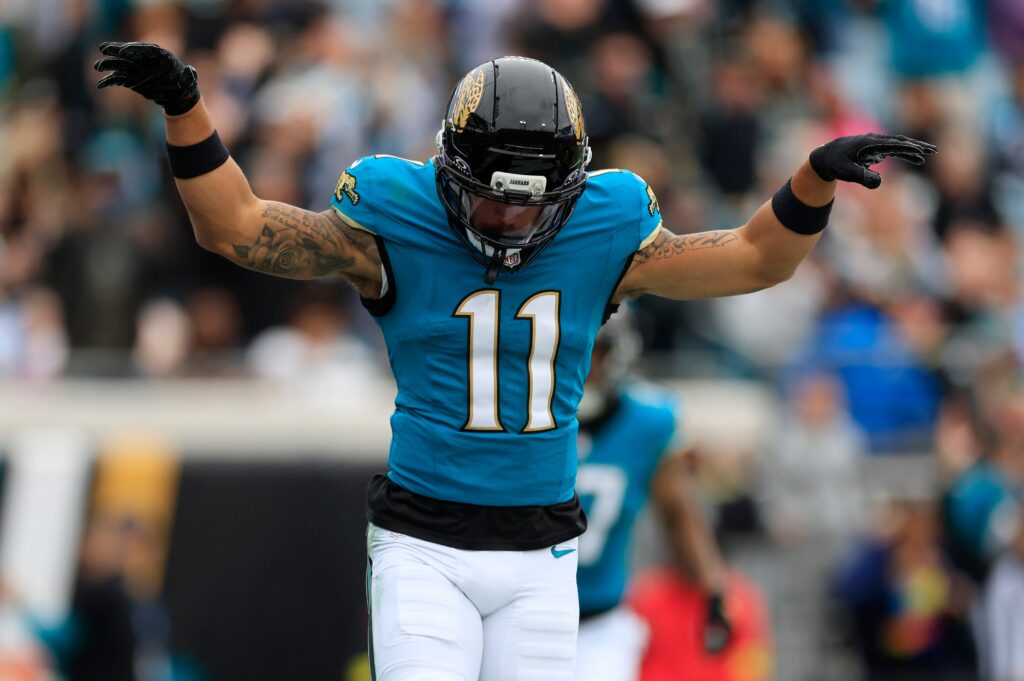
Parker Washington earns the second spot on the depth chart after emerging as one of the offense’s most complete weapons. While Thomas provides the explosive plays, Washington consistently creates separation through polished route running, reliable hands, and impressive run-after-catch ability. His knack for winning contested catches despite not having prototypical size has become one of the most underrated aspects of his game. It would not be surprising if Washington ultimately leads the Jaguars in receptions, and there is a very realistic path for both him and Thomas to eclipse 1,000 receiving yards this season.
Jakobi Meyers gives Jacksonville arguably the best third receiver in football. The veteran may not possess the explosiveness of Thomas or Hunter, but his value comes through consistency. Meyers excels as a route runner, understands leverage as well as nearly any receiver in the league, and has built a career moving the chains on third down. His experience should provide Lawrence with a dependable security blanket while allowing the younger receivers to attack defenses vertically.
Travis Hunter may technically be listed fourth on the receiver depth chart, but his impact will be far greater than most fourth options across the NFL. Hunter is expected to spend the majority of his snaps at cornerback, yet his offensive ability is simply too dynamic to leave off the field. Expect Coen to manufacture touches specifically designed for Hunter, utilizing his elite athleticism, remarkable body control, and natural playmaking instincts. Whether as a receiver, on jet sweeps, or in designed packages, Hunter should become one of the offense’s biggest mismatch weapons. Having a player of his caliber as the fourth receiving option highlights just how dangerous Jacksonville’s passing attack could become.
Rookies Josh Cameron and CJ Williams round out the receiver room after they both were selected in the sixth round. While neither projects for a large role, both offer intriguing developmental traits and provide valuable depth behind the top four receivers. Their size gives Jacksonville additional options in contested-catch situations, and they could eventually assume many of the responsibilities previously handled by Tim Patrick as bigger-bodied perimeter targets. Unless injuries strike, their primary contributions during their rookie seasons will likely come on special teams while continuing to develop within the offense.
Tight End
Depth Chart
TE1: Brenton Strange
TE2: Nate Boerkircher
TE3: Tanner Koziol
Analysis
Jacksonville quietly assembled one of the more intriguing tight end rooms in the league this offseason.
Brenton Strange enters the season as the unquestioned starter after earning a contract extension and establishing himself as one of the NFL’s better all-around tight ends. His receiving ability has continued to develop each season, but what truly separates him is his blocking. Strange has become one of the league’s premier blocking tight ends, allowing Jacksonville to remain unpredictable regardless of personnel grouping. If he remains healthy throughout the season, he possesses the talent to finish among the NFL’s top 10 players at his position.
The Jaguars reinforced that strength by selecting Nate Boerkircher, whose profile mirrors Strange in many ways. Both players entered the league as athletic, physical blockers with untapped receiving upside, similar size, and comparable play styles. Jacksonville hopes Boerkircher can eventually develop into another version of Strange, giving the offense two tight ends capable of dominating the line of scrimmage while remaining legitimate receiving threats. If that projection comes true, Coen’s offense should become significantly more effective utilizing two-tight-end formations and establishing the running game.
Tanner Koziol provides an entirely different skill set as the third tight end. Standing 6-foot-7, Koziol lacks the athletic explosiveness and blocking prowess of Strange and Boerkircher, but he brings intriguing receiving ability that neither of the other two can replicate. His size creates mismatches, particularly in the red zone, and early practices have suggested Lawrence has already developed trust in him. Koziol has consistently produced during scrimmages and may already have more catches than nearly any other rookie on the roster. If he continues progressing while adding functional strength to improve as a blocker, it would not be surprising to see him climb the depth chart during his rookie season.
Together, the trio gives Jacksonville outstanding versatility. Strange can handle every situation, Boerkircher strengthens the rushing attack, and Koziol adds another unique receiving weapon. Rather than relying on one style of tight end, the Jaguars now have specialized options capable of creating different problems for opposing defenses.
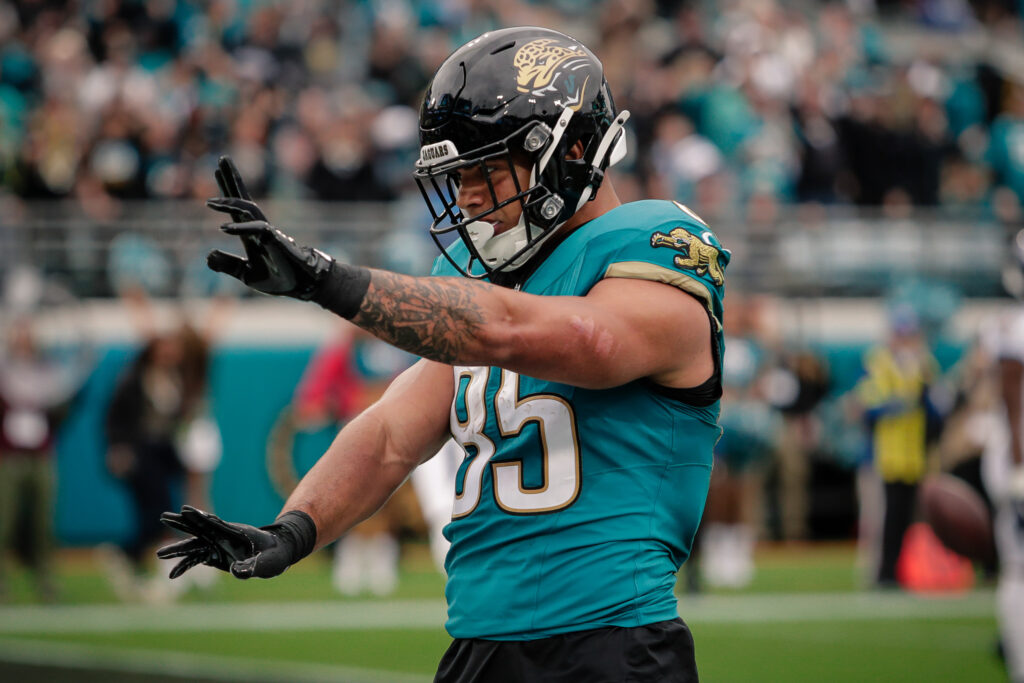
Left Tackle
Depth Chart
LT1: Cole Van Lanen
LT2: Walker Little
Analysis
Before suffering his season-ending injury last year, Van Lanen quietly played some of the best football of his career. He looked comfortable within Jacksonville’s offensive system, displayed impressive athleticism in pass protection, and consistently reached second-level defenders in the running game. Those traits make him an excellent fit for Liam Coen’s outside zone offense, which asks offensive tackles to move well in space rather than simply overpower defenders.
Walker Little remains a decent tackle who could even be pursued by other teams around the league, but this projection is less about Little struggling and more about Van Lanen earning the opportunity. Little provides outstanding insurance behind the starter and gives Jacksonville arguably one of the strongest backup tackles in the NFL.
If Van Lanen can return fully healthy he will be the unquestioned starter.
Left Guard
Depth Chart
LG1: Ezra Cleveland
LG2: Wyatt Milum / Emmanuel Pregnon
Analysis
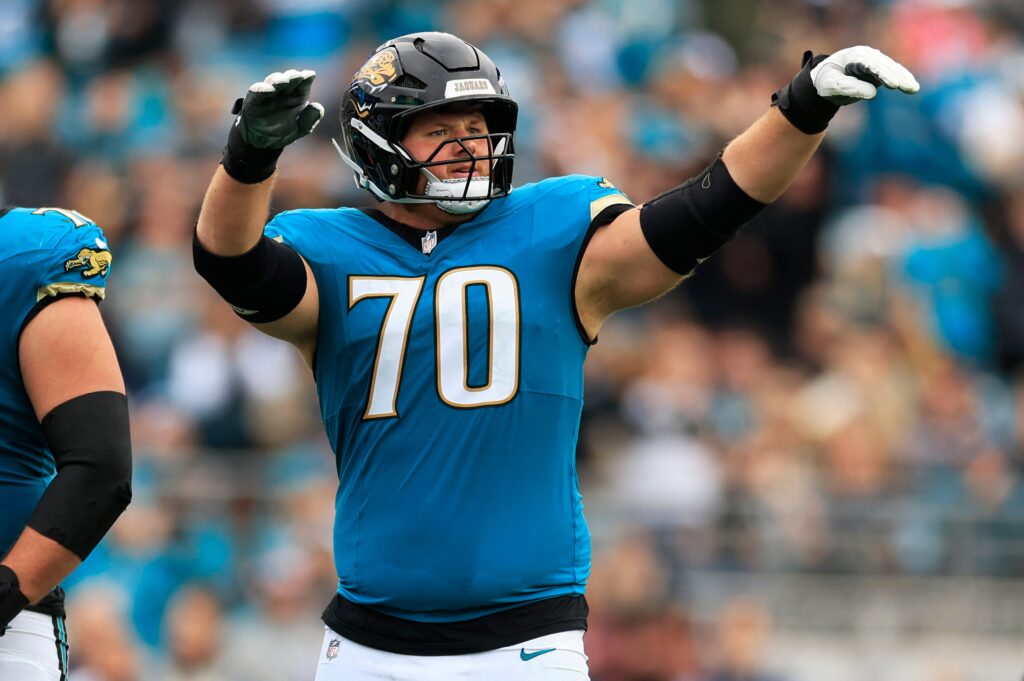
Ezra Cleveland enters another season as Jacksonville’s most reliable offensive lineman. While he rarely receives national recognition, Cleveland was arguably the Jaguars’ most consistent blocker throughout last season. Whether in pass protection or opening rushing lanes, his steady play made him one of the few constants along an offensive line that dealt with injuries and inconsistency. There is little reason to believe that changes heading into training camp.
The real intrigue comes behind him. Wyatt Milum or Emmanuel Pregnon project to be his backup entering camp, and both could eventually become Cleveland’s long-term replacement. Cleveland is entering the final year of his contract, making the development of these two young guards even more important.
Milum enters his second NFL season after transitioning from offensive tackle to guard. That adjustment is rarely easy, but with a full year of development behind him, he appears far more comfortable playing inside. His experience gives him a slight edge entering camp, particularly because he has already seen meaningful NFL snaps.
Pregnon, meanwhile, offers arguably the highest upside of any interior offensive lineman on the roster. His combination of size, power, and athleticism is exactly what teams look for when developing starting guards. He possesses the strength to overwhelm defenders in the running game while also showing impressive balance in pass protection.
Both players should see significant preseason snaps, and Jacksonville could realistically have two future starting guards already on the roster.
Center
Depth Chart
C1: Robert Hainsey
C2: Jonah Monheim
Analysis
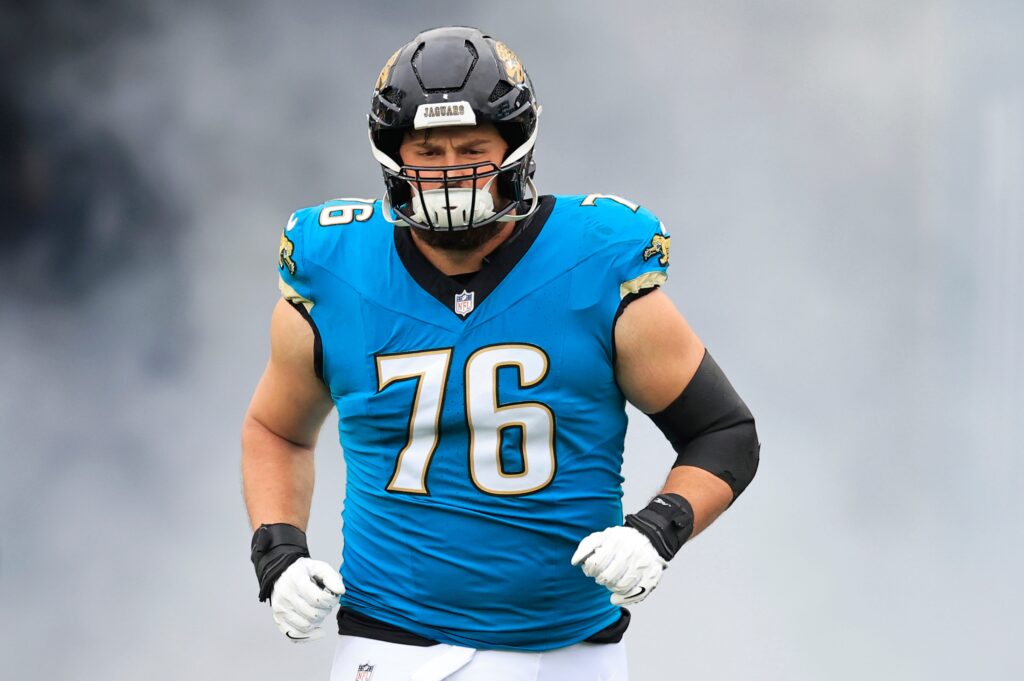
Robert Hainsey projects as the veteran anchor in the middle of the offensive line. Having now two seasons working within Liam Coen’s offensive system, Hainsey brings valuable familiarity to the offense. His communication, leadership, and experience making protection calls should help stabilize the unit while allowing younger players around him to develop.
Behind him is sophomore Jonah Monheim, who could quietly become Jacksonville’s center of the future. Monheim possesses excellent football intelligence and enough athleticism to thrive in Coen’s scheme. While he may not be ready to overtake Hainsey immediately, learning behind an experienced veteran gives him an ideal developmental path. If Monheim continues progressing, he could eventually become the long-term successor once Hainsey’s tenure comes to an end.
Right Guard
Depth Chart
RG1: Emmanuel Pregnon / Wyatt Milum
RG2: Patrick Mekari
Analysis
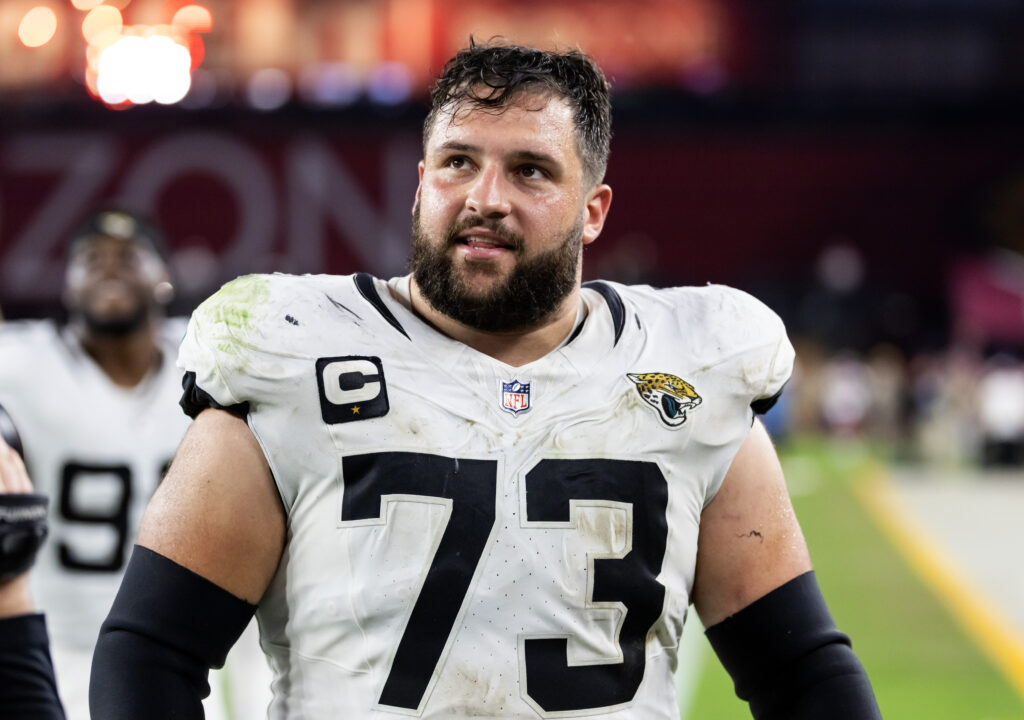
This is the most important position battle on the offensive line and in my opinion, the one Jacksonville should prioritize throughout training camp. Rather than relying on veteran Patrick Mekari, I believe one of Emmanuel Pregnon or Wyatt Milum should win the starting right guard job.
Pregnon possesses tremendous physical gifts. His combination of strength, length, and movement skills gives him legitimate starting-caliber upside from Day 1. He consistently finishes blocks with authority and has shown enough polish in pass protection to believe he can handle NFL competition much earlier than expected.
Milum offers a different type of appeal. After spending last season adjusting to guard following a college career at tackle, he now enters Year 2 with valuable experience under his belt. Even during stretches last season when he rotated into the lineup, the offense appeared more effective. Protection improved, the rushing attack found more consistency, and the interior played with noticeably more physicality.
Whichever young guard does not win the starting job should immediately become Cleveland’s primary backup at left guard, positioning Jacksonville well for the future regardless of Cleveland’s contract situation.
Patrick Mekari shifts into what may actually be his best role. Although Mekari struggled to consistently elevate the offensive line as a full-time starter last season, his versatility remains incredibly valuable. Few offensive linemen in the NFL can comfortably play all five positions, making him the perfect sixth man. Rather than forcing him into one starting spot, Jacksonville can maximize his value by allowing him to fill in wherever injuries occur.
This competition represents exactly what rebuilding offensive lines need: talented young players pushing veterans rather than automatically sitting behind them.
Right Tackle
Depth Chart
RT1: Anton Harrison
RT2: Chuma Edoga
Analysis
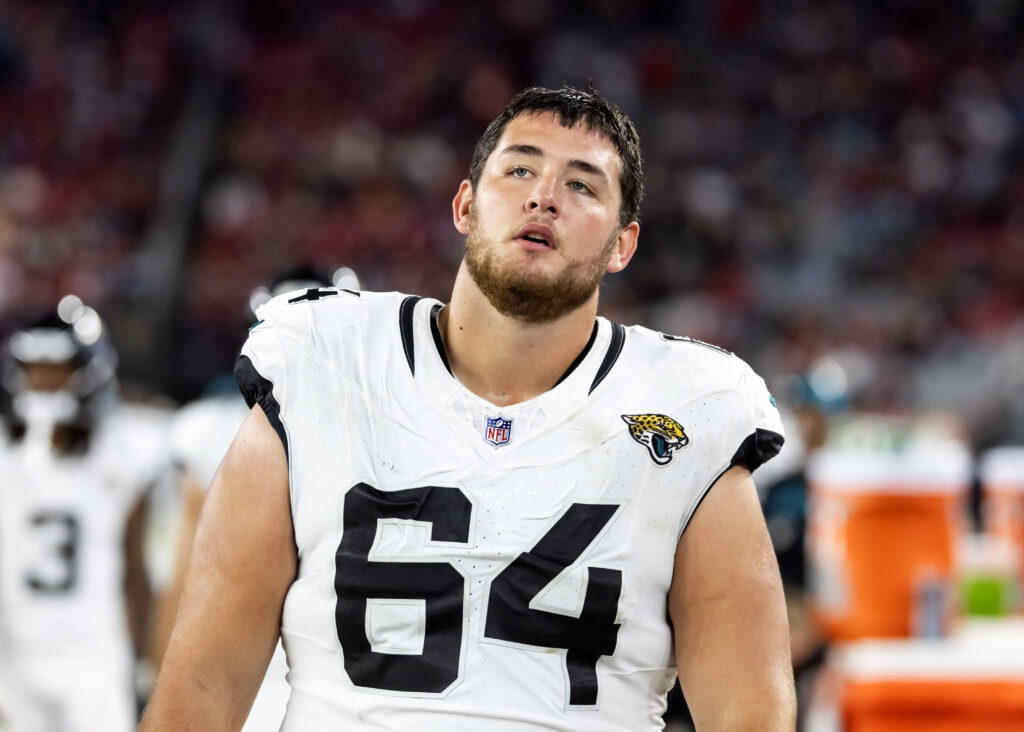
Anton Harrison enters what could become the breakout season many Jaguars fans have been waiting for.
Throughout offseason practices, Harrison has arguably looked like the most improved offensive lineman on the roster. His pass sets have become cleaner, his anchor against power rushers appears stronger, and his overall confidence has noticeably grown. Considering Jacksonville’s investment in him as a first-round pick, this is exactly the progression the organization hoped to see.
If Harrison continues developing, he has the potential to become one of the AFC’s better right tackles while giving Trevor Lawrence the consistent protection needed to fully unlock the offense.
Veteran Chuma Edoga rounds out the tackle room as the primary backup. His experience starting games across multiple offensive line positions provides valuable insurance should injuries occur. While Jacksonville hopes he rarely sees extended action, Edoga offers reliable depth capable of stepping into the lineup without dramatically changing the offensive game plan.
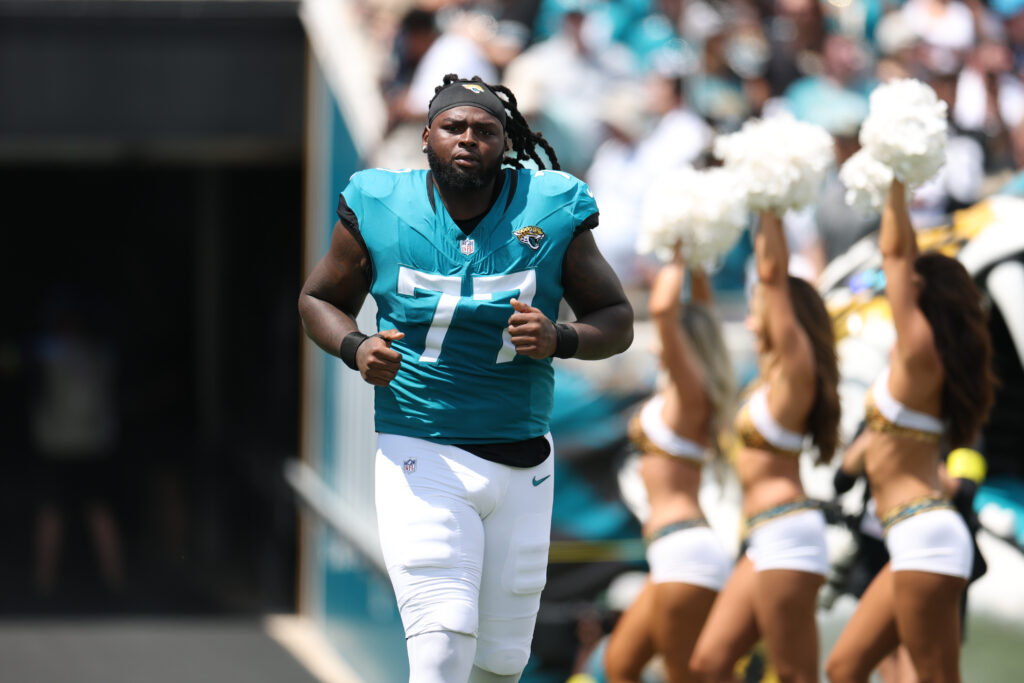
The offensive line may still have questions entering training camp, but it is considerably younger, deeper, and more competitive than it was a year ago. Cleveland, Hainsey, and Harrison provide veteran stability, while Van Lanen has earned an opportunity to prove he can be the long-term answer at left tackle. Perhaps most importantly, the battles involving Wyatt Milum and Emmanuel Pregnon should raise the overall level of play across the entire unit. If even one of those young guards develops into the player Jacksonville believes he can become, this offensive line could quickly transform from a mediocre unit into one of the team’s biggest strengths.
Edge Rusher
Depth Chart
EDGE1: Josh Hines-Allen
EDGE2: Travon Walker
EDGE3: Dennis Gardeck
EDGE4: Danny Striggow
EDGE5: Wesley Williams
EDGE6: Zach Durfee
EDGE7: Jalen McLeod
Analysis
Few teams in the NFL can match Jacksonville’s top-end talent off the edge.
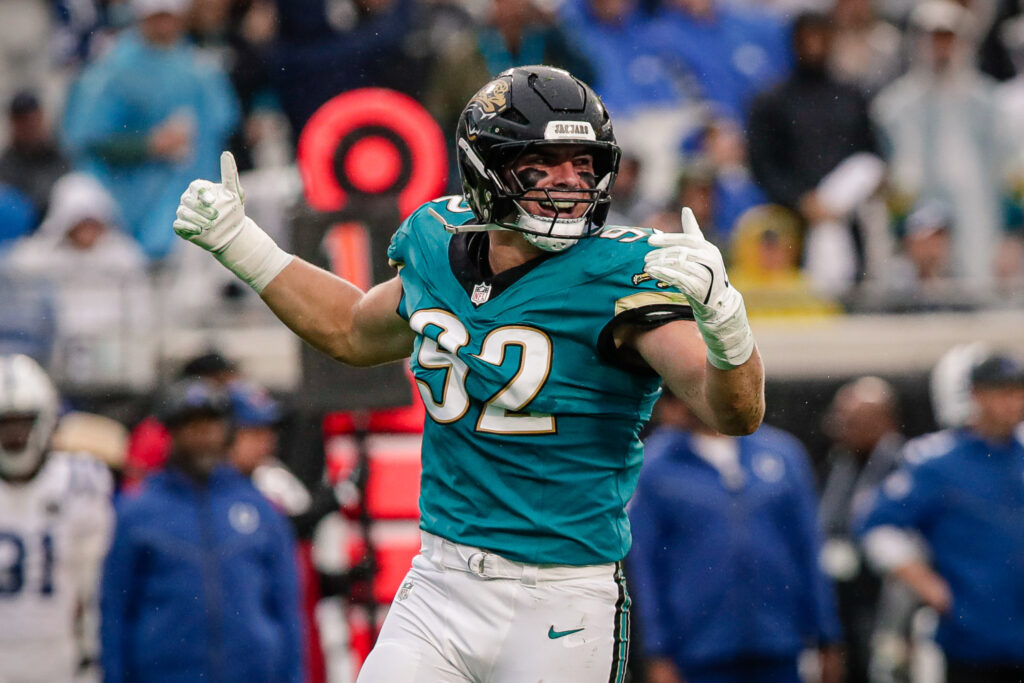
Josh Hines-Allen enters the season as the leader of the pass rush and looks poised for another dominant campaign. Throughout offseason practices, he has consistently been one of the most disruptive defenders on the field, regularly creating pressure before quarterbacks even have an opportunity to progress through their reads. He appears fully healthy and could be entering one of the best seasons of his career. If Jacksonville’s secondary takes a step forward, Hines-Allen could once again find himself among the league leaders in sacks.
Across from him, Travon Walker remains one of the NFL’s most complete defensive ends. While his sack production often grabs headlines, Walker’s ability to set the edge against the run is among the best in football. After battling injuries last season, he returns healthy and motivated to reestablish himself as one of the league’s premier young pass rushers. Together, Walker and Hines-Allen give Jacksonville one of the NFL’s best starting edge duos.
Dennis Gardeck projects as the first player off the bench and could play a far larger role than most rotational edge rushers. His motor never stops, and Campanile should utilize him in multiple ways. While he’ll primarily rush off the edge, Gardeck also has enough experience playing as an off-ball linebacker that Jacksonville can disguise pressures by moving him around the formation. Expect him to see meaningful snaps every week.
Danny Striggow continues one of the more impressive developmental stories on the roster. After arriving as an undrafted free agent last season, Striggow quickly earned praise for his physicality against the run and relentless effort. Those traits have continued into this offseason, where he has reportedly taken another step forward. He looks firmly entrenched as Jacksonville’s top developmental edge rusher and should become a regular part of the defensive rotation.
Fourth-round rookie Wesley Williams slots in next. His draft status alone suggests Jacksonville has plans for him, but his athletic profile makes him even more intriguing. Williams possesses the size and length teams covet at the position and should immediately contribute as part of the rotation while continuing to refine his technique. He should also see significant snaps on special teams particularly as a kick and punt blocker, he used his length to block a multitude of kicks during his college career.
Seventh-round pick Zach Durfee has quietly become one of the biggest surprises of training camp. Despite entering the league with far less fanfare than Williams, Durfee has consistently flashed explosive athleticism and has recorded multiple would-be sacks during scrimmages. While Williams may enter the season ahead of him because of draft investment, Durfee has already proven he deserves meaningful opportunities to compete for snaps.
Rounding out the group is Jalen McLeod, whose versatility makes him extremely valuable. He is a promising player having been selected in the sixth round last season, but he missed his entire rookie season due to injury. Now healthy he has a strong chance to make the roster as another Gardeck-esque player offering the ability to play both edge and traditional linebacker.
Defensive Tackle
Depth Chart
DT1: Arik Armstead
DT2: Ruke Orhorohoro
Analysis
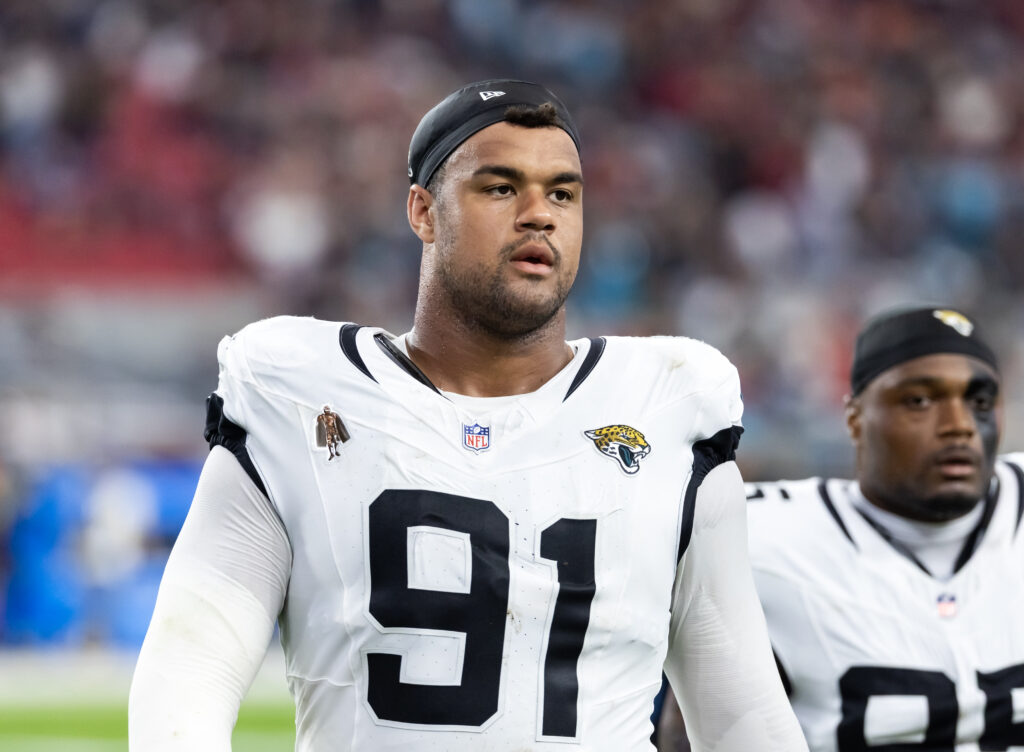
Arik Armstead remains the cornerstone of Jacksonville’s interior defensive line.
Even entering the later stages of his career, Armstead continues to provide everything a defense could ask for from a three-technique defensive tackle. His combination of power, length, and pass-rushing ability allows him to consistently collapse the pocket while remaining effective against the run. Beyond his production, his veteran leadership will be invaluable for one of the younger defensive fronts Jacksonville has fielded in years.
Behind him is newly acquired Ruke Orhorohoro, who could quietly become one of the team’s most impactful offseason additions.
Orhorohoro brings significantly more athleticism than Jacksonville has had as an interior rotational pass rusher in recent seasons. His first step allows him to penetrate quickly into the backfield, creating disruption even when he doesn’t finish the play himself. Learning behind Armstead should accelerate his development, and it would not be surprising if he eventually earns close to starter-level snap counts by the end of the season.
Nose Tackle
Depth Chart
NT1: Albert Regis / DaVon Hamilton
NT2: DaVon Hamilton / Albert Regis
Analysis
This projects to be one of the closest position battles on the entire roster. DaVon Hamilton has been one of Jacksonville’s most dependable run defenders for several seasons and remains an excellent fit at nose tackle. His size, strength, and ability to occupy multiple blockers have made him an important piece of the defensive line for years. Even if he doesn’t officially start every game, Hamilton will continue to play an important role throughout the rotation.
However, I believe rookie Albert Regis has a legitimate chance to overtake him as the primary starter sooner rather than later. Already nicknamed “Regigigas” after the Pokemon by Jaguars fans, Regis has generated significant excitement because of his rare athleticism for a nose tackle. He moves far better than most players his size while still possessing the strength necessary to anchor against double teams. His ability to penetrate into the backfield gives Jacksonville a dimension they have rarely had from the position.
Hamilton remains the safer, more experienced player entering camp, which is why this battle remains too close to definitively call. But if Regis continues developing throughout training camp and the preseason, it would not be surprising if he ultimately emerges as Jacksonville’s primary nose tackle before the end of his rookie season. Regardless of who officially starts, expect both players to receive significant snaps as Campanile rotates fresh defensive linemen throughout games.
Linebacker
Depth Chart
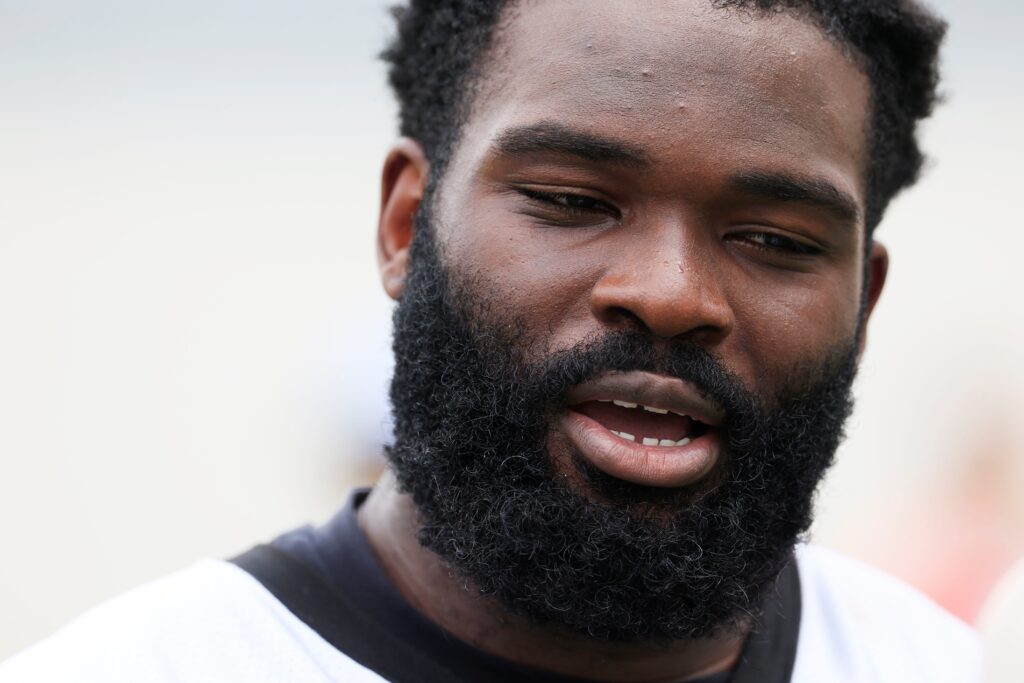
WLB: Foye Oluokun
MLB: Ventrell Miller / Branson Combs
SLB: Dennis Gardeck
LB4: Branson Combs / Ventrell Miller
LB5: Jack Kiser
LB6: Parker Hughes
LB7: Jalen McLeod
Analysis
The linebacker room looks noticeably different following Devin Lloyd’s departure, but it remains anchored by one of the league’s most productive defenders.
Foye Oluokun continues to serve as the heart of Jacksonville’s defense. The veteran captain has been one of the NFL’s most consistent linebackers for years, combining elite tackling production with outstanding leadership and communication. He remains the unquestioned starter at weakside linebacker and will once again be responsible for setting the tone defensively.
The starting strongside linebacker will realistically be Dennis Gardeck. He is the proven veteran who’s shown to be a playmaking force at this position, but he will primarily serve as edge depth and the Jaguars rarely put a strongside linebacker on the field.
Replacing Lloyd at middle linebacker is expected to be Ventrell Miller, although I believe this battle is much tighter than many realize. Miller has flashed impressive potential throughout his career whenever healthy. His downhill style, physicality, and instincts fit Anthony Campanile’s aggressive defensive philosophy extremely well. Overall the former Florida Gator finally appears positioned to receive an opportunity to prove he can handle a full-time starting role.
That said, Branson Combs has quietly become one of the biggest risers on the roster. After joining Jacksonville as an undrafted free agent last season, Combs has consistently impressed coaches and has reportedly continued standing out throughout offseason practices. His athleticism, effort, and rapid development make him a legitimate challenger for the starting middle linebacker job. While Miller enters camp with the inside track, this competition feels close enough to project with a slash until someone clearly separates themselves.
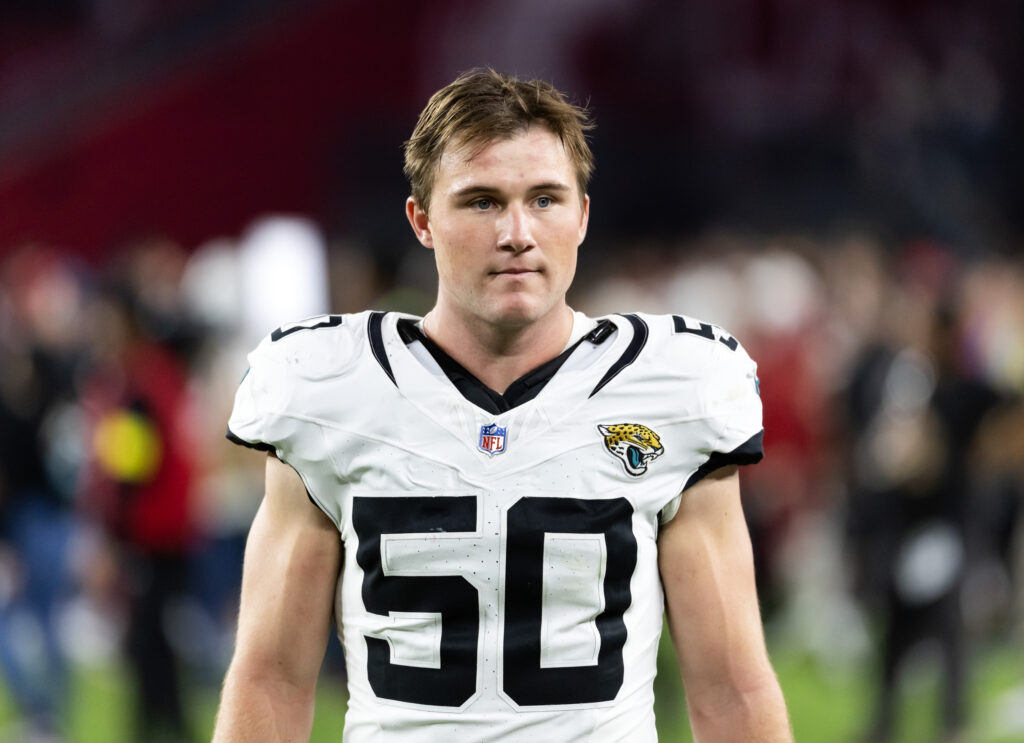
Jack Kiser projects as the top backup for Oluokun and should play an important rotational role. Being the linebacker the current front office has invested the most into, Kiser may even have an opportunity to earn the middle linebacker job over Miller or Combs if he can standout significantly. He brings excellent instincts, reliable tackling, and strong special teams value. His intelligence should allow him to contribute immediately even if he isn’t an every-down starter.
Seventh-round pick Parker Hughes rounds out the traditional linebacker room. Hughes offers exceptional athletic upside, highlighted by outstanding straight-line speed that few linebackers possess. Although he will likely spend much of his rookie season contributing on special teams, Jacksonville clearly believes his physical tools can eventually develop into much more.
Jalen McLeod earns the final linebacker spot despite primarily functioning as an edge rusher. His versatility is simply too valuable to ignore. Like Dennis Gardeck, McLeod would frequently move between linebacker and edge depending on the defensive package or where he’s needed due to injuries, giving Campanile another player capable of disguising blitzes and creating confusion before the snap.
The versatility throughout this room should allow Jacksonville to present a wide variety of defensive looks without needing to substitute personnel, something that could become a major advantage throughout the season.
Cornerback
Depth Chart
CB1: Travis Hunter
CB2: Montaric Brown
CB3: Jabbar Muhammad
CB4: Caleb Ransaw / Jalen Huskey
NB1: Jarrian Jones / Jourdan Lewis
NB2: Jourdan Lewis / Jarrian Jones
Analysis
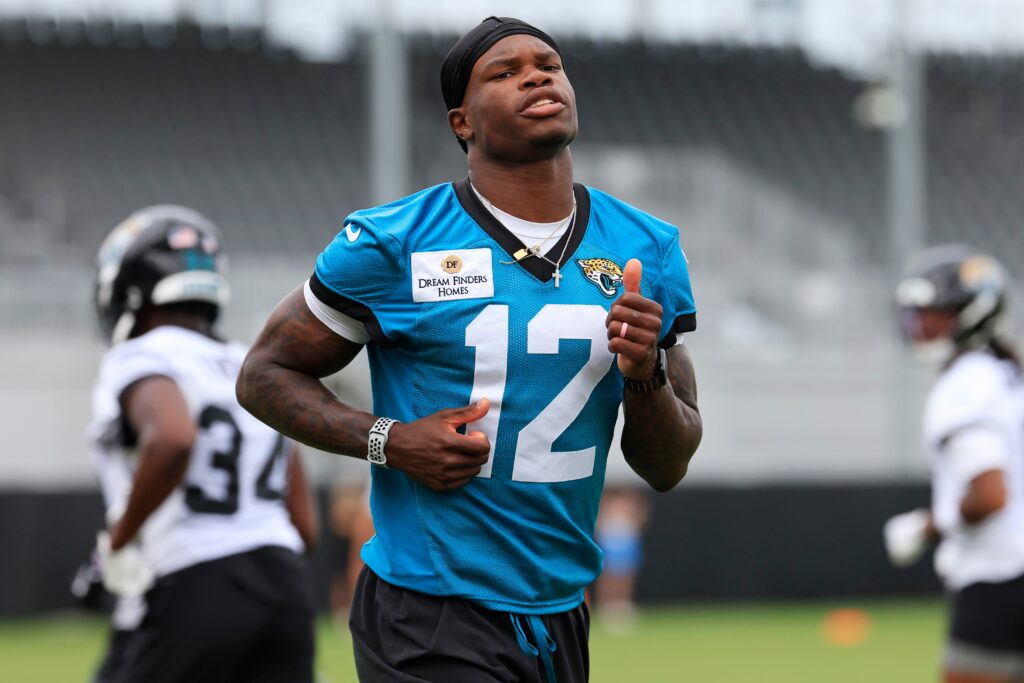
The addition of Travis Hunter completely changes the outlook of Jacksonville’s secondary now that he returns from injury. While he will play a significant offensive role, his primary position is expected to be cornerback, and he has the potential to become one of the NFL’s elite players at the position. His instincts, ball skills, recovery speed, and ability to mirror receivers make him an immediate difference-maker. Hunter enters training camp healthy and looking to remind everyone why he was considered a generational prospect.
Across from him is Montaric Brown, who quietly put together one of the most underrated seasons of any cornerback in football. Brown finished last season allowing the lowest passer rating in zone coverage among qualifying cornerbacks, showcasing outstanding awareness and discipline. While he may not receive the same attention as Hunter, Brown has earned the opportunity to begin the season as Jacksonville’s other starting outside corner.
Jabbar Muhammad projects as the top backup on the outside after one of the strongest offseasons of any defender on the roster. The former undrafted free agent has consistently impressed during practices, showing improved confidence, tighter coverage, and a much better understanding of the defensive scheme. Jacksonville should feel comfortable inserting him into games whenever necessary, and it would not be surprising to see him rotate into certain defensive packages even when everyone is healthy.
If the team needs another outside cornerback incase of emergency, safeties Caleb Ransaw and Jalen Huskey both offer great versatility to potentially play on the boundary.
The nickel position has a competition between two players that would be clear starters on the majority of teams. Jarrian Jones enters camp with a slight edge after emerging as one of the NFL’s better slot defenders last season. His physicality, instincts, and ability to quickly diagnose routes made him one of Jacksonville’s biggest defensive surprises. He deserves the first opportunity to continue building on that breakout campaign.
However, veteran Jourdan Lewis is far too talented to simply sit on the bench. Lewis has extensive experience playing inside and has consistently been one of the league’s more reliable nickel defenders throughout his career. Expect both players to see heavy snaps regardless of who technically starts, making this one of the few positions where the depth chart is almost interchangeable.
Safety
Depth Chart
FS1: Antonio Johnson
FS2: Jalen Huskey
SS1: Caleb Ransaw / Eric Murray
SS2: Eric Murray / Caleb Ransaw
S5: Rayuan Lane III
Analysis
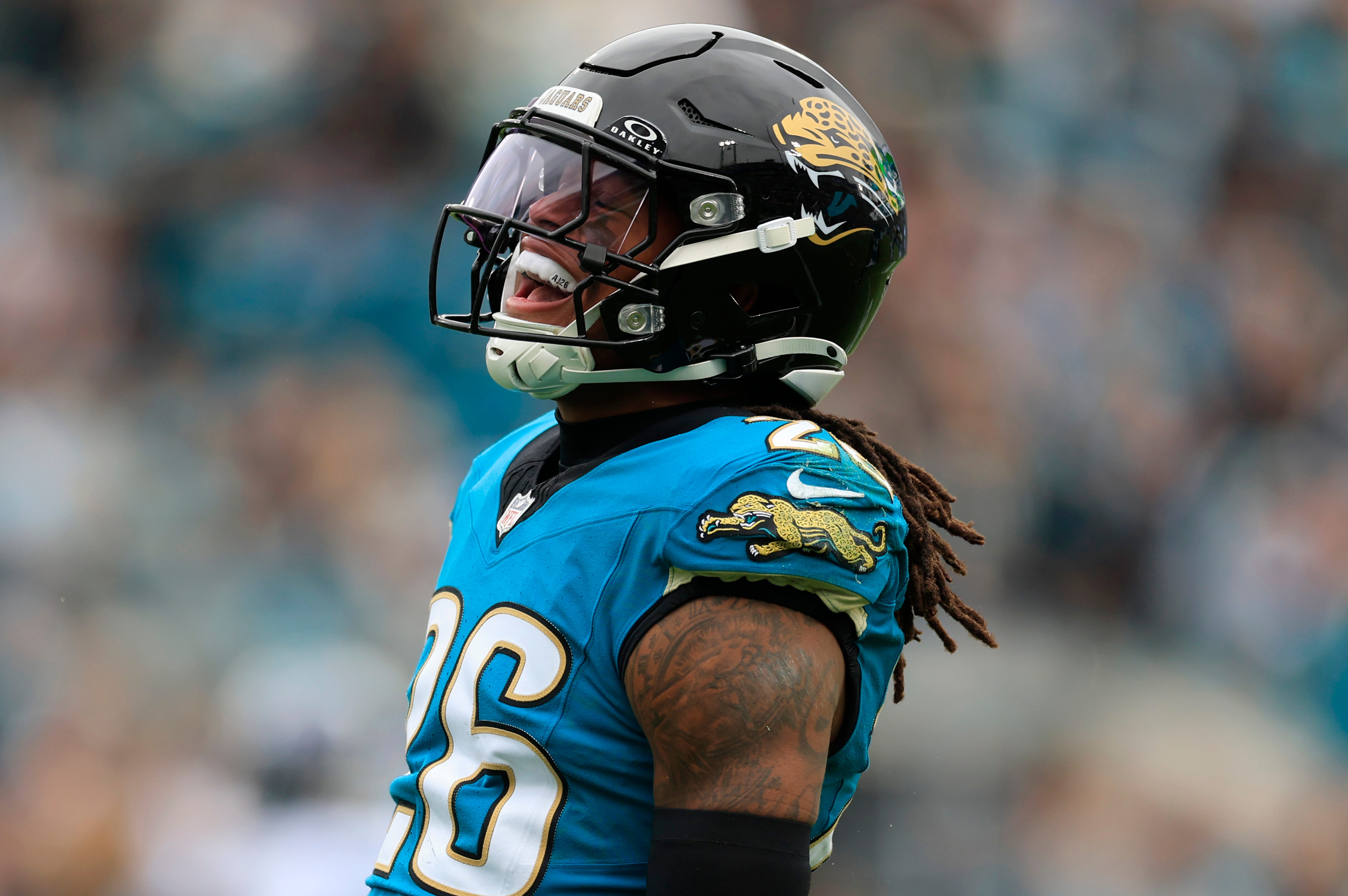
Antonio Johnson enters the season as one of the Jaguars’ most important defensive players. After breaking out last year, Johnson established himself as one of the league’s premier free safeties. His outstanding range, instincts, and physicality against both the pass and the run helped him earn the highest overall safety grade from PFF. With another offseason under Anthony Campanile, Johnson appears poised to cement himself among the NFL’s elite at the position.
Behind him is rookie Jalen Huskey. Although Jacksonville selected Huskey relatively early, there is no reason to rush him into the starting lineup. His ball-hawking ability stood out throughout his college career, and his versatility allows him to contribute at both safety and cornerback when needed. Initially, Huskey should serve as Johnson’s primary backup while developing into either Johnson’s eventual successor or a future starter opposite of him at strong safety.
The competition comes at strong safety. Caleb Ransaw enters camp with a legitimate opportunity to win the starting job after missing his entire rookie season because of injury. Despite the lost year, Jacksonville clearly remains excited about his athletic upside. Ransaw has impressed throughout offseason practices, displaying excellent range and physicality while looking fully recovered. His ceiling is simply too high to ignore.
Veteran Eric Murray remains firmly in the mix, however. Murray started the majority of games last season and continues to provide valuable leadership and experience. While age and injuries have begun to slow him somewhat, he remains a dependable veteran capable of handling multiple responsibilities within the secondary.
Ultimately, I believe Jacksonville should prioritize Ransaw’s upside while allowing Murray to remain heavily involved as part of the safety rotation. Both players are likely to see meaningful snaps regardless of who officially starts.
Rayuan Lane III rounds out the safety room as one of the Jaguars’ most valuable special teams players. Even if his defensive opportunities remain limited, his special teams contributions alone justify his place on the 53-man roster and he can serve as an emergency option in the secondary.
Specialists
Depth Chart
K: Cam Little
P: Logan Cooke
LS: Ross Matiscik
Kick Returner: Bhayshul Tuten
Punt Returner: Parker Washington
Gunner: Rayuan Lane III
Analysis
Jacksonville’s specialist trio remains one of the best in football.
Cam Little enters his third NFL season already holding an NFL record and appears poised to establish himself among the league’s elite kickers. His combination of leg strength, accuracy, and confidence has made him one of the organization’s most dependable players, and it would not be surprising if he begins receiving All-Pro consideration this season.
Logan Cooke continues to redefine consistency at punter. Already owning the highest career net punting average in NFL history, Cooke remains one of the league’s premier specialists and consistently flips field position in Jacksonville’s favor. His value often goes unnoticed, but few punters impact games more consistently.
Ross Matiscik rounds out the roster as one of the NFL’s best long snappers. The All-Pro continues to provide flawless consistency while helping anchor what has quietly become one of the league’s top special teams units.
While Tuten and Washington currently project as the primary returners because of their explosiveness, both are expected to play major offensive roles. If Jacksonville wants to reduce their workload during the regular season, it would not be surprising to see another player eventually emerge to handle return duties.
Lane has established himself as the team’s premier gunner as he consistently impacts field position. He was the Jaguars’ leader in special teams tackles.
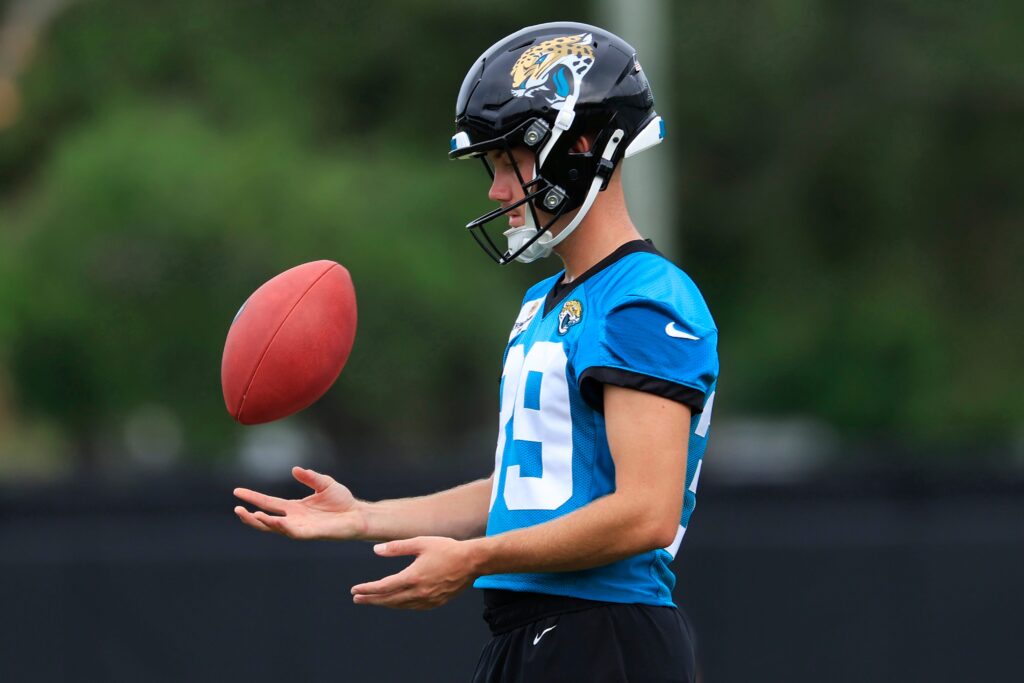
Players Who Just Missed the Roster
Several players narrowly miss my projected 53-man roster, but should remain strong candidates to fight for a roster spot throughout the rest of the offseason and are my top practice squad candidates.
BJ Green II (EDGE): Green has flashed enough pass-rushing ability to warrant continued development, but Jacksonville’s edge room is simply too deep entering training camp. He should be one of the first players promoted if injuries occur.
Quintin Morris (TE): Morris brings valuable veteran experience and remains a capable blocker. However, the upside of Nate Boerkircher and Tanner Koziol ultimately gives the younger players the edge.
Christian Braswell (CB): Braswell has continued to improve and offers quality depth in the secondary, but Jacksonville’s investment in younger defensive backs pushes him just outside the final roster.
Devon Marshall (CB): This year’s UDFA Marshall possesses intriguing traits and developmental potential. The Jaguars would be wise to keep him in the organization if possible as he continues refining his game.
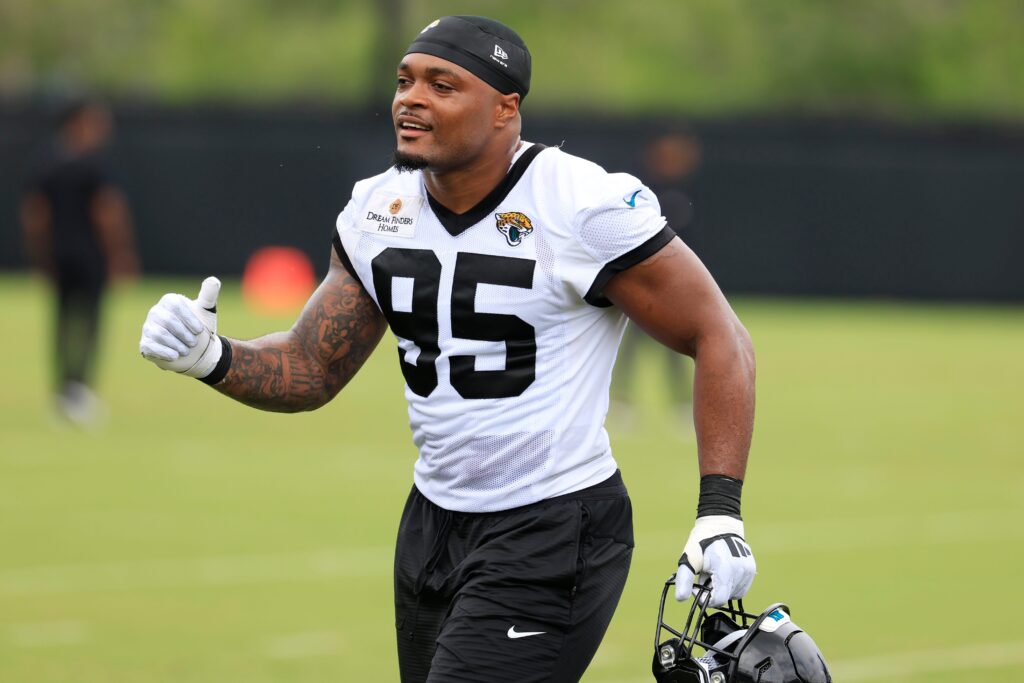
Final 53-Man Roster Projection
* Denotes that the player was already listed for another position group, hence doesn’t take up another roster spot.
Quarterbacks (2)
- Trevor Lawrence
- Nick Mullens
Running Backs (4)
- Bhayshul Tuten
- Chris Rodriguez Jr.
- LeQuint Allen Jr.
- J’Mari Taylor
Wide Receivers (6)
- Brian Thomas Jr.
- Parker Washington
- Jakobi Meyers
- Travis Hunter
- Josh Cameron
- CJ Williams
Tight Ends (3)
- Brenton Strange
- Nate Boerkircher
- Tanner Koziol
Offensive Line (10)
- Cole Van Lanen
- Walker Little
- Ezra Cleveland
- Emmanuel Pregnon
- Wyatt Milum
- Patrick Mekari
- Robert Hainsey
- Jonah Monheim
- Anton Harrison
- Chuma Edoga
Edge Rushers (7)
- Josh Hines-Allen
- Travon Walker
- Dennis Gardeck
- Danny Striggow
- Wesley Williams
- Zach Durfee
- Jalen McLeod
Interior Defensive Line (4)
- Arik Armstead
- Ruke Orhorohoro
- Albert Regis
- DaVon Hamilton
Linebackers (5)
- Foye Oluokun
- Ventrell Miller
- Jack Kiser
- Branson Combs
- Parker Hughes
- * Dennis Gardeck
- * Jalen McLeod
Secondary (9)
- * Travis Hunter
- Montaric Brown
- Jabbar Muhammad
- Jarrian Jones
- Jourdan Lewis
- Antonio Johnson
- Caleb Ransaw
- Eric Murray
- Jalen Huskey
- Rayuan Lane III
Specialists (3)
- Cam Little
- Logan Cooke
- Ross Matiscik
Final Thoughts
This roster reflects a franchise that has fully embraced youth, athleticism, and competition. Rather than relying on veterans simply because of experience, Jacksonville has built a roster where young players have legitimate opportunities to earn significant roles immediately.
The offense has surrounded Trevor Lawrence with arguably the deepest collection of skill-position talent of his career. Bhayshul Tuten brings explosive speed to the backfield, Brian Thomas Jr. and Parker Washington have the potential to become one of the NFL’s top receiving duos, and Travis Hunter adds a dynamic element few teams can match. If the young offensive line develops as expected, this offense has the potential to rank among the league’s best.
Defensively, the Jaguars are built around one of football’s premier pass-rushing duos in Josh Hines-Allen and Travon Walker while adding significantly more depth across the front seven. The emergence of players like Albert Regis, Danny Striggow, Branson Combs, and Jabbar Muhammad could ultimately determine just how high this defense’s ceiling becomes. In the secondary, Antonio Johnson appears ready to establish himself as one of the NFL’s elite safeties, while Travis Hunter has the talent to transform Jacksonville’s defense from the moment he steps onto the field.
There are still plenty of position battles left to settle once training camp begins, but if this projection ultimately becomes reality, the Jaguars will enter the 2026 season with one of the youngest, fastest, and most versatile rosters in the AFC. More importantly, they will have assembled a team capable of competing not only for another playoff berth, but for the first Super Bowl championship in franchise history.