
Baltimore Ravens
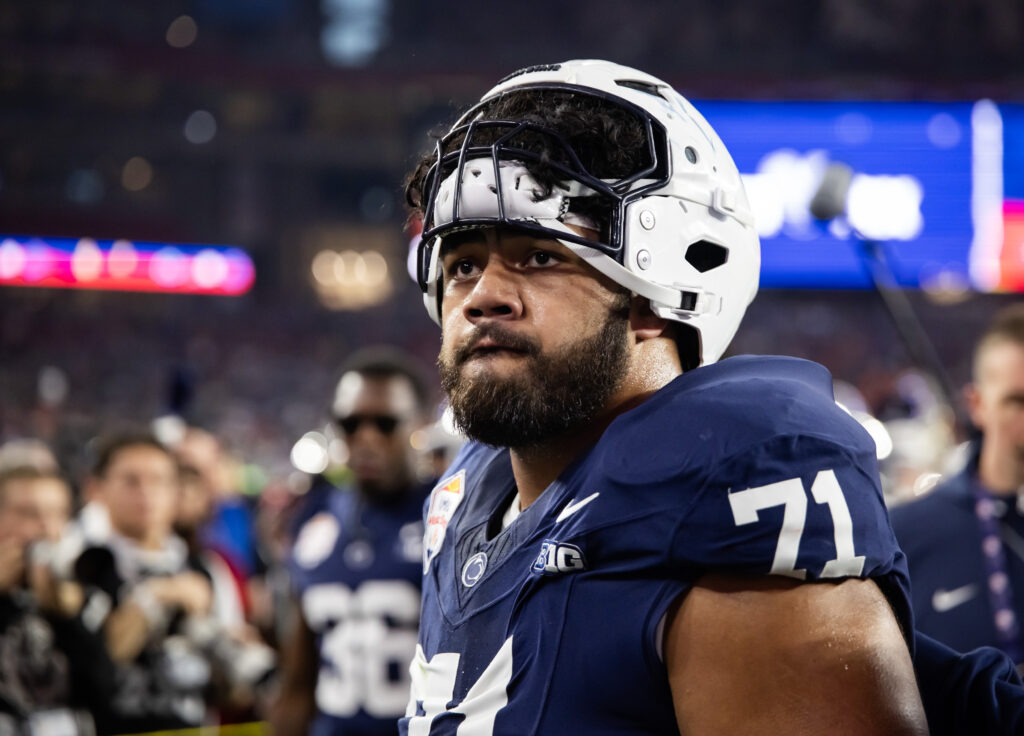
Round 1, Pick 14: Olaivavega Ioane, G, Penn State
Baltimore could not have scripted a better opening selection. Vega Ioane was my top guard in the entire class and one of the few interior offensive linemen I viewed as a true blue-chip prospect. While Miami selected Kadyn Proctor before him, I never considered the two players particularly close as prospects. Ioane brings elite strength, outstanding balance, and consistent pass protection ability while also fitting perfectly into Baltimore’s physical rushing attack. The Ravens entered the draft needing an immediate answer along the interior offensive line and landed a player who should start from day one. This was one of the cleanest player-team fits in the entire draft.
Round 2, Pick 45: Zion Young, EDGE, Missouri
The Ravens stayed true to their identity by continuing to invest in the defensive front. Zion Young was valued almost exactly where I expected him to go and provides another talented pass rusher for a defense that already added Trey Hendrickson earlier in the offseason. Young is not an elite athlete off the edge, but he wins with effort, power, hand usage, and discipline. He plays with a relentless motor and consistently impacts the run game. Baltimore now has tremendous depth with Hendrickson, Mike Green, Tavius Robinson, and Young all competing for snaps, making this a strong addition despite not being a major value steal.
Round 3, Pick 80: Ja’Kobi Lane, WR, USC
Lane was a slight reach relative to my board, but it is difficult to dislike the fit. Baltimore needed additional receiving talent behind Zay Flowers and Lane offers exactly the type of size and catch radius the offense lacked. He is a physical outside receiver who wins through body control and strong hands rather than pure speed. There is still development needed in his route running, but Lane should have a legitimate opportunity to climb the depth chart quickly and carve out a significant role in the offense.
Round 4, Pick 115: Elijah Sarratt, WR, Indiana
The Ravens doubled down at receiver and got much better value with Elijah Sarratt. I had Sarratt slightly ahead of Lane on my board and viewed him as a third-round talent. He lacks elite athletic traits, but he is one of the most reliable receivers in the class. Sarratt consistently finds soft spots against zone coverage, understands leverage, and plays with excellent body control. He projects as a dependable possession receiver who can line up both inside and outside. This feels like the type of player Lamar Jackson will quickly grow to trust.
Round 4, Pick 133: Matt Hibner, TE, SMU
This was one of Baltimore’s biggest reaches according to my board. Hibner was my TE18 and carried a seventh-round grade. The athletic tools are intriguing and he offers value as a blocker, but he is already 24 years old and remains very raw as a receiving threat. His route running needs work, he struggles to consistently create separation, and he has not shown enough strength at the point of attack to maximize his physical gifts. He should compete for the TE2 role, but the value here was difficult to justify.
Round 5, Pick 158: Chandler Rivers, CB, Duke
Rivers was one of my favorite selections Baltimore made on Day 3. While he lacks ideal size for an outside corner, he is one of the best slot defenders in the class. Rivers is quick, instinctive, and highly competitive at the catch point despite his smaller frame. I had a fourth-round grade on him, making this a good value addition for Baltimore. With Marlon Humphrey entering the later stages of his career and potentially approaching free agency, Rivers gives the Ravens a potential long-term answer in the secondary.
Round 5, Pick 173: Josh Cuevas, TE, Alabama
The Ravens returned to the tight end position with Josh Cuevas. While I had him slightly higher than Hibner on my board, this was still a reach relative to where I valued him. That said, Baltimore’s offensive philosophy makes the selection easier to understand. Tight end remains one of the most important positions in this offense, and after losing Isaiah Likely, the Ravens needed multiple developmental options. Cuevas has enough athletic ability and receiving upside to justify the investment even if the value was not ideal.
Round 5, Pick 174: Adam Randall, RB, Clemson
Randall is one of the more fascinating developmental players in the class. A former receiver who transitioned to running back, he offers tremendous athletic upside and natural receiving ability out of the backfield. I had him valued almost exactly in this range and thought the fit made plenty of sense. Derrick Henry remains productive, but Baltimore eventually needs a succession plan. Randall is still learning the position, but the traits are there for him to become a dangerous offensive weapon in the future.
Round 6, Pick 210: Ryan Eckley, P, Michigan State
Replacing Jordan Stout was always going to be a priority, and Eckley gives Baltimore a powerful leg to work with. He is one of the strongest punters in the class and has the ability to completely flip field position. The biggest concern is hang time, as return opportunities can become an issue when the coverage unit is not given enough time to get downfield. Still, the talent is there and the pick fills a need without sacrificing much value.
Round 6, Pick 214: Rayshaun Benny, DE, Michigan
This was a solid value addition late in the draft. Benny is an explosive run defender who consistently penetrates gaps and creates disruption. He remains raw as a pass rusher and needs significant development in that area, but his quickness and effort level stand out immediately. With veterans like Calais Campbell and John Jenkins nearing the end of their careers, Benny gives Baltimore a developmental defensive lineman who could eventually earn a larger role.
Round 7, Pick 251: Evan Beerntsen, G, Northwestern
Beerntsen is an experienced interior offensive lineman who may ultimately find his best NFL fit at center. While he lacks overwhelming power, he plays with intelligence and technical consistency. Baltimore’s center situation remains uncertain, making this a worthwhile late-round investment. At worst, Beerntsen provides quality depth across multiple interior positions. At best, he could develop into a useful starter down the line.
Overall Grade
Baltimore upgraded the offensive line, strengthened the pass rush, added multiple receiving options, and created long-term depth throughout the roster. There were a few reaches, particularly at tight end, but the overall class feels balanced and productive. I believe this is a strong class and that the Ravens will get multiple long-term starters out of this draft. However despite having the most draft selections of every team in this division, they had the least selections that were steals according to my board. The Ravens had a good draft, but I believe the AFC North as a whole drafted better than any other division in the league, and compared to their rivals I was the least impressed with this class.
Grade: B-
Cincinnati Bengals
Round 2, Pick 41: Cashius Howell, EDGE, Texas A&M
After moving their first-round pick in the Dexter Lawrence trade, the Bengals entered the draft needing impact defenders and immediately found one in Cashius Howell. I had Howell as a first-round talent and my EDGE6 overall. His explosiveness, bend, hand usage, and production all point toward a player capable of becoming a high-level NFL pass rusher. Arm length concerns pushed him down some boards, but the value here was outstanding. Cincinnati already has several young pass rushers, but Howell may quickly emerge as the most dangerous of the group.
Round 3, Pick 72: Tacario Davis, CB, Washington
Davis was one of the bigger reaches of Cincinnati’s class according to my board. However, the position itself was impossible to ignore. The Bengals desperately needed help in the secondary after one of the league’s worst defensive performances last season. Davis brings exceptional size at 6-foot-4 and offers intriguing upside as a boundary corner. He is still developing technically, but the physical tools give him a chance to become a long-term starter.
Round 4, Pick 128: Connor Lew, C, Auburn
This was one of my favorite selections the Bengals made. Lew was my top center in the class and carried a second-round grade despite sliding into Day 3. He combines intelligence, strength, athleticism, and consistency better than any center in the class. The ACL injury likely contributed to the fall, but at only 20 years old his ceiling remains incredibly high. Cincinnati may have landed its center of the future well below his true value.
Round 4, Pick 140: Colbie Young, WR, Georgia
Young was one of the most confusing picks in the Bengals’ class. I did not have a draftable grade on him and struggled to see the need after Cincinnati committed long-term money to Tee Higgins. Young offers size and athletic upside, but the production simply was not there during his college career. He will compete for depth opportunities, but this felt like a significant reach relative to both value and roster construction.
Round 6, Pick 189: Brian Parker II, C, Duke
Parker was another offensive line addition I liked quite a bit. I had a fourth-round grade on him and viewed him as one of the better centers available. Cincinnati plans to move him to guard, which should still work given his technical refinement and pass protection ability. He may not start immediately, but Parker has the tools to eventually develop into a quality long-term starter.
Round 7, Pick 221: Jack Endries, TE, Texas
The Bengals found solid value late with Endries. I graded him as a sixth-round prospect and thought he brought enough receiving ability to compete for meaningful snaps. He is not an elite athlete, but he understands how to find space and can contribute as a reliable secondary target. With the league placing increased value on multiple tight end sets, this was a smart late-round investment.
Round 7, Pick 226: Landon Robinson, DT, Navy
Robinson was another excellent value addition. While undersized, he consistently disrupts plays with his quickness and effort. I had a fourth-round grade on him and viewed him as one of the better interior penetrators available. Playing behind veterans like Dexter Lawrence and Jonathan Allen should allow him to develop without immediate pressure while still contributing in rotational pass-rushing situations.

Overall Grade
Considering Cincinnati entered the draft without a first-round pick, this class greatly exceeded my expectations. Howell and Lew were both tremendous value selections and filled key positions of need for the Bengals, I believe both of these players will be stars for their roster. Outside of them, the Bengals added three players I had as fourth round talents in Davis, Parker, and Robinson, giving the team incredible value with starting upside. The only selection I truly disliked was the addition of Young, but that reach doesn’t take too much away from a very impressive draft. Despite only having seven additions, this team did a remarkable job.
Grade: A-
Cleveland Browns
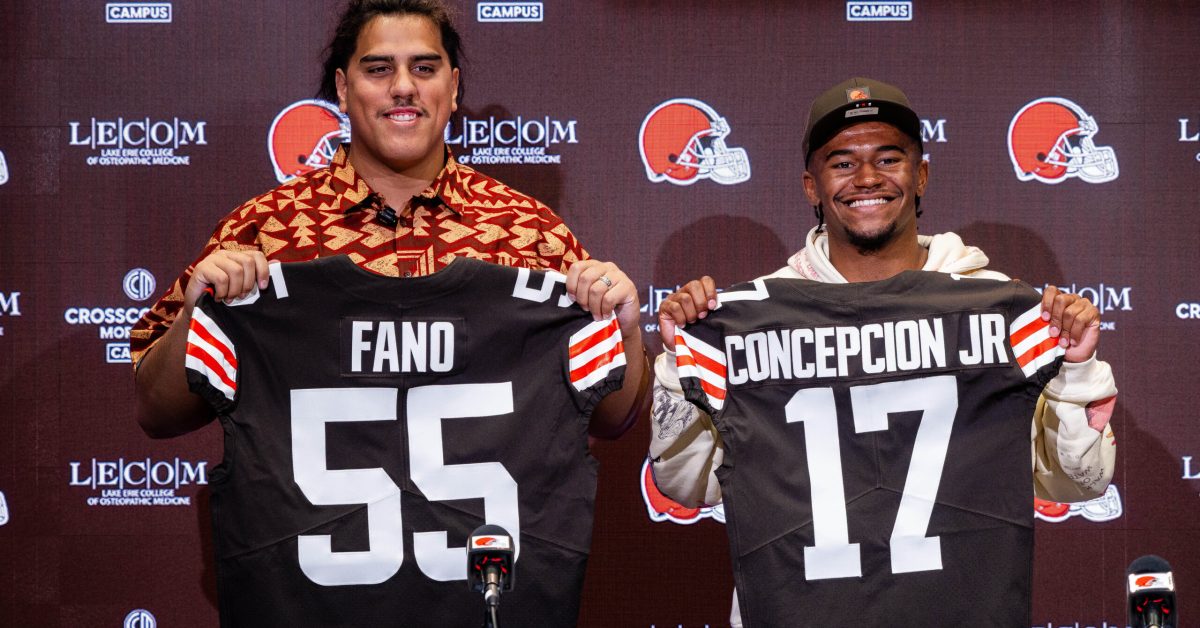
Round 1, Pick 9: Spencer Fano, OT, Utah
After trading down, the Browns still landed their left tackle of the future in Spencer Fano. I loved the process of moving back and accumulating value, but I did not love the value of the player relative to where he was selected. Fano was my OT3 in the class and was the first tackle off the board. There is a lot to like about his game. He is athletic, technically sound, plays with a great motor, and has the type of personality teams love building around. However, his arm length remains a concern and is the primary reason I did not view him as the top tackle in the class. Despite that, Cleveland addressed one of its biggest needs and added a player who should start for a very long time.
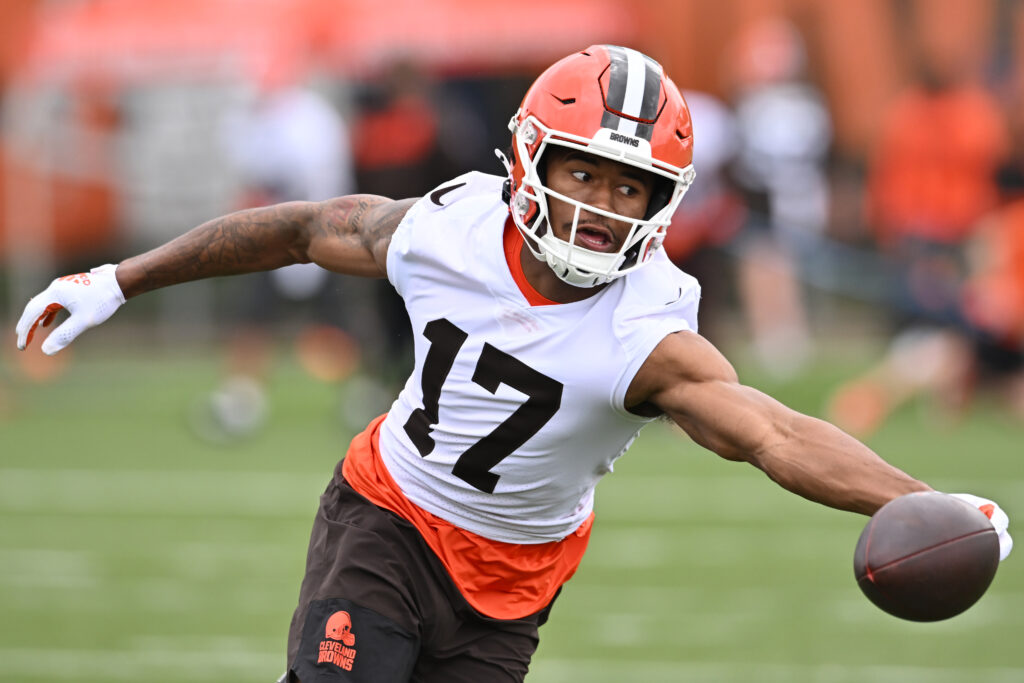
Round 1, Pick 24: KC Concepcion, WR, Texas A&M
This was one of the cleanest selections in the draft. Concepcion was valued almost exactly where I expected him to go and he fills a massive need for Cleveland. He is a dynamic playmaker who can line up all over the formation and consistently create yards after the catch. The Browns desperately needed more explosiveness in the receiving room and Concepcion gives them exactly that. I would not be surprised if he emerges as the team’s top receiver very early in his career. The value, fit, and need all lined up perfectly.
Round 2, Pick 39: Denzel Boston, WR, Washington
The Browns doubled down at receiver and I loved the decision. Boston was an early second-round talent on my board and I thought there was a realistic chance he would hear his name called in the first round. Unlike Concepcion, Boston wins with size, physicality, and contested catch ability. He complements both Concepcion and Jerry Jeudy extremely well and gives Cleveland a completely different type of weapon on the outside. The Browns refused to settle for the underwhelming receiver room they had last season and this selection significantly raises the ceiling of the offense.
Round 2, Pick 58: Emmanuel McNeil-Warren, S, Toledo
This was my favorite selection of Cleveland’s entire class and one of the biggest steals in the draft. I had a late first-round grade on McNeil-Warren and was shocked to see him available near the end of the second round. He is an elite athlete with outstanding range, physicality, and versatility. Whether Cleveland uses him at safety, in the slot, or in a hybrid role, he has the talent to make an impact immediately. This is the type of player you simply find a role for because he is too talented to keep off the field.
Round 3, Pick 86: Austin Barber, OT, Florida
Barber was a slight reach according to my board, but I still like the addition. He brings excellent size at 6-foot-7 and has extensive experience protecting the quarterback in the SEC. While he may not be ready to start immediately, Cleveland needed additional depth along the offensive line and Barber provides exactly that. With Tytus Howard carrying injury concerns and inconsistency throughout his career, Barber gives the Browns both insurance and a potential future starter at right tackle.
Round 5, Pick 146: Parker Brailsford, C, Alabama
This was a smart investment in the future of the offensive line. Brailsford was valued about where I expected him to be drafted and gives Cleveland a developmental center with plenty of upside. Elgton Jenkins remains the current starter, but injuries and age make it important to have a succession plan. Brailsford gets the opportunity to learn from a veteran while refining his own game. Even if he never becomes a high-end starter, he has all the traits necessary to develop into a quality contributor.
Round 5, Pick 149: Justin Jefferson, LB, Alabama
This was the first selection in the Browns’ class that I truly disliked. I had a seventh-round grade on Jefferson and did not view linebacker as a major need. Cleveland already has quality starters in Carson Schwesinger and Quincy Williams, making it difficult to justify spending a fifth-round pick here. Jefferson offers depth and athleticism, but the value simply was not there and there were several players at positions of greater need still available.
Round 5, Pick 170: Joe Royer, TE, Cincinnati
Royer was a solid value pick and one that made sense for the roster. I had him ranked as my TE11 and he was selected as the eleventh tight end off the board. After losing David Njoku, the Browns needed another option behind Harold Fannin Jr. Royer is a reliable pass catcher who should have a legitimate chance to win the TE2 job. He may never become a star, but he fills a clear role and has a realistic path to contributing early.
Round 6, Pick 182: Taylen Green, QB, Arkansas
This was one of my favorite picks in the entire draft. Green has some of the most intriguing physical tools of any quarterback in this class. At 6-foot-6 and 225 pounds while running a 4.37 forty-yard dash, his athletic profile is almost unheard of. He also possesses a powerful arm and has shown flashes of high-level quarterback play. The consistency is not there yet, which is why he slid, but the upside is extraordinary. For a sixth-round selection, this is exactly the type of gamble teams should take. If Green develops properly, Cleveland may have found its franchise quarterback.
Round 7, Pick 248: Carsen Ryan, TE, BYU
The Browns finished their class by taking another tight end in Carsen Ryan. Ryan is a developmental prospect with strong athletic traits and plenty of room to grow. He likely begins his career as the third or fourth tight end on the roster, but teams around the league are increasingly valuing depth at the position. Ryan may not contribute much immediately, but the upside is worth taking a chance on late in the draft.
Overall Grade
The Browns put together one of the strongest draft classes in football. They addressed premium positions throughout the roster, added significant talent to the offense, and consistently found value. McNeil-Warren and Green stand out as not just the two of the biggest steals found by Cleveland, but as two of the best value selections made in the entire draft according to my board. Cleveland reinforced their offensive line, completely upgraded their receiver core, managed to bring in four players that are arguably round 1 talents, and got a quarterback with freakish potential. No class is perfect, but Cleveland came remarkably close by maximizing both value and fit throughout the draft.
Grade: A+
Pittsburgh Steelers
Round 1, Pick 21: Max Iheanachor, OT, Arizona State
The Steelers entered the draft needing offensive line help and addressed it immediately with Max Iheanachor. I viewed him as a late first-round prospect, making this a slight reach relative to my board. However, the context matters. Pittsburgh watched a run on offensive tackles develop and needed to secure one before the position completely dried up. Iheanachor offers tremendous size, athleticism, and upside while also providing insurance behind Broderick Jones. Even if Jones develops into the player Pittsburgh hopes he can become, adding another talented young tackle was a smart move.
Round 2, Pick 47: Germie Bernard, WR, Alabama
This was one of my favorite selections by Pittsburgh. Bernard was my WR7 and I thought there was a legitimate chance he could sneak into the first round. He is a polished route runner with reliable hands and excellent feel for creating separation. Pittsburgh completely rebuilt its receiver room over the last year and Bernard fits perfectly alongside DK Metcalf and Michael Pittman. He has the skill set to contribute immediately and eventually develop into a featured weapon within the offense.
Round 3, Pick 76: Drew Allar, QB, Penn State
The Steelers may have landed their quarterback of the future here. Before his injury, Allar was generating first-round buzz and for good reason. He possesses prototypical size, impressive athleticism, and one of the strongest arms in the draft class. More importantly, he landed in an ideal situation. Pittsburgh can afford to let him sit behind Aaron Rodgers, learn the nuances of the position, and develop without being rushed onto the field. The physical tools are there for Allar to become a franchise quarterback if he reaches his potential.
Round 3, Pick 85: Daylen Everette, CB, Georgia
Everette was selected right around where I expected him to go. While there were other corners I preferred, the upside here is undeniable. He is a tremendous athlete with a sub-4.4 forty and elite testing numbers across the board. His willingness to contribute in run support only adds to his value. Pittsburgh already has strong starters at corner, allowing Everette time to develop without pressure. If his technique continues improving, this could become a very strong selection down the road.
Round 3, Pick 96: Gennings Dunker, OT, Iowa
This was the best value pick Pittsburgh made in the entire draft. I had Dunker graded as a second-round talent and one of the best interior offensive line prospects available. Although he played tackle in college, I believe his best fit is at guard. Dunker is a violent blocker who thrives in the run game and consistently looks to finish defenders. He also brings strong pass protection experience from his time on the edge. I would not be surprised if he wins a starting job sooner rather than later.
Round 4, Pick 121: Kaden Wetjen, WR, Iowa
Wetjen is one of the better return specialists in the draft class, but I simply thought this was too early. I viewed him as a seventh-round prospect and was not convinced he would even be drafted. His value comes almost entirely from special teams, as his upside as a receiver is limited. He will likely carve out a role immediately as a returner, but spending a fourth-round selection on a player with such a narrow projection felt like a significant reach.
Round 5, Pick 169: Riley Nowakowski, TE, Indiana
This pick made a lot of sense despite being a slight reach according to my board. Nowakowski is a hybrid player who can line up at tight end, fullback, or even in the backfield. With Connor Heyward no longer on the roster, Pittsburgh needed someone capable of filling that versatile role. Nowakowski should see meaningful snaps right away because he already has a defined purpose within the offense and also provides value on special teams.
Round 6, Pick 210: Gabriel Rubio, DT, Notre Dame
Rubio was one of the few picks in Pittsburgh’s class that I struggled to understand. I did not have a draftable grade on him and the Steelers already possess one of the deepest defensive line groups in football. Rubio offers impressive size, but his athletic upside and production are both limited. Barring injuries, it will be difficult for him to find meaningful snaps within such a crowded position group.
Round 7, Pick 224: Robert Spears-Jennings, S, Oklahoma
This was one of Pittsburgh’s best values of the draft. Spears-Jennings possesses an outstanding athletic profile, measuring nearly 6-foot-2 and 205 pounds while running a blazing 4.32 forty. The physical tools are elite and he plays with aggression against both the run and pass. His discipline in coverage still needs refinement, but the upside is significant. With uncertainty surrounding the long-term future of the safety position, this was an excellent developmental addition.
Round 7, Pick 230: Eli Heidenreich, RB, Navy
The Steelers closed their class with a player who fills a very specific role. Heidenreich is one of the better receiving backs in this class and provides a skill set that Pittsburgh lost when Kenneth Gainwell departed. He catches the ball naturally and can line up in multiple alignments, giving the offense additional flexibility. He may never become a featured back, but he has a clear path to earning snaps as a complementary piece and third-down option.
Overall Grade
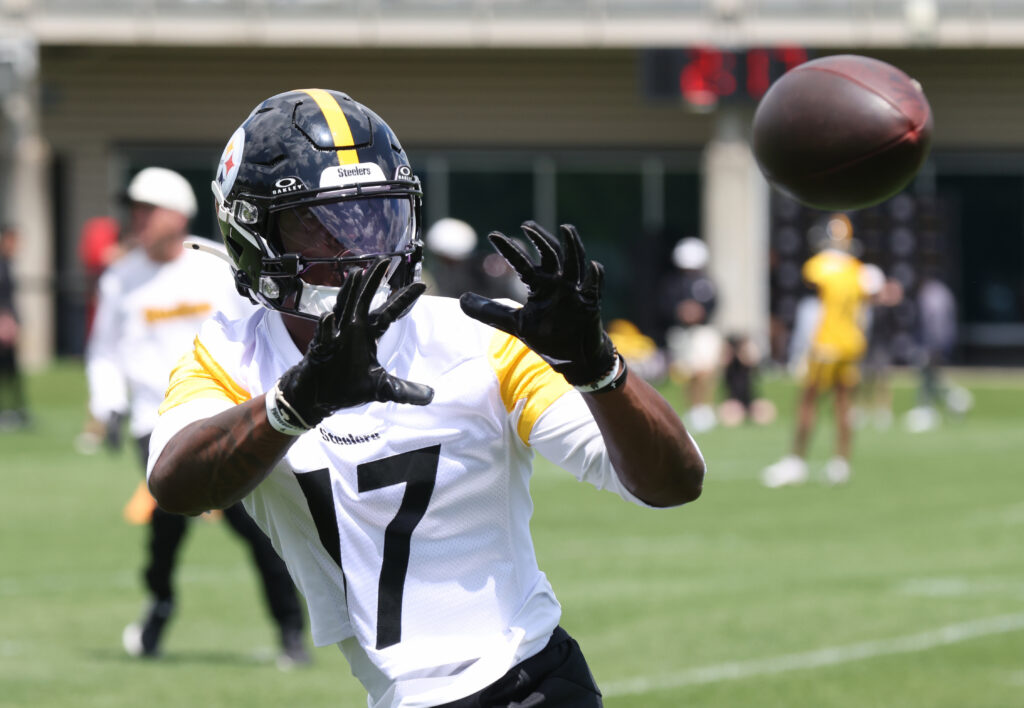
I thought Pittsburgh assembled one of the strongest classes in the league, which is especially impressive considering they were a playoff team last season. The Steelers finished their impressive young offensive line, completed their reconstruction of the wide receiver room, strengthened their improving secondary, and potentially found their quarterback of the future in Allar. There were a couple of reaches, but they also had many incredible value selections and the overall talent added to the roster outweighs the concerns. This was an excellent draft that could have a major impact on the franchise for years to come.
Grade: A